The average household owns a remarkable 120 to 175 kitchen tools and appliances. This number includes everything from a common fork to more complex appliances that languish in the back corners of cabinets. But it’s not just about ownership. Utilization, not possession, is what matters. Numbers don’t lie, though sometimes they reveal an uncomfortable truth about how we consume.
Nearly everyone in the United States uses certain utensils, according to a new YouGov survey of 1,000 U.S. adults. At least 90% of American kitchens have measuring cups, can openers, spatulas, and measuring spoons. Cutting boards, steak knives, whisks, and peelers follow, found in over 80% of homes. These are the kitchen’s infrastructure, the implements that justify their place in the cupboards. On the other hand, a different picture emerges.
Fewer than half (41%) of Americans own chopsticks, garlic presses, juicers, zesters, mandolins, and ricers. Specialized tools are designed for cooking tasks that not all cooks find equally compelling. We have not yet collected such data for the Kenyan consumer market, but we plan to execute it in a ground study.
The Competence Gradient: Skill as a Predictor of Ownership
One of the most salient findings from the YouGov data is a strong correlation between self-evaluated cooking skills and the number of tools a household has. This is not merely a correlation; it suggests a cause-and-effect relationship that warrants further exploration. Among the 21% of Americans who say they are great cooks, ownership rates for each utensil measured are higher than among those who do not consider themselves great cooks.
The differences suggest a cycle of culinary confidence and tool acquisition. Confident cooks are more likely to invest in specialty equipment and use it, expanding their cooking repertoire and further increasing their confidence. The smaller, less confident cook, on the other hand, may buy the same equipment but not feel compelled to learn how to use it, and thus end up with a piece of paper on the shelf.
The demographic dimension is also relevant. As a rule, the older the person, the more likely they are to own most utensils, unsurprisingly, because they acquire these items over their lives. But the younger group owns more chopsticks, ricers, mandolins, zesters, and juicers, suggesting generational shifts in culinary interests and exposure to a variety of cuisines.
The Appliance Paradox: Owning More, Using Less
The statistics on small appliances are alarming, to say the least, while the data on utensils paint a picture of aspirational accumulation. According to a GfK MENA Appliance Ownership Report, the average home has 27 small appliances, but only 9 are used every day. Globally, consumers are estimated to have 20-30 small appliances, of which 8-10 are used regularly. Around 35% of appliances go unused for more than six months, mainly because of a lack of real need and too many overlapping functions.
The U.K. is an example of an appliance surplus. Eight in ten (88%) UK consumers say they have at least one kitchen appliance they have never used or rarely use, and a third (34%) say they have between three and five gadgets they rarely or never use. Additionally, 83% report having at least one appliance in their kitchen that has fallen into disrepair and is covered with dust; researchers call these kitchen graveyards.
One of the fastest-growing appliance categories, the air fryer, illustrates the paradox. In the UK, more than 2.25 million air fryers are unused or have been thrown into landfill or incineration, meaning over 10% of the 20 million air fryers sold in the country end up in landfill or incineration. This not only costs money but also creates an environmental cost, and fewer than four out of ten consumers know it can be recycled.
Why is there a gap between purchase and adoption?
One aspect of the behavioral economics of kitchen gadget acquisition is particularly interesting. Consumer Reports found that one in three adults admitted to buying a kitchen gadget they use only infrequently or not at all. An NPD Group study found that 60% of adults buy new kitchen gadgets every year, yet more than 30% go unused because they are unfamiliar or too complicated.
This isn’t just about intimidation. When new technology emerges, you need time to learn it, and many consumers won’t have the time or motivation, so they stick with what they know. In the end, you end up with a toolbox full of tools that might come in handy but never do.
Aspirational purchasing, the culinary fantasy effect, exacerbates the phenomenon. Today’s consumers increasingly view cooking as an art form and a source of visual and sensory enjoyment, fueling demand for more special and beautiful utensils. However, the disconnect between the cook and the gadgets he dreams of using often shows up in unused gadgets.
A Socioeconomic Dimension: Kitchen Class and Status
Having many kitchen utensils isn’t just about what you want; it’s also about what you have. A survey of 469 middle school families in Korea found that the number of kitchen utensils owned was strongly related to educational level, income, and floor area. The hypothesis that wealthier households accumulate more tools holds across contexts.
This has implications for minimalism as a design and lifestyle principle. Owning less often rests on buying quality and investing in a tool with a higher initial price that will be much more useful. Partly, the minimalist kitchen is a luxury for those with a lot of money, because they don’t need to accumulate; they can be selective.
Design Implications: Toward the Intentional Kitchen
The study of single-person households identified three keywords that captured the ideal kitchen tools: simplicity, comfort, and customization. These values could guide the whole family. They reduce cognitive burden, build cooking habits, and reflect real, not idealized, cooking preferences.
Design scholarship focuses on operational burden, meaning that excessive functions, unnecessary decoration, and complicated interfaces in kitchen tools make users uncomfortable. Rather than fewer tools, minimalist-design advocates argue for more efficient, better-designed tools with minimal extraneous features, high usability, and efficient functionality.
The saga of Koko Networks is one of the most significant business collapses in recent Kenyan history, a cautionary tale of what happens when climate finance, government policy, and millions of households meet on the ground.
Employees at one of Africa’s biggest clean cooking firms received a text message on Monday, January 31, 2026, telling them not to appear at work. The company shut down its Kenyan operations at the end of January and entered insolvency proceedings on February 1. PricewaterhouseCoopers was appointed joint administrator. Over 700 jobs were lost as the company laid off direct employees after the shutdown. Yet about 1.5 million Kenyan households had relied on Koko’s subsidized bioethanol cooking fuel for years and were suddenly without their main cooking source.
The failure wiped out an estimated $300 million in investment in Kenya, leaving more than 3,000 automated fuel dispensers idle across urban and peri-urban Kenya. The key question is: how can a World Bank-funded, Microsoft Climate Innovation Fund- and international investor-supported company collapse so quickly?
The Business Model: A Delicate House of Cards
Australian entrepreneur Gregg Murray established Koko in 2013 to provide clean cooking solutions to people living in low-income urban areas. The company developed an automated dispensing machine network of more than 3,000 “fuel ATMs,” located in neighborhood shops throughout Kenya. A mobile app or card let customers fill reusable canisters with clean fuel once their accounts were activated, making clean fuel as readily available as mobile airtime.
The company’s prices were competitive: a two-burner stove cost only KSh 1,500, while the market price was around KSh 15,000, representing a 90% discount. Bioethanol was sold at about KSh 100 per liter, roughly half the market price of KSh 200.
However, these prices were not viable without subsidies. Koko’s entire business model relied on selling carbon credits in international compliance markets. It cost nearly KSh 13,600 per customer to keep its fuel and stove affordable, but the company funded these subsidies through carbon-credit revenues.
The calculations were simple, but the math was shaky. A customer who needed 10 liters of fuel a month had to pay Koko about KSh 1,000 per month in subsidies (or KSh 12,000 per year). If the figure were applied to one million households, it would amount to an annual subsidy cost of KSh 12 billion ($93 million). The subsidy was possible only because Koko could produce about 6 million carbon credits per year, certified by the Gold Standard under a methodology developed by the UN. At launch, Koko had issued almost 15 million credits.
These credits were not traded on the less volatile voluntary carbon market, where prices have been low. Koko designed its business to target compliance markets, specifically the International Civil Aviation Organization’s Carbon Offsetting and Reduction Scheme for International Aviation (CORSIA), where eligible credits could command substantially higher prices. The Kenyan government issued one key document needed to access these markets: a Letter of Authorization (LoA).
The Government Standoff
In June 2024, the Kenyan government signed an investment framework agreement with Koko, which seemed to set the stage for transactions on the compliance market. The deal granted Koko ownership rights over carbon credits and included government commitments related to their transfer.
However, the company never received the authorization letter. The company waited for at least eight months. The government had earlier revoked Koko’s import license for bioethanol products in 2023, leaving the company dependent on local supplies that it considered unreliable and costly.
The government’s public justification cited market concentration issues. The business model did not fit, Trade Cabinet Secretary Lee Kinyanjui said: “If Kenya had accepted the volumes they wanted, no other company would have benefited because they would have taken up the entire allocation. If Koko had claimed as many credits as it did, it would have completely cornered Kenya’s international compliance market, much to the detriment of other sectors like agriculture, manufacturing and the forestry industry.”
The issue is “multidimensional” and raises questions about the credibility of cookstove carbon credits, Kenya’s climate policies, carbon market rules, transparency in business models, and diplomatic pressures, David Ndii, President William Ruto’s economic adviser, said.
Questions were also raised about Koko’s carbon-accounting methodology. An investigation by REDD-Monitor, linked to an analysis by cookstove project specialist Tom Price, suggested Koko used a 93% non-renewable biomass (fNRB) assumption for its cookstove projects. In contrast, the fNRB use rate for urban cooks in Nairobi and other cities could have been as high as 38%. Cookstove carbon credits have faced significant scrutiny since their inception because of reports of overestimated emissions savings. An investigation of sampled projects published in 2024 found that claimed emissions savings were more than nine times too high.
The Collapse: What Happened When the Credits Stopped
Without the LoA, Koko could not sell its credits to the targeted compliance markets. Without carbon revenues, it would not have had the funds to subsidize fuel prices. Without subsidies, the business model became financially unsustainable.
The shutdown was immediate and complete. After internal discussions, management decided to cease operations. Fuel supply was halted, and many automatic refill machines were turned off. Employees were told not to come to work the following Monday. The closure was announced via mass text messaging on January 31 to staff and clients. Koko did not initially make a detailed public statement.
The Human Toll
The shutdown was a disaster for the families that depended on Koko.
Grace Kathambi, a resident of Kibera, said it was a life-changing experience. “I did not have enough money to fill a gas cylinder, but I had Koko as my next best bet if I wanted to cook, and with approximately 30 U.S. cents I could fill enough Koko fuel for a cooking session.”
Margaret Auma added: “I can’t afford to use gas… Koko made life easy for those of us who don’t earn that much from casual jobs; we feel abandoned; it’s not our fault.”
The machines stopped operating without warning for Fredrick Onchenge, a Koko agent who used to serve up to 50 customers daily. “I was confused at first, and then I realized what had just happened: I lost my job. I called the salesperson, but they were out of service.”
The closure affected:
More than 700 direct workers who lost their jobs.
Thousands of agents who operated the dispensing machines and depended on commissions.
About 1.5 million households that had relied on Koko’s affordable cooking fuel.
Now they face a hard choice: either return to charcoal and kerosene as the government moves away from them, or pay for an expensive LPG cylinder, which the draft estimates at around KSh 1,200.
The Financial Wreckage
As a result of Koko’s collapse, there was a trail of financial casualties:
About $300 million had been invested in Kenya, with a substantial portion going toward production and distribution infrastructure.
Investors including Microsoft’s Climate Innovation Fund, Mirova, Rand Merchant Bank and Verod-Kepple have provided more than $100 million in debt and equity to the company.
A World Bank Group political risk guarantee worth $179.6 million (KSh 23.18 billion) from the Multilateral Investment Guarantee Agency (MIGA) covered Koko’s investment against specified political risks, including breach of contract, expropriation, transfer restrictions, war and civil disturbance.
The MIGA guarantee could become particularly important in the fallout from Koko’s collapse. The taxpayer risks paying a potential compensation bill of around KSh 21 billion ($162 million) for failing to meet contractual obligations, unless the government can prove it fulfilled its obligations to Koko.
The government argues that the guarantee covers political risks, including expropriation, civil unrest, and breach of contract, but that the company also had a duty to comply with existing laws and ensure that its business model complied with Kenyan regulations. If the dispute proceeds to arbitration, the process could have far-reaching consequences for future climate finance in Kenya and Africa at large.
The Asset Sale: What Remains
In July 2026, PwC’s administrators began selling Koko’s assets, offering them to buyers willing to pay more than $15 million. The package includes:
Patents, hardware designs, and software technologies.
A canister factory in Sanand, Gujarat, India, which produces and sells stoves.
The network delivering services to more than 3,000 Kenyan automated fuel stations.
The company’s 0.25 MPa ethanol cooking-system technology, developed over more than 10 years.
The $15 million threshold indicates a preference to sell the business as a whole rather than split its assets. But if a buyer were to purchase it, they would need to develop a new business model or secure the necessary carbon-market approvals. The financing mechanism is crucial to the infrastructure’s success.
The affiliated Koko companies in India, namely Saarus Innovations Pvt Ltd and Koko Networks Pvt Ltd, are being wound up through voluntary liquidation.
The Bigger Picture: What’s at Stake for Clean Cooking With Koko’s Collapse
Koko’s failure has affected Africa’s clean cooking sector and raised fundamental questions about financing the shift to clean fuels.
“The clean cooking situation in Kenya, and indeed across Africa, is a crisis,” Amos Wemanya, a senior analyst at Power Shift Africa, said. This isn’t about emissions or climate targets; it is about development, health, dignity and household survival. The problem is immense.”Traditional cooking fuels in homes in Africa contribute to the deaths of hundreds of thousands of people each year from household air pollution (HAP). Four out of five Africans still use polluting cooking methods.
Koko’s model, which provides a carbon-credit subsidy to low-income households for using clean fuel, was championed as a solution. However, its crumbling architecture reveals how precarious such strategies can be. “We’re not going to engage in carbon math and carbon credit spreadsheets; we’re not going to solve the clean cooking challenge with carbon,” Wemanya said. He argued that carbon markets can let polluters keep emitting while households bear the risks when projects fail.
Jacqueline Novogratz of the climate investing firm Acumen summed up the broader lesson: “This most recent failure highlights a stark reality: Markets for low-income people cannot be created with shaky economics. Now it’s time to have the more candid discussion about what it will take to build markets for low-income people.”
The Key Lessons From the Koko Collapse
1. Policy-dependent models can be fragile and problematic
Koko’s entire business was based heavily on one approval. The company had no Plan B if the government withheld approval, and climate finance projects need to withstand regulatory risk.
2. The carbon market must be trusted to function
Governments need to maintain confidence in carbon markets’ integrity.
Kenya was hesitant to approve Koko’s credits because of concerns about market monopolization, carbon accounting, and national climate commitments. Governments are now taking a more cautious approach to allocating carbon credits.
3. End users bear the ultimate cost
These systems are the ones that, when they fail, can harm households most. They have to switch to harmful substitutes such as charcoal and paraffin, even though they are not responsible for the failure.
4. Don’t underestimate regulatory risk
Koko was one of Africa’s biggest clean cooking companies, backed by the World Bank Group and investors. However, regulatory risk doesn’t care about scale. Approval risk cannot be mitigated with strong operating assets when the business itself relies heavily on government approval.
What Comes Next?
The Koko collapse isn’t the end; it’s merely a turning point. The clean cooking crisis in Africa is pressing, and the need to innovate in financing is greater than ever. However, the message is clear: subsidy schemes that rely on a single revenue source and a single government approval are fragile.
There are several things that future projects will require:
Diversified income sources rather than reliance on a single source of revenue.
Improved collaboration between governments and their partners, based on shared ownership and transparency.
Stronger carbon-accounting tools to foster trust.
Greater focus on cost-effectiveness, including electrification and other scalable solutions.
Currently, millions of households in Kenya lack affordable clean-cooking options and face an uncertain future. The blue flame symbolizing progress has ended. The next stage in Africa’s clean cooking revolution will need to be more resilient. The question is whether the sector will learn from Koko’s success and failure.
Traditional biomass fuels such as firewood and charcoal remain the primary cooking fuels for almost 70% of Kenyans. However, things are changing in 2026. The government’s targets, significant international investment, and the ingenuity of local innovators and manufacturers are making clean cooking a reality, not a far-fetched dream, for the country.
The Human Cost of Traditional Cooking
The effects of smoke on millions of Kenyan families gathering around cooking fires in their homes extend beyond the kitchen. According to the Kenya National Cooking Transition Strategy (KNCTS), household air pollution in Kenya causes about 22,283 deaths every year. This is not just a health issue; it is a generational issue.
Women and girls carry the heaviest burden. Studies indicate that using clean cooking technologies would save about 790 hours per household per year. That is time currently spent collecting firewood and tending smoky fires instead of generating income, learning, or resting. Researchers in neighboring Tanzania found that an extra hour of firewood collection reduced school attendance by 25 minutes a week, resulting in a 20% reduction in attainment 20 years later.
However, “the reliance on biomass continues to have far-reaching implications for public health, environmental sustainability and climate resilience,” warns Kenya’s National Council for Nomadic Education (NCNE) CEO Harun Yussuf.
Kenya’s Bold National Strategy
By 2028, Kenya is targeting universal access to clean cooking, two years ahead of the SDG 7.2 target. This is a national priority under the Kenya National Cooking Transition Strategy (KNCTS), which sets ambitious targets: 3% of households using wood stoves, 2% using charcoal, 50% using LPG, and 30% using bioethanol. The total cost of achieving universal access in Kenya is estimated at KSh 133 billion, with KSh 56.5 billion allocated to households and KSh 76.7 billion to institutions such as schools, hospitals, and prisons.
Institutional Transformation: Schools, Prisons, and Public Facilities
In Kenya, some of the most dramatic changes are happening in public institutions. Over 97,000 educational institutions, more than 13,000 health care facilities, and more than 130 correctional facilities prepare meals daily; 90% or more still rely on biomass.
Schools Leading the Change
The National School Meals Program (NSMP), which reaches 2.6 million learners, especially in the Arid and Semi-Arid Lands (ASALs), is undergoing a complete transformation. The government has introduced the Institutional Clean Cooking for Sustainable and Universal Climate-Smart School Meals Project, which is introducing clean cooking technologies in 11 ASAL schools and constructing kitchens in thirteen additional schools.
The results are already promising. Pilots have reported significant reductions in fuel consumption, improved kitchen efficiency, healthier workplaces, and reduced operational costs. Kenya is also building its first institutional centralized kitchen in Eldoret City, which will serve over 30,000 learners.
Correctional Facilities Making the Switch
The State Department for Correctional Services aims to fully switch from wood fuel to clean energy within one year. Correctional facilities currently consume 64,000 metric tonnes of wood fuel, which imposes significant financial, environmental, and health costs. The initiative, which includes LPG, biogas, solar-powered stoves, and steam technologies, among others, follows a successful pilot conducted at Lang’ata Women’s Maximum-Security Prison.
County-Level Momentum
National adoption of clean cooking is 24%, but adoption rates vary significantly across counties. The Accelerating County Cooking Transitions (A2CT) project, funded by SNV Netherlands Development Organization, has been introduced in Kakamega County, where a large proportion of the population lives in rural areas, contributing to an adoption rate of only 9%.
Meanwhile, Makueni County inked a five-year agreement with CLASP, with the initiative targeting more than 4,500 people across 63 vocational training centers. Governor Mutula Kilonzo Jr. said that the county is committed: “We know what’s possible when the right partners show up. This is about scaling this partnership, lowering fuel costs in our institutions, and creating jobs for young people in the clean energy sector.”
The Investment Case
Clean cooking is emerging as an increasingly attractive, investable opportunity rather than simply a development need. The Kenya Institutional Clean Cooking Sector Pack highlights an investment opportunity to reach 100,000 institutions serving 12.6 million people by investing KSh 72 billion.
The math is compelling. Annual social and private benefits from sustained use of clean cooking technologies would exceed US$240 million, including health benefits, time savings, carbon reduction, and other benefits. In addition to the savings, the shift would prevent 26,588 deaths and avert 622,782 disability-adjusted life years (DALYs). To date, $750 million has been disbursed from $2.2 billion in pledges for clean cooking projects from 2024 to 2030. Kenya has received the largest share of the pledges, accounting for 19% of overall spending. In July 2026, Kenya was among the first countries to join the newly formed Clean Cooking Alliance (CCA) under the IEA, making a more significant contribution to the sector.
Local Innovation and Job Creation
A clean cooking revolution is not merely a technology import; it also means developing manufacturing capacity and creating jobs in the country. Local cookstove production has evolved through the project “Promotion of Climate Friendly Cooking: Kenya and Senegal,” funded by the Green Climate Fund.
During the project period (2020–2025), more than 4.7 million improved cookstoves (ICS) were produced and sold. It created 60 business-class producers and 146 intermediate professional producers. This program alone created 3,466 full-time employment opportunities in 2025.
Artisanal stove producers in Murang’a County, who used to produce 50 stoves a month, have become professional producers employing six staff and producing 300 stoves a month. In Tharaka-Nithi County, Bruce Kimanthi increased production from 2,000 ceramic liners per month to 5,000, thanks to supply chain management training.
Environmental Impact
The environmental advantages are just as significant. So far, the GCF project has saved more than 5.7 million tons of CO₂. Transitioning to clean cooking in Kenya at 100% adoption is expected to reduce more than 7 million tons of CO₂ equivalent in basic climate-forcing pollutants.
This directly supports Kenya’s National Tree Growing and Restoration Campaign, which aims to plant 15 billion trees by 2032. Clean cooking helps reduce pressure on Kenya’s forests and mitigate the climate crisis by reducing wood fuel use.
Challenges Remain
While progress has been strong, challenges remain. An estimated 850,000 Africans die prematurely each year due to the use of unsafe cooking methods – four out of five Africans still cook with unsafe methods. The government recognizes that “without a faster pace of investment and implementation, Kenya, like many other African countries, will not reach universal access to clean cooking by 2030.”
One of the biggest challenges remains affordability. The approach aims to cover fuel and stove subsidies through carbon credits generated by the continued use of clean technologies. The government’s intention to put 10 million homes on subsidized LPG is a significant commitment, but implementation remains a major challenge, including limited county-level resources.
The Kenyan cost of inaction on cooking fuel is estimated at $39 billion per year, including health costs, lost labor, and climate damage. But cooking fuel is more than a household cost. It’s a health crisis, an environmental disaster, a gender gap, and an economic blunder. Here’s why this is more complex than most people think.
The Public Health Emergency Hiding in Plain Sight
Almost 7 out of 10 Kenyan households use traditional biomass fuels for cooking every day. The proportion is even higher in rural areas, with more than 80% of households in western Kenya depending mainly on firewood. These fires can be deadly because of the smoke they produce. Household air pollution due to solid fuel use has been estimated to kill thousands of people each year by the World Health Organization. Indoor air pollution is associated with about 23,000 deaths.
Women and children are most affected. They are closest to the cooking zones, where they breathe fine particulate matter at levels far above safe limits. This exposure leads to respiratory infections, chronic obstructive pulmonary disease, and eye complications, and is associated with a higher risk of pneumonia.
The economic consequences are tremendous. Health costs account for 56% of the annual cost of clean cooking in Kenya. Preventable illnesses drain household incomes, put strain on health care facilities, and reduce people’s productivity.
The Hidden Economic Trap
Unfortunately, the poorest families often pay the highest energy costs. They buy firewood in small amounts at exorbitant prices, whereas better-off households may obtain wood from private property at little or no direct cost. This is a particularly stark form of energy injustice.
One recent study in Nairobi comparing cooking costs in the city concluded that the electric pressure cooker was the most economical and energy-efficient option. However, it is too expensive, between Ksh 6500 to Ksh 10000 ($50–80), for many families. Meanwhile, LPG and charcoal prices fluctuate significantly by brand and market, so households often cannot predict fuel prices in advance.
The global market also worsens hardships for Kenyan families. The war in Ukraine has disrupted supply chains, pushing up the prices of fuel, food, and fertilizers and deepening inequalities. In times of economic crisis, women are more likely than men to switch to cheaper, traditional cooking fuels that harm their health. The fuel subsidy put in place to support households was not sufficient to change their behavior.
The Unseen Burden: Time, Dignity, and Opportunity
One of the highest costs of unclean cooking is time. Studies show that, with clean cooking solutions, households would save about 790 hours per year that would otherwise be spent collecting firewood and tending smoky fires.
Women in rural homes must collect firewood for hours a day. Often, girls help, sacrificing school attendance. Research from neighboring countries revealed that a one-hour rise in firewood collection corresponded to fewer school days, which was associated with lower educational attainment later in life.
Kenya’s cost of inaction on clean cooking includes 36% of its total costs in labor-related expenses, worth $14 billion. This reflects the time women and girls spend collecting fuel, cooking, and cleaning stoves, which limits their participation in education, employment, and economic activities.
Cleaner fuels fill this gap. Evidence shows that cleaner cooking technologies can reduce the time gap between women and men in cooking.
The Environmental Death Spiral
Harvesting firewood and producing charcoal is slowly stripping Kenya of its tree cover. Forest loss also reduces the landscape’s ability to regulate rainfall, reduce soil erosion, and store carbon. This seemingly domestic energy choice is actually a local driver of environmental change that leads to land degradation and increased climate vulnerability.
Kenya’s cost of inaction on clean cooking includes climate-related costs of 8%, equivalent to $2.9 billion. This reflects the environmental damage from continued use of inefficient fuels and biomass, including deforestation, ecosystem degradation, and greenhouse gas emissions.
This cycle continues, creating a vicious loop of energy poverty and environmental degradation that increases rural communities’ economic vulnerability.
The Uncomfortable Truth: Policy That Punishes the Poor
A disturbing side effect is that well-intentioned policies can have adverse outcomes. Forest conservation policies have created tensions at the county level, even though they are meant to protect forests. Limited access to firewood has put at-risk families in a difficult position, forcing some to choose between meeting their cooking needs and complying with conservation rules.
This has created tensions between human needs and environmental protection. But according to experts, energy injustice extends beyond access to clean cooking fuels and electricity to who decides, who is listened to, and who suffers when systems fail.
A Way Forward: What 2026 Shows
Despite the grim situation, 2026 offers real hope. Kenya’s National Cooking Transition Strategy (NCTS) aims to achieve universal access to clean cooking by 2028. Between 2024 and 2030, development partners have committed $2.2 billion for clean cooking projects, with Kenya receiving the largest share.
County governments are acting; Makueni County entered a five-year partnership with CLASP to help more than 4,500 people in 63 vocational training centers transition to clean energy. The county has already invested KSh 157 million in solar energy projects. Nakuru County is implementing stakeholder engagement forums to promote the uptake of clean cooking.
Some solutions have practical applications. Recently, the KPC Foundation distributed full LPG starter kits to 100 vulnerable households in Mukuru Viwandani, Nairobi. For homes connected to the grid, electric pressure cookers are among the most cost-efficient cooking options. Improved cookstoves can reduce fuel consumption by up to 60%.
So, let’s face it for a second. When we hear “sustainable kitchen,” most of us think of mason jars, bamboo utensils, and maybe a compost bin under the sink, but many other items can make a difference. But when we say sustainable kitchen, you probably think of mason jars, bamboo utensils, and even perhaps a compost bin under the sink; many other items can make a difference, though. However, in 2026 things are much more complex and much more pressing. The sustainable kitchen is no longer a trendy style, but a system of smart decisions shaped by climate policies such as New York’s All-Electric Buildings Act and consumer demands for brand transparency.
Beyond Aesthetics: Why Sustainability Now Means Substance
For years, sustainable kitchen design was often superficial. It meant choosing natural colors, adding a few plants, and that was it. However, things have changed. Contemporary sustainable kitchens are measurable: carbon footprints shrink, indoor air quality improves, waste drops, and materials are truly renewable and recycled.
The kitchen area has become more of a multi-purpose central living space than a functional room, and designers now focus on materials, technology, and layouts that fit lifestyle and sustainability. This isn’t about giving up; this is about living smarter.
The Foundation: Materials That Matter
The most important sustainability decision you’ll make during a kitchen renovation is what materials you use. Whether you’re installing cabinets, countertops, or flooring, it is a huge investment of resources, and the wrong choice can cost you years of environmental damage.
Cabinetry: The Hidden Carbon Culprit
Traditional kitchen cabinets can be made from particleboard or medium-density fiberboard (MDF) using formaldehyde-based adhesives. These materials give off volatile organic compounds (VOCs) for years in your home and have a high carbon footprint.
In 2026, innovative manufacturers are the game-changers. This revolutionary material is made without formaldehyde, using chipboard with a binder made from tannin, which comes from tree bark. It reduces CO₂ emissions by about 30% compared to conventional chipboard, while maintaining the same durability and appearance.
There are more choices available for cabinet doors and fronts:
FSC-certified solid timber remains the sustainability benchmark. Responsibly harvested wood has a long useful life, can be refinished instead of replaced, and stores carbon.
Reclaimed timber is undoubtedly the most sustainable choice in the market. It is a historical material and does not require new forestry, embodying true circularity.
Using agricultural waste such as rice husks or sunflower hulls as bio-based composite materials is becoming an increasingly attractive alternative to conventional wood-based materials.
Countertops: Balancing Beauty and Impact
Your work surface should be strong enough to handle everyday use and not harm the environment. In 2026, the sustainable kitchen is:
Natural stone such as granite or marble will last a long time, but quarrying and delivery can create environmental issues. Choose local stone when possible to minimize transportation emissions. Truly circular recycled glass is an option that turns glass bottles and jars into beautiful countertops.
Sintered stone is a durable composite, compressed under extreme heat and pressure without any resin, from natural minerals and pigments, very stain- and wear-resistant.
The most exciting innovation is worktops made from crushed stone bonded with recycled PET plastic bottles. The manufacturing process uses 50% fewer resources, the product is lighter and more transport-efficient, and it has a lower carbon footprint than stone-like products.
Flooring: What’s Underfoot Matters
Some flooring choices for 2026 are sustainable:
As grass, bamboo grows quickly to maturity in 3-5 years, as opposed to the 30-50 years of hardwoods. Because it is harvested from the bark of cork oak trees without felling, the trees can continue to absorb CO₂ for centuries.
Recycled tile from post-industrial and post-consumer waste helps reduce landfill waste. Lime-washed concrete needs fewer chemical sealers and also improves indoor air quality.
Appliances: The Electrification Revolution
One of the biggest changes in sustainable kitchens in 2026 will be reduced fossil fuel use. Laws, health concerns, and undeniable efficiency drive this.
The End of Gas
In January 2026, New York State’s All-Electric Buildings Act will take effect, and other states are considering similar legislation. These regulations are driving the shift to electric appliances. Induction cooking is a key driver of this change. The uptake of induction technology in professional kitchens grew by a remarkable 155% between 2022 and 2024, and it looks like the number of consumers using this technology is catching up quickly.
Implementing induction is the future because:
Efficiency: Induction heats your pan (or vessel) directly, whereas gas heat releases a large portion of energy into the air. This translates to a 20-40% faster boil with less energy use.
Precision: Induction provides instant temperature control, so delicate sauces won’t scorch and searing won’t burn.
Safe: It stays relatively cool at the cooktop, which helps minimize the risk of burns and makes it safer for families with children.
Indoor Air Quality: This is where induction truly excels. Gas stoves: They release nitrogen dioxide, which can lead to asthma, and unburned natural gas with benzene, a known carcinogen. Recently, a Cornell professor said induction is “a better model to have overall,” and culinary students are now being taught only with this technology.
Leading brands are responding with the latest induction technology, a variety of cooking surfaces, user-friendly interfaces based on car technology, and smart connectivity that lets you track energy consumption.
Other Appliance Innovations
The new Energy Star-rated refrigerators now use AI to adjust cooling based on usage, reducing energy waste. A heat pump dishwasher saves 40% of energy compared to a conventional dishwasher by using the ambient air heat. With app integration, you can preheat the oven remotely and get alerts when it’s ready, avoiding wasted energy.
Operations: Daily Habits That Make a Difference
Sustainable hardware doesn’t matter if people don’t use it sustainably. An unthoughtful operation in the greenest kitchen in the world can still have a huge environmental impact.
Energy-Efficient Cooking Techniques
Energy conservation is easy to achieve by making some changes in your cooking habits:
Buy smaller appliances: A toaster oven and a microwave oven use much less energy than a standard oven when preparing smaller meals.
Slow cookers and pressure cookers are energy-efficient workhorses. Using a pressure cooker can cut cooking time by up to 70% compared with traditional methods.
Batch cooking is probably the most effective energy-saving strategy. By preparing several meals at once, you can use the heat more efficiently and minimize energy use.
The Zero-Waste Mindset
A sustainable kitchen is basically a low-waste kitchen. In 2026, recycling gets a whole lot more than just recycled:
Replace disposable items with reusable ones: silicone baking mats instead of parchment paper, beeswax wraps instead of plastic wrap, and washable produce bags instead of plastic produce bags.
Fill a stocked pantry with bulk items such as grains, legumes, and spices. Buying in bulk reduces packaging waste and often saves money.
The Most Sustainable Strategy: Use What You Have
Did you ever think that the most sustainable food in your kitchen is the food in your fridge or pantry?
Make a list of the items you have on hand before going to the supermarket. Rotate the ingredients around each meal. This practice:
Avoids food waste: The average family discards 30-40% of the food they buy. The best way to fight this is to use what you have!
Saves money: You make fewer purchases and waste less.
Creative: It makes you a more resourceful cook because you have to learn to cook with what you have.
Water Conservation: Every Drop Counts
Water conservation is a key issue of sustainable kitchens in 2026 as well:
Aerated faucets mix air with water to reduce flow without lowering pressure.
Touchless or motion-activated faucets stop water when it’s not needed.
Sink grid inserts help prevent dishes from clogging the drain, making washing more efficient.
An increasing number of new homes are being built with greywater systems that use sink water for irrigation.
Waste Management: The Circular Kitchen
A full-blown waste management plan is a key element of a truly sustainable kitchen:
Composting is no longer an offbeat practice. Composting is a good way to dispose of food scraps responsibly, whether at home using an electric composter or in the backyard, and it reduces methane released from landfills.
Sorting glass, plastic, metal, and paper is easier because they go into different recycling streams. Glass bottles can be creatively reused, reducing the need for new containers.
The Financial Case: Why Sustainable Pays Off
The myth about a sustainable kitchen is that they are very costly. In reality, the situation is more complicated:
Energy savings: An induction cooktop, Energy Star appliances, and smart cooking practices will directly lower your energy bills.
Value for Durability: Good-quality sustainable materials last longer than cheaper alternatives, reducing the need for replacement.
Health advantage: Better indoor air quality without gas and VOCs can reduce respiratory problems and improve overall health.
Home value appreciation: Homes with green features are seeing higher values as sustainability becomes more important in the home-buying process.
The Future: What’s Next for Sustainable Kitchens
The sustainable kitchen is an ongoing process and will continue to change:
Smart integration will enable appliances to talk to one another and to the grid, and they will work to the grid’s energy needs.
Circular design will become commonplace, and manufacturers will take responsibility for the full life-cycle value of their products.
Using local resources for materials and/or labor will help mitigate transport emissions and benefit communities.
The kitchen garden is already making its way into the practice of edible gardens, and here it is the chef who can harvest fresh herbs and vegetables right from the kitchen stove.
Conclusion: Your Sustainable Kitchen Journey
A sustainable kitchen in 2026 isn’t about perfection or being expensive; it’s about what you can do. It’s about making informed decisions that match your values, your budget, and your lifestyle.
Make one change, maybe switching to induction cooking or even to batch cooking, and then add more changes. Whether it’s the materials you select or the habits you develop, each step matters.
In 2026, the kitchen is where you can find the latest trends in sustainability. Following these guidelines is not only about making a beautiful place to prepare meals, but also about improving the planet for generations to come.
With the latest gimmicks, rare and unusual items that perish before you can use them, and the desire to make something for Instagram, cooking can feel stressful instead of a way to feed the soul. The modern kitchen can feel daunting, so let us face it. However, a subtle shift is taking place, even in 2026 design. Minimalism is not going away; it is evolving. It is moving away from the sterile, empty look toward a more functional, purposeful aesthetic focused on sanity, sustainability, and taste. Minimalism can completely revolutionize the way you cook for the better in the following ways:
This is the Shift: From Overwhelm to Intention
You are not the only one who’s opened her pantry, gotten a bit panicky, and ordered takeout. The modern cooking trend is to go for the complexity. There must be a special tool for each job and a kitchen with every spice you can dream of. This results in decision fatigue. Choices and clutter abound, and we must start somewhere.
Minimalist cooking is the cure! It is not about eating plain food; it is about cutting out the chaff and focusing on what matters: good ingredients, efficient processes, and enjoying the meal. After simplifying their kitchen, one home cook said the best life isn’t about having more to get richer, but about letting go of the redundant to live more simply and comfortably. It can turn the kitchen into a war zone and disrupt serenity.
There is also a trend towards soft brutalism and human-made designs. Technology is clinical, and this trend balances it by highlighting tactile qualities and craftsmanship. In effect, this translates to kitchens becoming homier and more efficient, rather than spotless and perfectionistic. The focus is on quality over quantity, incorporating natural materials such as wood and stone and choosing efficient appliances. This departs from the more-is-more philosophy, creating a space carefully selected and designed to make cooking a delight, not a task.
Core Principles of Minimalist Cooking
1. The Meal Prep Revolution
A huge, incredibly useful part of minimalist cooking is being efficient most of the time through batch cooking, or meal prep. It is about thinking strategically about cooking, not scrambling every day.
Busy people have shifted to bulk-preparing foods once or twice a week. This means selecting a few core ingredients such as a lean protein, a vegetable that can be used in many ways, and a healthy carbohydrate and preparing a big batch. You can then store these individually in the fridge and use different sauces or seasonings to create different meals throughout the week, with the option to mix and match. This reduces kitchen time from more than an hour a day to about 15 minutes. The approach is to plan, prepare, and relax.
2. The Power of Task Layering
A professional chef should not waste time, and neither should a home cook. Task layering is an innovative idea. This includes scheduling cooking time in your calendar, pairing down tasks with things you can do while waiting for something to cook, such as chopping veggies, with activities you can do while things are simmering, such as making a sauce. Rather than working on a single task, you are a kitchen choreographer. Bring sauce to a simmer and prepare vegetables while it cooks. Here you are, spending no minutes wasted and staying mentally productive without adding to your mental load, smoothing the stressful process.
3. The One-Pot and No-Heat Movement
Cleaning is a minimalist concept, as well. This is known as the one-pot or one-pan technique, a popular cooking method for anyone from a single person to a large family. It makes dishes in one pot or on one sheet pan, so you save a lot of cleanups.
No-heat or no-oil cooking is also becoming popular, in part because of Japanese cool meals. This includes mixing items such as warm rice, cold tofu, canned fish, and vegetables without using the stove. It’s not necessarily a nutritious food, but it’s certainly a demonstration of the way minimalism will ask you to simplify the process to the very extreme, rather than the oil splatters, heavy cleaning, and thinking about what kinds of ingredients and foods you should think about using.
4. Curbing the Chopping Anxiety
For many people, the most daunting part of cooking is the preparation itself. One basic rule for minimalist cooks is to do everything on the weekend: chop and prep vegetables and make the sauce. A frequently offered tip for minimalist cooks is to do the chopping and prep on the weekend and make the sauce.
Do not make all meals from scratch. Instead, cook a whole chicken once per week, blanch the broccoli once, and chop all the carrots and onions. On Tuesday nights, when you open your fridge, you do not see a whole chicken; instead, you see pre-portioned chicken breasts and cut vegetables ready to make. The learning load is removed. No preparation is involved; you are simply putting it together. This exercise helps prevent the so-called staring-into-the-fridge syndrome that can lead to pizza orders.
The Kitchen: Space for Calm
Space is also needed to embody the minimalist approach. One of the interior design mantras for 2026 is: everything has a home, and it looks good there. The golden standard for a minimalist kitchen is “台面无物” (clear counters). When not in use, store it away. Use clever storage solutions that minimize visual noise and make items easy to put away and retrieve.
Strategic Storage
Utensils: Use a magnetic white utensil strip that clips to the wall to save counter space, or a white utensil drawer organizer to hide the utensil mess.
Use slim pull-out pantries to maximize vertical space and keep everything visible. This reduces the risk of buying the same spices or food twice or letting them spoil because you don’t realize you already bought them.
Curating Tools: A key element of minimalist cooking is having a few essential tools. As with eliminating decision fatigue, you can minimize physical and mental clutter by minimizing gadgets. A sharp knife, large cutting board, cast iron skillet, and Dutch oven can be your entire arsenal.
The Benefits: What You Actually Gain
A minimalist approach to cooking has real-world positive impacts, beyond saving time.
Less Stress and Decision Fatigue: With fewer choices, you spend less mental energy on inconsequential decisions.
Money Savings: You will save money by cutting back on waste and ordering less food. It’s more economical to buy whole foods at once and serve them throughout the week than to make individual meals.
Enhanced Wellness: A diet with fewer processed foods and more whole foods naturally supports better health. It helps you avoid processed foods and take charge of what you put in your body.
When you take stress and chaos out of the kitchen, cooking and eating become enjoyable, and many people come to appreciate the taste of simple, good-quality food more than complex food.
This year, we’re learning that good doesn’t have to mean bigger or fuller in the kitchen. It is the easiest way to make nutritious food without going crazy. Low-prep cooking isn’t deprivation; it’s a path to a better, simpler, more delicious life. It’s not a cooking show; it’s about cooking for life.
The vintage market isn’t about the past. It’s not about buying something new; it’s about buying something that’s well-made; it’s about purchasing something that has stood the test of time; it’s about buying something that’s well-worn. A small part of the soul of Kenya is in each of these objects. Here are 10 stories about objects. They’re more than functional or beautiful; they are cultural artefacts that take you back in time to Kenyan history, craft traditions, and a more thoughtful, slower lifestyle.
When purchasing a vintage soapstone vase, you’re not acquiring a container; you’re acquiring a piece of art. You are in the company of some Kisii spirituality. Put a kanga on your sofa, and you’re embracing Swahili wisdom, right? When you put a meal on an old wooden salad bowl, you’re sharing in an age-old tradition of sharing in common that predates colonialism.
Soapstone Vase, Kisii Stone.
Clay used in Kisii’s Tabaka region is soft, chalky soapstone, which gives these vessels their shape. These vessels are made from a soft, chalky soapstone found in the Tabaka region of Kisii and vary in size from small bud vases to large floor vessels. Artisans handcraft them using centuries-old techniques passed down through generations in Kisii. Quarried from the western hills of Kenya, the stone is very soft when taken from the quarry, allowing it to be carved with a simple knife. After carving, artisans sand it with increasingly fine sand and pumice until it has a silky-smooth, almost buttery texture.
This unique soapstone vase bears the slight marks of the maker’s hand, unlike mass-produced ceramics. Natural veining or colour variations, from creamy white to deep green, ochre, and even reddish, provide a record of the quarry from which the stone was extracted. Older soapstone items may have a more pronounced patina than newer ones. Over the years, handling and polishing have smoothed their surfaces in ways machine-made products cannot replicate. Collectors love old pieces for the ‘aged’ look, faded surfaces, and the natural chemical processes that have taken place in the stone in the presence of air.
Soapstone holds spiritual significance for the Kisii people. Traditionally, small figural carvings and containers made from soapstone were used in blessing and protection rituals. Owning a vintage soapstone object offers a quiet connection to the sacred practices that preceded its arrival in a modern residence.
What to Look For
Examine the carving of the object. Are the lines clear and distinct? Is the symmetry pleasing? The most valuable vintage pieces have intricate carvings, often featuring themes such as geometric patterns, animals, or delicate floral designs, and require exceptional skill.
2. The Kanga-Clad Throw
The kanga is not just fabric; it’s a cultural artefact. Since the 19th century, this brightly coloured rectangular cotton wrap, with striking patterns and Swahili proverbs, has been an integral part of life in East Africa. In vintage markets, you’ll find kangas from decades past, their colours mellowed by washing, edges slightly frayed, and occasionally their proverbs worn out and nearly unreadable.
A kanga of this sort carries the history of its previous owner. Every crease, every tear, every patch has a tale to tell. A vintage kanga was probably printed in Kenya, Tanzania, or India, using traditional printing methods now lost, rather than as a fresh print from a Chinese factory. Today, vintage kangas are used in so many ways in contemporary homes! They instantly elevate any sofa when draped over the back. Hung on a wall, they are works of art; laid on a table, they are a storytelling feast. Fold them at the end of a bed for warmth and pattern.
What to Look For
Inspect the material for tears or rips. Older kangas were sometimes made from thicker cotton that has softened over time. Keep an eye out for the jina (Swahili proverb), as the age and content of the jina can make a big difference in the value. Proverbs written in the 1970s and 1980s that contain allusions to politics or historical events are particularly interesting and highly sought after.
3. The Solid-Wood Sideboard
Originating from a time when furniture had to last beyond its owners, the sideboard was originally designed for the dining room. They are mostly made of mahogany, teak or the locally available mvule tree. They have good joinery, unlike today’s flat-pack furniture, which uses cheap dowels and cam locks.
A vintage sideboard is a treasured item whose value lies in its ability to stand the test of time in an age of engineered wood, veneered chipboard and throwaway furniture. The wood is real and dense, having aged for decades, if not longer, developing a patina and depth that new wood cannot match. Over the years, many vintage sideboards show signs of use and abuse, from scratches left by keys to marks from glasses and the countless meals they have held. These are not flaws; they are part of the provenance.
What to Look For
Keep all doors and drawers open. Do they roll smoothly? Are the runners in good condition? Examine the back panel for woodworm holes. The best pieces are intricately carved or feature unusual hardware, such as brass handles with a handsome, aged patina.
4. The Enamel Coffee Cup
Enamelware is a type of steel that was once common in Kenyan homes, fused with a vitreous enamel glaze. People served chai and kahawa in classic enamel coffee cups, which were white with a coloured rim and sometimes lightly decorated with a floral pattern or the manufacturer’s stamp. The cups are mainly from the 1960s to the 1980s.
These cups date from an era long past in Kenya’s cup manufacturing. Many were made at the Kenya Ceramics Company or imported from the Maling or Nisa factories in England. They are heavy and hard, and unlike modern ceramics, they insulate the hands from heat. The small lip at the bottom of the cup, where enamel pools during manufacture, clearly signals age.
Grab an old-fashioned enamel cup, and you have a weight in your hands! It’s solid and satisfying. Years of dishwasher use have burnished the enamel, and it’s often chipped. It’s not the same when you drink from it: a smooth, slightly cool metal rim and a comforting weight. Thinner cups don’t do the same job as these cups that tie you into the chai ritual.
What to Look For
Know whether the enamel is intact or broken. Ripples around the rim caused by minor chips are normal and fine; if it is cracked all the way around, the steel underneath may be rusting. The most valuable cups have complete manufacturer’s marks, often on the bottom, and rare colour combinations such as deep red with a white interior or blue with a yellow rim.
5. The Brass Jewellery Holder
A small, ornate brass piece with rings, hooks, or triangles attached to it for securing necklaces, rings and bracelets. They often show surface irregularities, such as evidence of hammering or casting, creating an uneven texture and slight asymmetry in form and in the brass alloy.
Kenyan artisans have worked with copper-zinc alloy (brass) for centuries. Brass jewellery holders blend functionality and creativity in the vintage world. They are practical yet sculptural conversation pieces that make a statement on a bath or dressing table. The patina colour is a reliable indicator of authenticity: the dark, greenish film that eventually forms on brass. A naturally aged vintage brass holder speaks of the air it has breathed, the oils from human fingers that have touched it, and the years it has lived in human spaces.
What to Look For
Check for handmade characteristics such as hammer marks, asymmetry and minor casting flaws. The prints reflect the artisan’s hand. Ideal pieces are those from the 1960s and 70s, when the craft movement in Kenya was at its strongest. Avoid pieces that are too uniform; they are most likely machine-made.
6. Ceramic Storage Jar, wax seal.
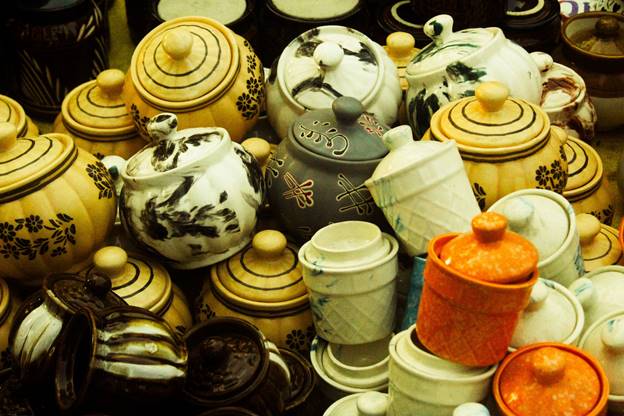
The wide-mouthed vessels were originally used to store grain, sugar, tea leaves, or other dry goods and are relics of a bygone era when people kept their food supplies in large containers. They are made of terracotta, or may be enamelled or glazed, and are 12–24 inches tall and heavy.
Plastic Tupperware, plastic bins and the ubiquitous plastic containers of food bought in supermarket aisles fill modern kitchens. The old ceramic pot, with its earthy weight and handcrafted quality, is an antidote to this plastic world. It brings the kitchen to life with a touch of antiquity and a sense of the elements, of earth and fire.
These jars may be embellished with simple geometric designs or with natural elements such as leaves, flowers or repeating spirals. The glaze has almost certainly aged unevenly, resulting in subtle colour variegation that is impossible to recreate. Over time, these jars developed hairline cracks in the glaze, a characteristic known as crazing, which collectors consider desirable.
These jars will not absorb coffee beans, tea leaves, or spices and are inert and non-reactive. The material helps control temperature and humidity, thereby maintaining food quality. The Kenya Tea Development Agency (KTDA) black tea will stay fresher and tastier in a cool, dry ceramic container than in any plastic or metal container.
What to Look For
Look for body cracks and chips, not glaze cracks and chips. Finish cracks are OK; structural cracks may eventually cause the jar to split. Avoid using older jars with lead glazes on the inside surfaces unless they have been tested for lead content or are used only for decorative purposes. Modern lead-testing kits are inexpensive and available online.
7. Kikoy
Kikoy (or kikoi) is a handwoven, very thick cotton blanket or wrap, traditionally worn by men in coastal Kenya. Kikoy is made from double-woven cotton, with two layers bound together, making it extremely warm and long-lasting. Traditional colours include red, black, white, blue, and orange, and the designs draw on Swahili and Arabic motifs.
Kikoys hold great cultural value in coastal Kenya and Zanzibar. Artisans weave them on narrow looms, typically in small cooperatives that have existed for centuries. Vintage kikoys made before the machine-weaving era display the signature imperfections of hand-loomed fabric, such as minor variations in stripe width, minor irregularities in the weave, and a texture that cannot be reproduced on a machine.
You can use a vintage kikoy as a bath towel, a light afternoon blanket, a decorative throw on a sofa, or a casual beach wrap. The more you wash it, the softer it will become, and a vintage kikoy will have been softened by years of use.
What to Look For
Kikoys are double-woven cotton and much heavier than modern kikoys. The stripes should be slightly wavy rather than perfectly straight; this indicates machine use. Older kikoys might have a few small mends or patches; this shows loving use, not a fault. Fraying edges are OK as long as they are stable.
8. The Wooden Salad Bowl
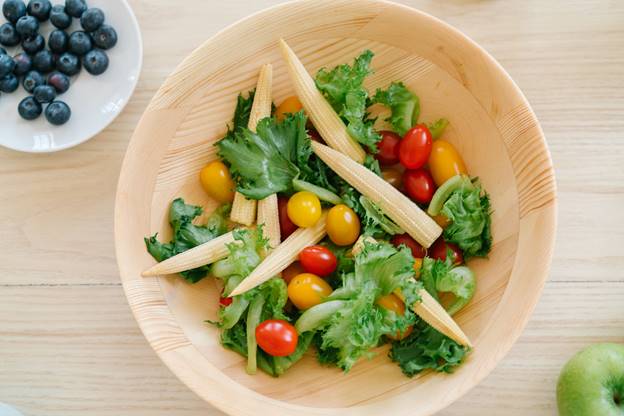
A bowl, usually of wood, somewhat bucket-like but deep and wide, with gracefully curved sides. They are usually carved from mvule, muhuhu, or mahogany, which are dense hardwoods that produce rich, fragrant shavings when worked.
Modern kitchenware is plastic, metal, and mass-produced ceramic. The opposite is a handmade wooden bowl, organic and certainly one-of-a-kind. Unlike other bowls, each is unique in its grain pattern, the shape of its curve, and the placement of knots; a signature piece for any kitchen. In western Kenya, people made these bowls to pass around as a sign of generosity and for communal eating. Bringing a wooden salad bowl to the table is a modern-day expression of sharing and hospitality.
The colour of wood darkens, and the grain becomes more prominent as it ages. An old, used salad bowl, when oiled with coconut or linseed oil now and then, will acquire a warm, rich patina that will be the envy of any new salad bowl. Soft scratches from knives and serving utensils add texture and hint at the meals it has served.
What to Look For
Look for cracks in the joints or in the wood itself. Test the wood for rancidity. Do not use it if it is rancid. A good bowl should have no sharp splinters and be smooth to the touch. Watch for regular oiling, a soft sheen, and a smooth surface.
9. Sterling Silver or Silver Cutlery
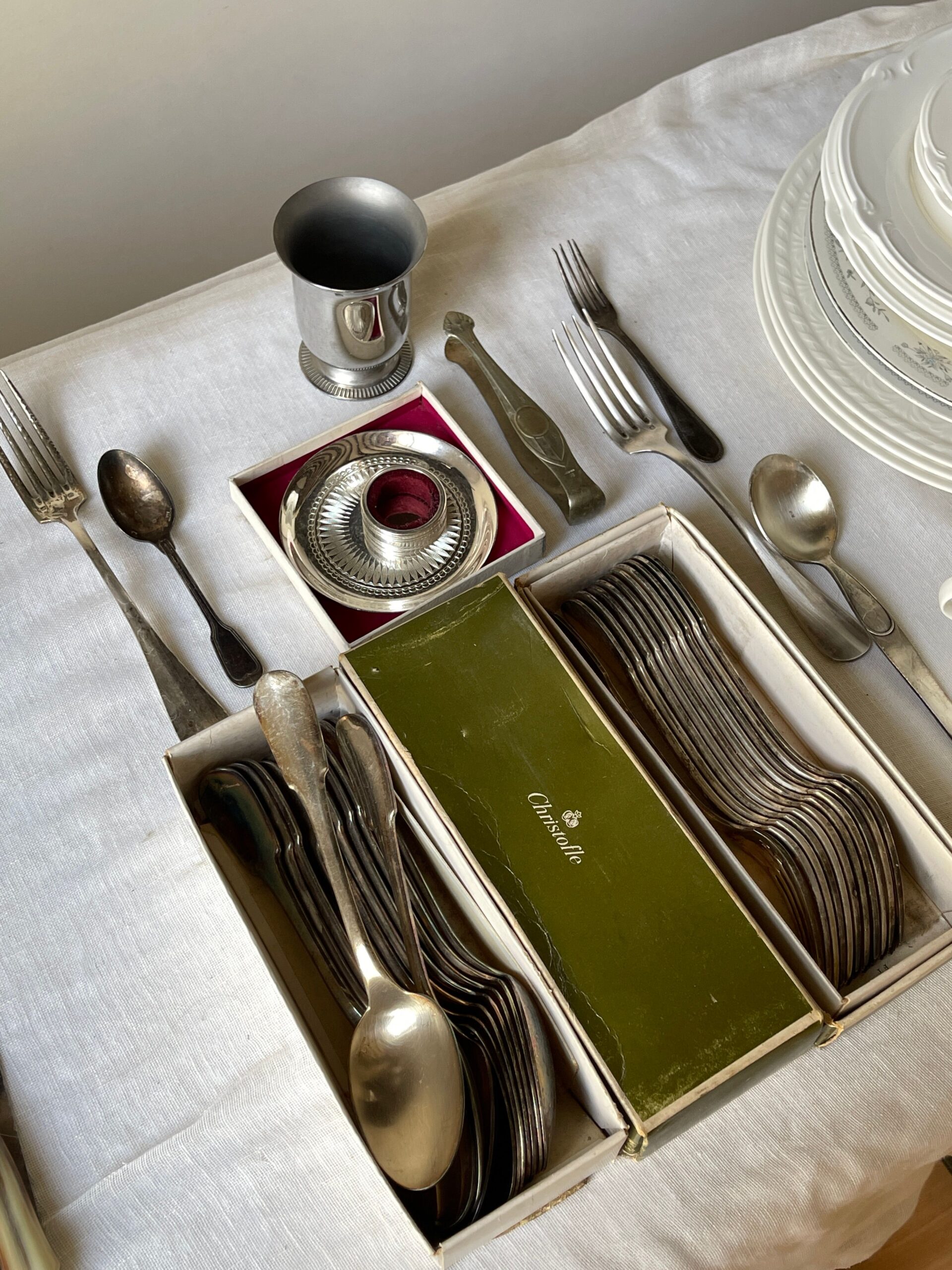
Intricate table-service cutlery, such as fish knives, soup spoons, serving forks, butter knives, and sugar tongs. These may be colonial or from just after independence, when silver plate was a feature of a Kenyan household if they could afford it.
High-quality sterling silver and silver-plate jewellery are not only investments, but also decorative pieces. In addition to weight, the cutlery has a silvery sheen from its silver content, which gives a nice warm glow that stainless steel does not. With decades of polishing and wear, silver develops a soft patina of micro-scratches that gives it a velvety look. You can’t create this patina artificially.
Vintage silver cutlery has a sense of prestige and elegance in vintage markets. But perhaps more importantly, it comes from a design period when design and function were considered equally important. Handles are sometimes weighted for balance, and tines are precisely spaced. Many of the vintage silver items show marks, which are tiny stamps that show purity, maker and year, which are not found on stainless steel items.
What to Look For
EPNS is a high-quality silver plate, electroplated with nickel silver. Wear test: If the silver plate is worn, a shiny layer of the base metal will be visible underneath. More intricate patterns are preferable to plain patterns.
10. Handwoven Sisal Basket
A big, soft, spiral basket of the natural fibre, sisal. Women in rural communities throughout Kenya weave these baskets, a tradition passed down through generations. Making each basket can take weeks, if not months. They dry the fibres, dye them (usually with natural colours: brown with onion skins, black with charcoal, or ochre with clay), and coil them into a wicker basket of amazing strength and flexibility.
Vintage market traders in Kenya are just beginning to enjoy the market for these baskets; they are among Kenya’s most advanced indigenous technologies. The coiling method makes a basket by wrapping a long piece of sisal fibre with smaller dyed fibres, then stitching it to the coil beneath to create a sturdy, flexible basket. No glue, wires, or modern tools are used.
Evidence of weaving in vintage baskets includes small irregularities in the coil, differences in stitch width, and some variation in dye application. They are not flaws, but the signature of the hand of man. This basket was not made, but woven; it was made with care and intention.
The large sisal basket ranks among the most useful vintage items to purchase. Use it as a laundry basket. Keep it in the living room for firewood. Use it to store onions and potatoes in the kitchen. Use it as a wall hanging or decorative art. Use it to collect all the rainwater at the front door.
What to Look For
Check the quality of the weaving. Do the stitches line up? Is there no space between the coils? Look for dye fading. Natural dyes will fade to soft, muted colours. These are gorgeous but can also signal age. Ideally, the best baskets should be flexible enough to roll up when empty yet strong enough not to collapse.
Most bedrooms are laid out in reverse: we select colours for how they look in daylight, decorate our rooms symmetrically, and pile on decorative items to make them look amazing on arrival, then ask ourselves why we can’t get a good night’s sleep. That takes away the bedroom’s one duty: to help you sleep.
The bed.
The most critical item in the bedroom is the bed, yet it’s often overlooked. People will fork out lots of money for a sofa, which they spend an hour on at night and will be tempted not to put any money into the surface they spend a third of their lives on. Even a simple room will provide a good night’s sleep if the bed is right.
This begins with the mattress, then a sturdy frame that provides firm support for the mattress, prevents annoying squeaking that keeps a light sleeper awake, and contributes to the overall look of the room. Low platform beds create a relaxed, grounded atmosphere, whereas upholstered frames with high headboards add softness and presence. If your bed mattress is more than eight years old, it’s time to begin shopping.
The ideal pillow should match the contour of your neck: side sleepers should have thicker pillows, back sleepers medium ones, and stomach sleepers thin ones. When it comes to sheets, anything higher than 400 in thread count is more of a marketing ploy.
Master the Light
Light is the strongest cue for sleep. Street lights, early sunlight and glowing electronics can upset our internal clock, causing us to lose track of time as it grows darker and then begins to grow lighter with daylight. A glimmer of street light on your face at 2 am will mess up your sleep pattern. Don’t spend the money on curtains that don’t go up high enough, wide enough or long enough to block light from the edges. Cover with sheer curtains to soften daylight and blackout curtains at night.
LED lights, charging LEDs and bright alarm clocks quietly illuminate the darkness. Cover or remove them. As far as lighting is concerned, artificial overhead lighting in a bedroom is a crime. You should have layers of lighting, including a side-table lamp for reading, accent lighting for ambience, and dimmers for all lights. Use only warm bulbs. If it’s cooler, it’s morning, not night-time. A sunrise alarm clock is the most helpful sleep investment you can make. It eliminates the adrenaline rush of an ordinary alarm and gradually escalates to natural light, rather than waking you with the shock of an ordinary alarm.
Neutral tone with a few colour accents.
As with other colours, the bedroom’s colour selection can have a profound impact on mood, and one thing is certain: calm must always take priority over drama. Soft, muted colours such as sage green, warm taupe, muted blues, stone, sand, and creamy whites help reduce visual stimulation and add comfort. These colours are a safe choice for the brain and are associated with lower blood pressure. Avoid bright red, orange, and yellow. They stimulate alertness and arousal, the exact opposite of what a room focused on sleep should be.
Texture is as important as colour. Use natural materials such as linen, wool, brushed cotton and wood to add warmth and depth without clutter. A layered bed adds richness to the room and makes it inviting. Large pieces, such as an upholstered bed frame, will give the room presence without cluttering it.
Clear the Clutter
Visual chaos increases cortisol and keeps your brain constantly stressed, even during relaxation. An overstuffed bedroom can distract and overstimulate your nervous system. Your bed should be the focal point, a sleep haven. Maintain an uncluttered environment. Only a lamp, a glass of water and the book you are reading should be kept on your bedside table. Your brain will think your night table is your desk if it looks like one. It is crucial to have storage, but built-in storage is best. Everyday items are out of sight with under-bed storage, closed cabinets and built-in closets.
Open shelving can be effective, but it is more difficult to maintain over time. Things tend to accumulate dust and clutter. If you choose to use shelves, don’t overfill them and be sure they are deliberate. It takes five minutes before bedtime to clear surfaces, which signals to your brain that the day is coming to an end. Get up and make your bed every morning to establish a sense of order and carry this into the mood of the day and productivity.
Air and temperature
One of the less-discussed sleep factors is temperature. The body always cools down to sleep, and an overly warm room can make this difficult. The recommended bedroom temperature is 18-20°C (65-68°F), and it should always be cooler than your body temperature. This can be easily managed with a smart thermostat. Air quality is also of paramount importance. Poor air quality can make you feel unwell, with a congested nose, dry lips, or tiredness when you sleep. If you have pets or allergies, you may have a few issues with your sleep, which can be solved by using an air purifier with a silent operating mode. Humidity is also very important for a comfortable night’s sleep, since it should neither be too moist nor too dry.
The aroma has a surprisingly strong effect on relaxation. Soft, soothing fragrances can help create a relaxing atmosphere and encourage your mind to unwind at night. Again, consistency is key: scents should be light and used only at night. Over time, this becomes an automatic sleep cue. A gentle scent, such as an essential oil diffuser, dried lavender, or a candle, will do. Just don’t overpower the room; your sleeping space should be fresh, but not scented.
Turn the TV and phone out
A TV set in front of the bed or a mobile phone on the bedside table can turn the bed into a workstation for work and entertainment. This makes it harder to fall asleep and keeps the mind active. If you cannot get rid of the TV altogether, at least keep it in a TV cabinet with doors that close. Keep your phone away from the bed, either in another room or across the room. Avoid screen time for 1 hour before bedtime. You’ll find that these simple tweaks can significantly affect how quickly your mind shuts down.
The placement of furniture
An organised bedroom design is luxurious because it supports a simple way of living. The route from the door to the wardrobe and bathroom, and then to bed, should be smooth and not require squeezing around furniture. Place the bed in the middle of the main wall, and, if possible, place a bedside table on the left and one on the right. The bed should be backed by a firm headboard or a wall, providing a sense of security. Only put in arm’s reach of the bed what is needed; everything else should be two steps away.
If your bedroom is smaller, place the bed against the longest wall to create more space. If possible, put it in the middle, as that will create a sense of calm and order. Multi-functional furniture, such as a storage bed with built-in drawers, is ideal for maximising space without cluttering the room with too many items.
Plants
Indoor plants can add colour, texture, and tranquillity to a space that artificial plants cannot match. Certain plants are especially helpful for sleep: snake plants purify the air at night and release oxygen, while lavender and jasmine are relaxing. Snake plants, spider plants, and other low-maintenance plants will not take over a small bedroom.
Room for the Senses
Top-quality bedroom style does rather more than catch the eye. Think about what the room sounds like, feels like and even smells like. Dark drapes absorb light and deaden sound. Acoustic comfort and warmth are enhanced with upholstered furniture, layered rugs and quality bedding. If you live in an area with a high noise level, a sound machine can be helpful. To avoid full wake-ups on the nighttime route to the bathroom, either use a low light or a motion-activated floor light.
We live in the best-lit times in human history, yet we feel as far from light as ever. Today, the global lighting market is worth more than USD 80 billion and is set to reach more than USD 100 billion by 2029. We are buying lots of lighting, and we feel it is a way of filling something we perceive as missing from our lives, which are often artificially lit. Before the 19th century, people were outside by the light of nature or by firelight for 80 per cent of their waking hours. In today’s modern world, most of the developed world’s population spends more than 90% of their time indoors.
Circadian rhythms, emotional security, melatonin production, and our bodies’ routines were shaped by the sun’s rhythm and the cosy glow of flame. That’s been replaced by the dull, impassive bleat of overhead LEDs. The clean lines, stark white walls, polished concrete, and large glass doors are an architectural achievement and, at night, a sensory-deprivation chamber. And it’s not simply a matter of buying another lamp to solve the problem. It requires a reorientation towards living in space, a philosophy.
The Architecture of Coldness.
Minimalism, simplicity and honesty in architecture are the hallmarks of a hard-edged room, the signature style of our time. Its qualities are undeniable: clarity, spaciousness, and visual calm. However, hard surfaces, such as glass, steel, polished stone, and smooth drywall, do not absorb light. They bounce light around the room in an uncoordinated, raucous stream. The outcome is a bright, hollow, noisy yet empty space; the effect is known as light glow. Light scattered randomly across hard surfaces produces competing lights and shadows that can irritate the eyes and overload the nervous system. Despite the non-literal sense, space is a hall of mirrors; a reflection of our restlessness, or our restlessness reflected at us. The colour scheme of today’s modern design exacerbates the issue. The calm, blank walls are white and grey and can be harsh judges of light. They make high-Kelvin bulbs feel colder and make unshaded fixtures even harsher.
How We Lost Warmth
Fire has been used to light homes for thousands of years, either through open fireplaces, candles or oil lamps. Firelight is the first of the warm lights, ranging between 1800K and 2000K, and is a deep, warm amber light that softens edges, enhances skin and relaxes. It was the irregular, alive, stuff that light in a modern steady state cannot match in our peripheral vision. Gas lighting was the first move towards cooler lighting in the early 19th century. It was a return to warmth that made Edison’s incandescent bulb so popular: it was the convenient, safe form of firelight. Incandescent lamps were the standard for more than 100 years, and our homes had a minimum of heat.
Next came the efficiency revolution. The unpleasantly greenish hue of fluorescent lighting was first imposed in offices and schools within institutional buildings, where people did not feel at ease. Early LEDs were also cold, typically producing a colour temperature of over 5000K, the colour of a cloudy midday sky. Although LED technology has progressed to make it possible to achieve a warmer temperature, the efficient ways of thinking remain. Even though we purchase bulbs based on the number of lumens per watt, not the emotional effect. Engineering drawings are still used to create lighting plans, and planning based on human experience is still not a thing of the past. We can make it warm, but we have lost the purpose.
The Science of Light and Human Biology
The human eye contains intrinsically photosensitive retinal ganglion cells that help us see and also help maintain our internal clock. These cells respond to blue light and help inhibit the production of melatonin in the brain’s suprachiasmatic nucleus. This is how light helps keep us awake. It is also the way that cold blue light colours can lead to anxiety, alertness and an inability to relax. Melatonin suppression starts at just 100 lux, which is the light intensity of a typical table lamp. Melatonin is delayed by up to 90 minutes by exposure to 4000 K light 4000K in the evening. In controlled studies, warm light (2700K) has been found to decrease stress hormones, and cool light increases the level of cortisol. The decision to use a 5000K bulb in our living room is not a design decision; it’s a physiological intervention that could affect sleep, increase stress, and reduce the ability to get a good night’s sleep.
The Psychology of Warmth
Warm light is neurologically associated with safety, intimacy and trust. This connection is deeply rooted in our evolutionary history: fire was a means of survival, community and marking the end of the day’s work. Cool light, on the other hand, was linked to vigilance, danger and exposure that could only occur in the bright light of the midday sun on the savanna, when predators could see them and they had nowhere to hide. That is why there is warm lighting in every hospitality space, such as hotels, restaurants and spas. They are not just going along with the flow; they’re responding to an instinctual emotional reaction. Our nervous system calms when we enter a room at 2700K, with layered shadows and glowing accents. Our nervous system is alert when we enter a room with flat, overhead light at 4000K. More than 70% of designers surveyed by the American Society of Interior Designers listed lighting as the top factor in establishing a mood for a space, and a majority rated the warm colour temperature as one of the most important factors for a residential project.
The Philosophy of Layering
Layered lighting is more than a method; it’s a philosophy about the relationship between people and space. It doesn’t treat light as a solution to spray around a room like paint, but as a variable medium that must be controlled depending on the activity, time and mood. Ambient lighting is the basic illumination that serves as the foundation for architects. It’s the functional level that allows us to move around space safely. If the subject is set in a hard-edged room, ambient lighting is frequently brought in through a recessed can or one of the light fixtures located in the centre of the ceiling. The important thing to remember is that light in the environment must be the least important line of your lighting system, not the most. It should supply sufficient light to see the room, but not so much that other, more interesting and warmer light sources are needed to fill the remainder of the light.
Task lighting is functional, designed for specific activities. Task lighting can be very useful in a well-designed room, adding a focal warmth and contrasting with the ambient light layer, creating deliberate, inviting pockets of light. Accent lighting is the decorative element, for example, illuminating architectural features, art or textures. This is the layer that makes the room come alive, adds visual interest and helps to direct the eye through the room. Even the most stunning room can look uninteresting and unfurnished, like a showroom, without accent lighting.
Mathematics of Layers.
Light levels are quantified by a unit called illuminance, measured in lux (lumens per square metre), which is the unit used by professional lighting designers. The Illuminating Engineering Society (IES) provides guidelines for the minimum desired levels for residential areas:
Renting Area
Ambient Lux
Task Lux
Accent Contrast Ratio
Living Room
50-100
300-500
3:1 to 5:1
Kitchen
100-150
500-750
5:1 to 10:1
Bedroom
30-50
200-300
3:1 to 5:1
However, the contrast ratios are truly the key to this wisdom. If you have a 5:1 ratio between your task light and ambient light, that means your task light is five times more intense than the ambient light. This contrast is what gives a cosiness, a sense of warmth and shelter, a pool of light surrounded by muted shadows. These ratios are particularly important in a hard-edged room, since reflective surfaces tend to reduce contrast. The shadows and highlights can really make or break the layered look and feel of a room, so it’s important to create them.
The Dimmer
The global market for dimmable LED bulbs was estimated at more than 2.3 billion USD in 2020 and is expected to grow by 8.2% annually until 2027. However, a 2018 Statista survey found that more than half of homeowners in the United States were not using any dimmer switches in their homes. The first and most inexpensive yet effective way to soften a hard-edged room is to use a dimmer. The shadows deepen, reflections decrease, and the room feels more intimate and softer.
Other Lighting Layers
Lighting a wall with light on the floor is one of the most time-tested lighting strategies when decorating. It helps make the ceiling appear higher and provides a warm glow that highlights texture, softens hard angles, and creates a sense of movement. Uplighting can change the architecture in a room, especially in rooms with high ceilings or exposed structural elements. A beam of warm light along a concrete pillar or a stone fireplace wall makes the structure feel warm and creates a visual anchor. The light plays with the material, highlighting the characteristics of its surface and softening its industrial appearance. The U.S. decorative lighting market, which comprises floor lamps, table lamps and sconces, reached a value of more than $12 billion in 2022. This indicates that consumers are already looking for such secondary light sources, although not necessarily in a smart way. The most important part is intentional placement; all of the lamps will have a purpose other than to light the way.
Elevated task lighting is not only functional but also emotional. A reading lamp placed beside an armchair gives a visual invitation to sit, linger and be comfortable in a warm, golden pool of light. An island pendant fixture creates a focal point in the kitchen.
Ambient lighting in a hard-edged room can be an antidote to the impersonal light that abounds. It brings human scale to a monumentally large area, which may otherwise be stark and uninviting. When a room has warm task light but cooler ambient light, the resulting contrast gives a sense of a dynamic, living room. A translucent or perforated shade provides interesting textures of shadows on the ceiling and walls, a visual texture that helps to soften the hard edges of the room. In contrast, a solid shade will focus all light into the pool, which will give a more intimate and focused look.
Light sources can be placed on top of bookshelves, in cabinets, under furniture, or behind plants; this is one of the best techniques, though it is not often used. These lights are concealed and create a glow as though the room itself is glowing. Hidden lights are especially beneficial in a hard-edged room, as they add depth and mystery. Installed on the back of a TV unit or under a bed frame, a strip of LED tape will give a floating appearance that makes the room look softer. A small light in a glass-fronted cabinet makes the contents glimmer; it provides the accent layer that brings personality and warmth. Hidden lighting is very inexpensive and is controlled by a remote.
Meditation, exercise, and nutrition are often thought of as practices we do ourselves. Self-care is also about the environment, however. The mental state is constantly shaped by the space we occupy, whether awake or asleep. Lighting is one of the most potent environmental factors we have at our disposal, yet it is often the least considered. For example, the average person will experience 3,000 to 5,000 changes in light in a day, from the light of a cell phone screen to the more intense light in an office to the softer light of a living room lamp. All these transitions leave a mark on the nervous system, modify cortisol levels, affect melatonin production, and influence mood. Beautifully lit rooms are not a luxury but a daily routine of mental health care.
Cool lighting
Cool lighting throughout most of the 20th century was synonymous with progress, modernity and efficiency. The clean, objective, rational lighting atmosphere of 4000K and higher, as in fluorescent offices, hospital corridors, and supermarket aisles, emphasised cleanliness, objectivity, and rationality. In a sense, choosing warm light was choosing the past. We haven’t yet come to the end of that cultural inheritance, though. With our homes adorned with mid-century pieces and artisan ceramics, we still leave the overhead lights on full blast. We tend to believe that if something’s visible, it’s better; if it works rationally, it’s better; if it’s comfortable, it’s better. This is slowly changing, though. As the wellness movement, the development of biophilic design, and the growing recognition of circadian health are driving a more sophisticated understanding of light, we are now seeing a more nuanced appreciation of it. But this hard-edged room will not disappear; our relationship with it is changing. We’re finding we can have all that and the warmth of old light too. There’s only one thing that’s required: intention.
The next step in lighting for the resident and building is circadian lighting practices that automatically modulate the colour temperature and intensity of the light over the course of a day to optimise natural biological rhythms. The light is set to 5000K in the morning to help promote alertness. Come evening, it’s lowered to 2700K to promote relaxation and sleep. Sales of circadian lighting are projected to increase from $500 million in 2020 to more than $3.5 billion by 2028. You don’t have to pick between warmth and function; you can have both a warm and a functional side at different parts of the day.
A minimalist kitchen is one in which every object, surface, and design element has its place. Minimalism in kitchen design is about keeping things streamlined and clean, retaining only the essential elements. People are increasingly seeking spaces that aren’t overwhelming because, as homes become smaller and lives busier, they want a more relaxing place to live. Even if you don’t realize it, a kitchen cluttered with mismatched appliances, cramped counters, and full cabinets can cause stress. By contrast, a minimalist kitchen has a certain visual quiet, organized before you open the first drawer.
The kitchen layout and elements of design.
A minimalist kitchen requires a solid foundation and a set of rules to guide the creation of that foundation before selecting a type of cabinetry or countertops.
Determine the purpose of your kitchen.
Great minimalist spaces begin with a clear purpose. What do you do in your kitchen? Do you cook for the whole family and enjoy baking, or do you cook every day for speed? Do you need a separate coffee station, or should it be used for meal prep?
Minimalism isn’t a one-size-fits-all approach; it’s about designing around your actual habits, not an idealized version of what you think you’re supposed to do when preparing meals. If you like to bake a lot, you’ll need different storage and counter space than someone who primarily reheats dinners. If you know what you want to do, you won’t remove what you’ll need or add what you won’t need.
Clean and organize countertops and cabinets
This is the most noticeable step toward making your kitchen minimalist. The countertops should be almost bare, with just a coffee maker or a knife block. The same holds for cabinets: organize like items together, eliminate duplicates, and discard broken, outdated, or unused items that are more than a year old. A good principle to follow is the “one in, one out” rule. For every new kitchen gadget you add, remove another. Getting rid of clutter isn’t something you do just once; it’s a practice that helps ensure the space doesn’t gradually pile up with unnecessary items.
Pick a Simple, Cohesive Color Palette:
Minimalist kitchens typically feature a limited color palette, with tones of white, neutral wood, and accent colors such as matte black or soft sage. This is not boring; it’s about achieving visual serenity. When colors and finishes flow together, the eye is not overloaded, which is one reason minimalist kitchens have a serene atmosphere.
One dominant neutral tone, such as white, cream, or light gray; one secondary material tone, such as natural wood or stone; and one accent material tone used sparingly, such as in hardware, a backsplash, or a single statement material tone. This is why it’s important to stick to a simple color scheme so the entire room appears purposeful rather than cluttered.
Form follows Function.
All additions to the kitchen should be considered first by asking: Will this improve the kitchen’s usability? While a beautiful pendant light is nice, it is also important to have adequate task lighting. It may be a beautiful design, but an open shelf will only be neat if it contains items you use, rather than those that are simply pretty but serve no purpose.
But that doesn’t mean minimalist kitchens lack personality; a single piece of art, an interesting light fixture, or a beautiful bowl of fruit will add warmth. The principle is that only a few items are carefully selected and found useful, rather than many items vying for a person’s attention.
Design an Efficient Kitchen Layout
Minimalism can be put to good use in layout. The old “kitchen work triangle” between the sink, stove, and refrigerator still works well: If you’re working in a kitchen, you don’t want to have to cross long distances between your three primary work areas.
Use zones around the triangle, a prep zone around the sink and cutting boards, a cooking zone around the stove, and a storage zone around the food and dish storage area. Keeping tools close to the job site minimizes wasted motion. Spices by the stove and cutting boards by the prep area help maintain an efficient, quiet environment, even during a hectic dinner rush.
Utilize natural light
Lights are integral to how the kitchen looks and feels, making it appear larger and more serene. Minimalist kitchens tend to be lighter and more open, with many windows to let in as much light as possible, and often use lighter colors to reflect rather than absorb light. If your kitchen is over a window or in close proximity to a prep area, be sure not to clog the window sill or the window itself with window treatments or clutter.
Choosing the Right Materials, Cabinets, and Appliances
Now that the principles have been established, the next stage is to apply them to the physical selection of cabinets, surfaces, and appliances that will make up the room. Less is more. In a minimalist design, these elements should feel purposeful: every element must be built to last a lifetime of work.
Flat-Panel Cabinets
The flat-panel cabinets, also known as slab or handleless cabinets, are a hallmark of minimalist kitchens. They feature uninterrupted surfaces without raised panels, molding, or ornate details. In many minimalist kitchens, handles are the next to vanish: many such kitchens use a push-to-open mechanism or integrated finger pulls. The style works especially well because it allows other features, such as a striking countertop or warm wood tone, to be seen, rather than the cabinets crowding them out.
Quality Countertops
In a minimalist kitchen, the materials you choose take center stage because there are few decorative elements, so they must be high quality. Quartz has become a popular option for its durability, low maintenance, and uniformity, making it ideal for busy homes. Natural stone offers unsurpassed depth and character but may require more maintenance. Wood countertops add warmth and texture to an otherwise sleek, cool material palette.
Regardless of the material you select, the idea is to find something that will work as a focal point, is not a show-stopper, is durable enough to use every day, and is pleasing enough that it doesn’t need embellishment.
Inbuilt appliances
Nothing undermines a pristine kitchen line more than a mismatch with the refrigerator or a large dishwasher that takes over the cabinet run. Appliances such as refrigerators, dishwashers and even microwaves will be built-in or integrated into the cabinetry, with panels that match the cabinet fronts.
This creates a sense of spatial continuity throughout the kitchen and emphasizes the underlying minimalist principle of visual quiet. While it will cost more than stand-alone appliances, it will offer many homeowners the added value of a unified design.
Open Shelving vs. Closed Cabinets
Today, open shelves are a popular addition to the minimalist kitchen, providing an open, uncluttered space that also allows easy access to everyday dishware. But if you’re interested in open shelving, you need to be disciplined about what you put on them, as they showcase everything. It requires good organization and beautiful dishes; otherwise, it’s not going to work.
Closed cabinetry, on the other hand, obscures the inevitable mess of everyday life, such as mismatched containers, bulk items in the pantry, or less attractive but essential tools. For many minimalist kitchens, there’s a balance: a short range of open shelving for items that are used frequently and look good on the shelves, and closed cabinetry for the rest. This combination is up to you and depends on how much you can tolerate seeing and how much time you’re willing to spend arranging.
Durable, Easy-to-Clean Materials
Minimalist kitchens do not require a lot of decoration, nor do they need to include a lot of materials that will fall into disrepair after a short time. Scratches, stains, and wear are much more evident in a pared-back space than in a more decorated and busy space. This means that durability and easy cleaning are not just desirable; they’re essential.
While beautiful, matte finishes are more prone to fingerprints and water spots than glossy ones. For the kitchen, choose scratch-resistant countertops, wipeable cabinet finishes, and stain-resistant floors, all of which help maintain a cool, clean appearance and make life easier.
Selecting a Smaller Number, But of Higher Quality Kitchen Essentials
Minimalism is not the doctrine of the absence of resources; it is the doctrine of the presence of resources. A minimalist kitchen may have just three good knives that will satisfy all the needs, instead of having ten mediocre knives. In the same way, when it comes to cookware, small appliances and tools, fewer items that are well-made, versatile and have a long lifespan are better options than a slew of specialized gadgets that are used only infrequently.
Styling a Minimalist Kitchen Without Losing Warmth.
The most common misconception about minimalist kitchen design is that it should be cold or sterile. In fact, a tastefully designed minimalist kitchen can be as welcoming and inviting as any other type of kitchen; it’s just that it creates the same warmth by selecting a few carefully planned items instead of filling the space with decoration.
Warm Lighting for a Welcoming Atmosphere.
Lighting can significantly shape the atmosphere of a space. A well-designed kitchen can feel clinical with overhead cool lighting, but warm, layered lighting instantly makes the room feel more inviting. Mix in different light sources: Use recessed lighting for the prep areas, warm-toned pendant lighting over an island, and under-cabinet lighting for a soft glow over the counter spaces at night. Dimmable fixtures are particularly beneficial because they can create a bright, efficient kitchen space when you’re cooking and a soft, cozy environment for dinner or a late-night snack.
Use of natural materials, such as wood and stone.
Natural materials are a great way to counteract the potential plainness of a minimalist kitchen. When a space is too homogeneous, a wood cutting board, open wood shelving, or a stone countertop with its visible veining can add texture and organic warmth. They age beautifully and get better with age, something which manufactured surfaces cannot compete with.
A limited colour palette with subtle contrast.
A minimalist kitchen is best rendered with a limited color palette, yet it’s important not to be “flat” with such a palette. A hint of contrast, such as warm white cabinetry with a deep walnut island or matte black fixtures with soft cream walls, provides depth and visual interest without detracting from the overall harmonious and subtle atmosphere. It’s contrast that matters, not one that is distracting.
Plants and herbs that can be grown indoors.
Nothing is more inviting in a kitchen than lush greenery. A few potted plants on a windowsill, or a single trailing plant on a freestanding shelf, will liven up a formally clean room with a touch of organic color. They also offer a practical advantage; fresh basil and rosemary within reach make cooking a bit more special and tie the decorative to the room’s use.
Minimal décor that complements the space.
Minimalist kitchen decorating does not mean no decorating at all; it’s simply a matter of making sure that every decorative element is deliberate. One painting, a lovely ceramic vase, or an interesting light fixture can serve as a subtle focal point for a room without dominating it. The secret is to focus on one or two significant items rather than adding many small, trifling pieces to the surfaces. If in any doubt: Less is more; 1 striking object works better than 5 smaller ones.
Beautiful organization of kitchen utensils, spices and pantry goods
The items used in a kitchen, even the mundane ones used every day, can add to the warmth and style of a kitchen. Glass or ceramic containers can be used to store pantry staples such as flour, rice, and pasta, making them look like design elements rather than necessities. Having spices in neat, tidy jars or a small collection of regularly used utensils in a crock near the stove infuses a homelike, intentional touch and demonstrates that a minimalist kitchen organization system can be both appealing and useful.
Keeping a Minimalist Kitchen Day-by-Day
You might have a minimalist kitchen, but maintaining it that way is another matter. Even the best-laid plans can fall apart if a few habits aren’t followed consistently.
Keep Countertops Clear
The simplest good habit to keep a kitchen from getting cluttered is to do a nightly cleanup and clear the countertops, or at least most of them, before you go to bed. Things tend to pile up during the day with mail, mixing bowls, and miscellaneous items, and a final sweep at the end of the day ensures that this doesn’t become a problem.
Organize Cabinets Regularly
As with countertops, cabinets should be inspected periodically; every few months is a good schedule. Set aside a few minutes to remove any items that are or were out of date, unused, or duplicated. This is a more consistent and manageable form of light “cleaning” than the once-a-year deep “declutter,” and helps cabinets function as intended.
Don’t keep appliances that are not used daily.
All kitchen utensils don’t have to be on the counter or in the key cabinet. Items used occasionally, such as a stand mixer, an air fryer, or a waffle iron, should be stored in a pantry, lower cabinets, or even a garage shelf, and used as needed. Use the most easily accessible space for the few items you need to use daily.
“One In, One Out” Rule
This simple rule is one of the best kitchen organization strategies a minimalist can use for long-term organization: “One in, One out.” When it comes to mixing bowls, a brand-new set means the odd ones out. New knife, old dull knife donated or thrown. This is a natural way to keep the volume of kitchen items under control without having to make major kitchen cleanouts once in a while.
Clean as You Cook
Rinsing bowls between tasks, cleaning counters while cooking something that’s bubbling, and putting away ingredients as soon as you’re done, etc., prevent things from getting messy in the kitchen when preparing meals. It also makes post-meal cleanup much less frightening, since the majority of the job is done before you eat.
Buy intentionally
Trending kitchen gadgets abound, and it’s easy to collect one-use-only items that then sit in your drawer for months on end. When considering purchasing a new kitchen tool or appliance, ask yourself whether it truly addresses a relevant and recurring issue and whether the same result can be achieved with an existing tool just as well. At the core of functional kitchen design is deliberate buying, where everything is included for a reason; a functional one, that is, not because it looked like a great idea to put in a store display.
Your cart
Cookie Consent
We use cookies to improve your experience on our site. By using our site, you consent to cookies.
Contains custom information set by the web developer via the _setCustomVar method in Google Analytics. This cookie is updated every time new data is sent to the Google Analytics server.
2 years after last activity
__utmx
Used to determine whether a user is included in an A / B or Multivariate test.
18 months
_ga
ID used to identify users
2 years
_gali
Used by Google Analytics to determine which links on a page are being clicked
30 seconds
_ga_
ID used to identify users
2 years
_gid
ID used to identify users for 24 hours after last activity
24 hours
_gat
Used to monitor number of Google Analytics server requests when using Google Tag Manager
1 minute
_gac_
Contains information related to marketing campaigns of the user. These are shared with Google AdWords / Google Ads when the Google Ads and Google Analytics accounts are linked together.
90 days
__utma
ID used to identify users and sessions
2 years after last activity
__utmt
Used to monitor number of Google Analytics server requests
10 minutes
__utmb
Used to distinguish new sessions and visits. This cookie is set when the GA.js javascript library is loaded and there is no existing __utmb cookie. The cookie is updated every time data is sent to the Google Analytics server.
30 minutes after last activity
__utmc
Used only with old Urchin versions of Google Analytics and not with GA.js. Was used to distinguish between new sessions and visits at the end of a session.
End of session (browser)
__utmz
Contains information about the traffic source or campaign that directed user to the website. The cookie is set when the GA.js javascript is loaded and updated when data is sent to the Google Anaytics server
6 months after last activity
SourceBuster is used by WooCommerce for order attribution based on user source.
Name
Description
Duration
sbjs_session
The number of page views in this session and the current page path
30 minutes
sbjs_udata
Information about the visitor’s user agent, such as IP, the browser, and the device type
session
sbjs_first
Traffic origin information for the visitor’s first visit to your store (only applicable if the visitor returns before the session expires)
session
sbjs_current
Traffic origin information for the visitor’s current visit to your store
session
sbjs_first_add
Timestamp, referring URL, and entry page for your visitor’s first visit to your store (only applicable if the visitor returns before the session expires)
session
sbjs_current_add
Timestamp, referring URL, and entry page for your visitor’s current visit to your store
session
sbjs_migrations
Technical data to help with migrations between different versions of the tracking feature