
The vintage market isn’t about the past. It’s not about buying something new; it’s about buying something that’s well-made; it’s about purchasing something that has stood the test of time; it’s about buying something that’s well-worn. A small part of the soul of Kenya is in each of these objects. Here are 10 stories about objects. They’re more than functional or beautiful; they are cultural artefacts that take you back in time to Kenyan history, craft traditions, and a more thoughtful, slower lifestyle.
When purchasing a vintage soapstone vase, you’re not acquiring a container; you’re acquiring a piece of art. You are in the company of some Kisii spirituality. Put a kanga on your sofa, and you’re embracing Swahili wisdom, right? When you put a meal on an old wooden salad bowl, you’re sharing in an age-old tradition of sharing in common that predates colonialism.
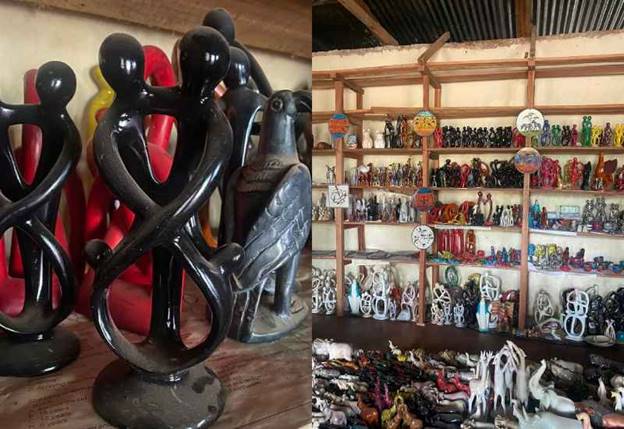
Soapstone Vase, Kisii Stone.
Clay used in Kisii’s Tabaka region is soft, chalky soapstone, which gives these vessels their shape. These vessels are made from a soft, chalky soapstone found in the Tabaka region of Kisii and vary in size from small bud vases to large floor vessels. Artisans handcraft them using centuries-old techniques passed down through generations in Kisii. Quarried from the western hills of Kenya, the stone is very soft when taken from the quarry, allowing it to be carved with a simple knife. After carving, artisans sand it with increasingly fine sand and pumice until it has a silky-smooth, almost buttery texture.
This unique soapstone vase bears the slight marks of the maker’s hand, unlike mass-produced ceramics. Natural veining or colour variations, from creamy white to deep green, ochre, and even reddish, provide a record of the quarry from which the stone was extracted. Older soapstone items may have a more pronounced patina than newer ones. Over the years, handling and polishing have smoothed their surfaces in ways machine-made products cannot replicate. Collectors love old pieces for the ‘aged’ look, faded surfaces, and the natural chemical processes that have taken place in the stone in the presence of air.
Soapstone holds spiritual significance for the Kisii people. Traditionally, small figural carvings and containers made from soapstone were used in blessing and protection rituals. Owning a vintage soapstone object offers a quiet connection to the sacred practices that preceded its arrival in a modern residence.
What to Look For
Examine the carving of the object. Are the lines clear and distinct? Is the symmetry pleasing? The most valuable vintage pieces have intricate carvings, often featuring themes such as geometric patterns, animals, or delicate floral designs, and require exceptional skill.
2. The Kanga-Clad Throw
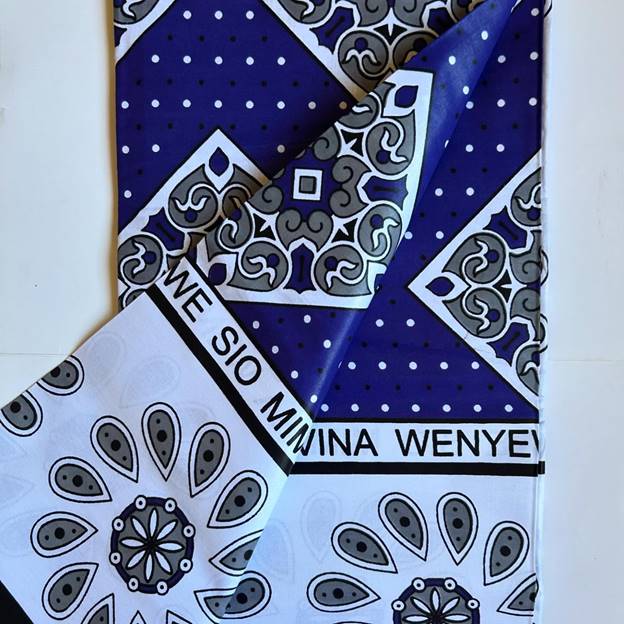
The kanga is not just fabric; it’s a cultural artefact. Since the 19th century, this brightly coloured rectangular cotton wrap, with striking patterns and Swahili proverbs, has been an integral part of life in East Africa. In vintage markets, you’ll find kangas from decades past, their colours mellowed by washing, edges slightly frayed, and occasionally their proverbs worn out and nearly unreadable.
A kanga of this sort carries the history of its previous owner. Every crease, every tear, every patch has a tale to tell. A vintage kanga was probably printed in Kenya, Tanzania, or India, using traditional printing methods now lost, rather than as a fresh print from a Chinese factory. Today, vintage kangas are used in so many ways in contemporary homes! They instantly elevate any sofa when draped over the back. Hung on a wall, they are works of art; laid on a table, they are a storytelling feast. Fold them at the end of a bed for warmth and pattern.
What to Look For
Inspect the material for tears or rips. Older kangas were sometimes made from thicker cotton that has softened over time. Keep an eye out for the jina (Swahili proverb), as the age and content of the jina can make a big difference in the value. Proverbs written in the 1970s and 1980s that contain allusions to politics or historical events are particularly interesting and highly sought after.
3. The Solid-Wood Sideboard
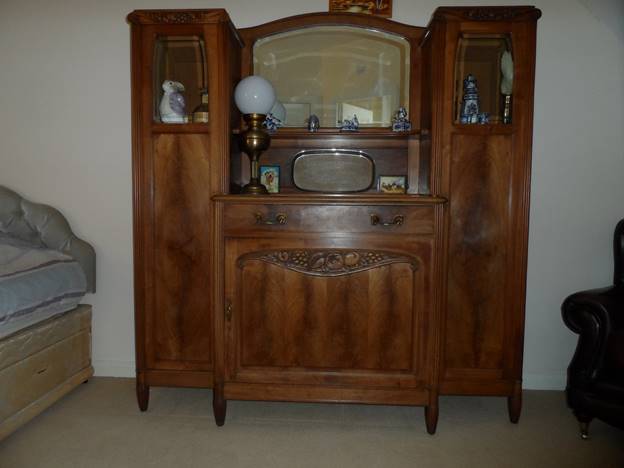
Originating from a time when furniture had to last beyond its owners, the sideboard was originally designed for the dining room. They are mostly made of mahogany, teak or the locally available mvule tree. They have good joinery, unlike today’s flat-pack furniture, which uses cheap dowels and cam locks.
A vintage sideboard is a treasured item whose value lies in its ability to stand the test of time in an age of engineered wood, veneered chipboard and throwaway furniture. The wood is real and dense, having aged for decades, if not longer, developing a patina and depth that new wood cannot match. Over the years, many vintage sideboards show signs of use and abuse, from scratches left by keys to marks from glasses and the countless meals they have held. These are not flaws; they are part of the provenance.
What to Look For
Keep all doors and drawers open. Do they roll smoothly? Are the runners in good condition? Examine the back panel for woodworm holes. The best pieces are intricately carved or feature unusual hardware, such as brass handles with a handsome, aged patina.
4. The Enamel Coffee Cup
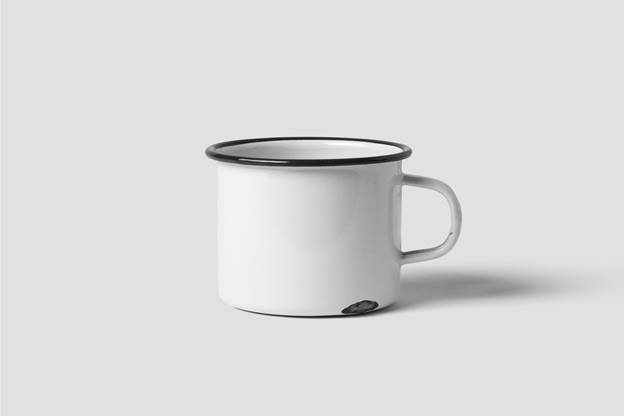
Enamelware is a type of steel that was once common in Kenyan homes, fused with a vitreous enamel glaze. People served chai and kahawa in classic enamel coffee cups, which were white with a coloured rim and sometimes lightly decorated with a floral pattern or the manufacturer’s stamp. The cups are mainly from the 1960s to the 1980s.
These cups date from an era long past in Kenya’s cup manufacturing. Many were made at the Kenya Ceramics Company or imported from the Maling or Nisa factories in England. They are heavy and hard, and unlike modern ceramics, they insulate the hands from heat. The small lip at the bottom of the cup, where enamel pools during manufacture, clearly signals age.
Grab an old-fashioned enamel cup, and you have a weight in your hands! It’s solid and satisfying. Years of dishwasher use have burnished the enamel, and it’s often chipped. It’s not the same when you drink from it: a smooth, slightly cool metal rim and a comforting weight. Thinner cups don’t do the same job as these cups that tie you into the chai ritual.
What to Look For
Know whether the enamel is intact or broken. Ripples around the rim caused by minor chips are normal and fine; if it is cracked all the way around, the steel underneath may be rusting. The most valuable cups have complete manufacturer’s marks, often on the bottom, and rare colour combinations such as deep red with a white interior or blue with a yellow rim.
5. The Brass Jewellery Holder
A small, ornate brass piece with rings, hooks, or triangles attached to it for securing necklaces, rings and bracelets. They often show surface irregularities, such as evidence of hammering or casting, creating an uneven texture and slight asymmetry in form and in the brass alloy.
Kenyan artisans have worked with copper-zinc alloy (brass) for centuries. Brass jewellery holders blend functionality and creativity in the vintage world. They are practical yet sculptural conversation pieces that make a statement on a bath or dressing table. The patina colour is a reliable indicator of authenticity: the dark, greenish film that eventually forms on brass. A naturally aged vintage brass holder speaks of the air it has breathed, the oils from human fingers that have touched it, and the years it has lived in human spaces.
What to Look For
Check for handmade characteristics such as hammer marks, asymmetry and minor casting flaws. The prints reflect the artisan’s hand. Ideal pieces are those from the 1960s and 70s, when the craft movement in Kenya was at its strongest. Avoid pieces that are too uniform; they are most likely machine-made.
6. Ceramic Storage Jar, wax seal.
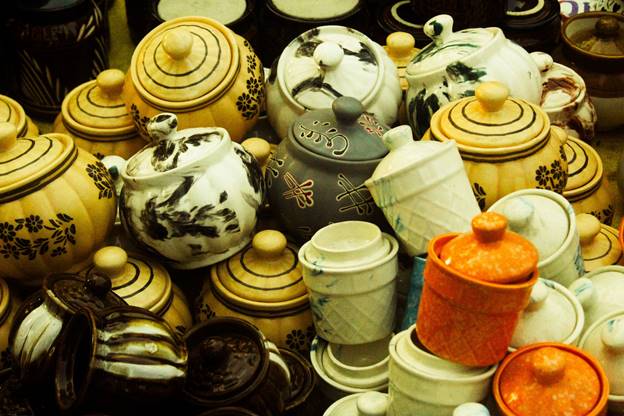
The wide-mouthed vessels were originally used to store grain, sugar, tea leaves, or other dry goods and are relics of a bygone era when people kept their food supplies in large containers. They are made of terracotta, or may be enamelled or glazed, and are 12–24 inches tall and heavy.
Plastic Tupperware, plastic bins and the ubiquitous plastic containers of food bought in supermarket aisles fill modern kitchens. The old ceramic pot, with its earthy weight and handcrafted quality, is an antidote to this plastic world. It brings the kitchen to life with a touch of antiquity and a sense of the elements, of earth and fire.
These jars may be embellished with simple geometric designs or with natural elements such as leaves, flowers or repeating spirals. The glaze has almost certainly aged unevenly, resulting in subtle colour variegation that is impossible to recreate. Over time, these jars developed hairline cracks in the glaze, a characteristic known as crazing, which collectors consider desirable.
These jars will not absorb coffee beans, tea leaves, or spices and are inert and non-reactive. The material helps control temperature and humidity, thereby maintaining food quality. The Kenya Tea Development Agency (KTDA) black tea will stay fresher and tastier in a cool, dry ceramic container than in any plastic or metal container.
What to Look For
Look for body cracks and chips, not glaze cracks and chips. Finish cracks are OK; structural cracks may eventually cause the jar to split. Avoid using older jars with lead glazes on the inside surfaces unless they have been tested for lead content or are used only for decorative purposes. Modern lead-testing kits are inexpensive and available online.
7. Kikoy
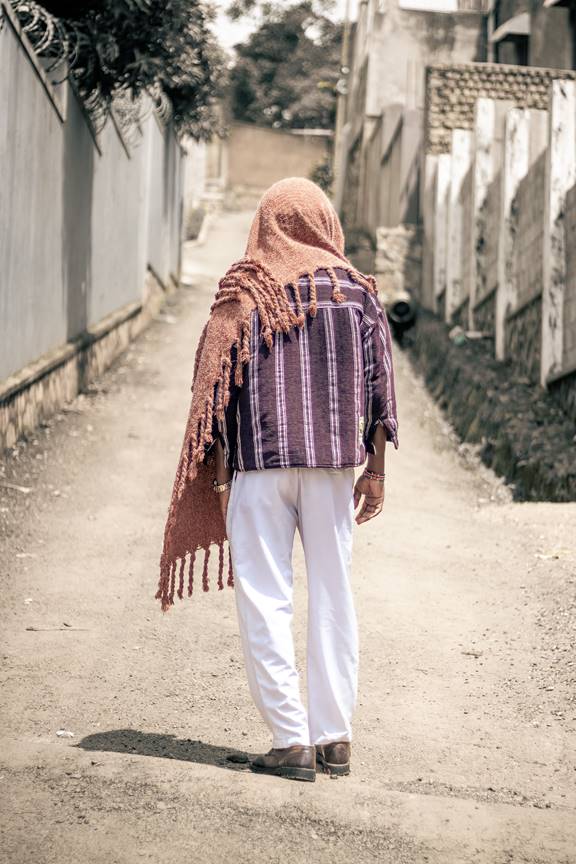
Kikoy (or kikoi) is a handwoven, very thick cotton blanket or wrap, traditionally worn by men in coastal Kenya. Kikoy is made from double-woven cotton, with two layers bound together, making it extremely warm and long-lasting. Traditional colours include red, black, white, blue, and orange, and the designs draw on Swahili and Arabic motifs.
Kikoys hold great cultural value in coastal Kenya and Zanzibar. Artisans weave them on narrow looms, typically in small cooperatives that have existed for centuries. Vintage kikoys made before the machine-weaving era display the signature imperfections of hand-loomed fabric, such as minor variations in stripe width, minor irregularities in the weave, and a texture that cannot be reproduced on a machine.
You can use a vintage kikoy as a bath towel, a light afternoon blanket, a decorative throw on a sofa, or a casual beach wrap. The more you wash it, the softer it will become, and a vintage kikoy will have been softened by years of use.
What to Look For
Kikoys are double-woven cotton and much heavier than modern kikoys. The stripes should be slightly wavy rather than perfectly straight; this indicates machine use. Older kikoys might have a few small mends or patches; this shows loving use, not a fault. Fraying edges are OK as long as they are stable.
8. The Wooden Salad Bowl
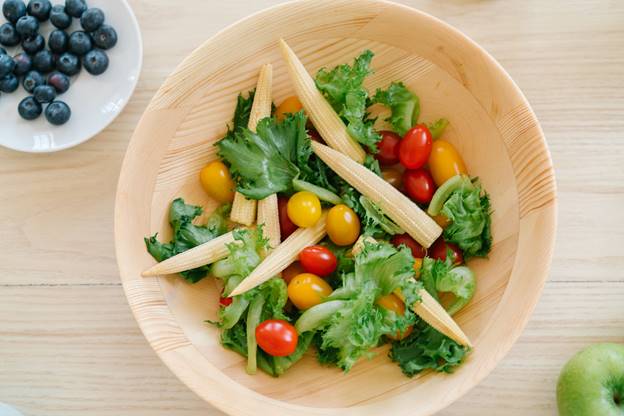
A bowl, usually of wood, somewhat bucket-like but deep and wide, with gracefully curved sides. They are usually carved from mvule, muhuhu, or mahogany, which are dense hardwoods that produce rich, fragrant shavings when worked.
Modern kitchenware is plastic, metal, and mass-produced ceramic. The opposite is a handmade wooden bowl, organic and certainly one-of-a-kind. Unlike other bowls, each is unique in its grain pattern, the shape of its curve, and the placement of knots; a signature piece for any kitchen. In western Kenya, people made these bowls to pass around as a sign of generosity and for communal eating. Bringing a wooden salad bowl to the table is a modern-day expression of sharing and hospitality.
The colour of wood darkens, and the grain becomes more prominent as it ages. An old, used salad bowl, when oiled with coconut or linseed oil now and then, will acquire a warm, rich patina that will be the envy of any new salad bowl. Soft scratches from knives and serving utensils add texture and hint at the meals it has served.
What to Look For
Look for cracks in the joints or in the wood itself. Test the wood for rancidity. Do not use it if it is rancid. A good bowl should have no sharp splinters and be smooth to the touch. Watch for regular oiling, a soft sheen, and a smooth surface.
9. Sterling Silver or Silver Cutlery
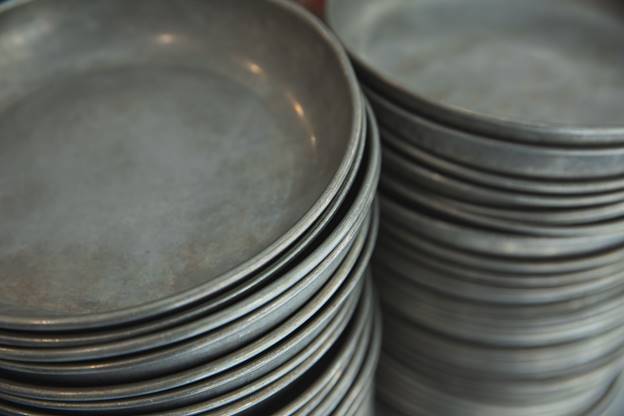
Intricate table-service cutlery, such as fish knives, soup spoons, serving forks, butter knives, and sugar tongs. These may be colonial or from just after independence, when silver plate was a feature of a Kenyan household if they could afford it.
High-quality sterling silver and silver-plate jewellery are not only investments, but also decorative pieces. In addition to weight, the cutlery has a silvery sheen from its silver content, which gives a nice warm glow that stainless steel does not. With decades of polishing and wear, silver develops a soft patina of micro-scratches that gives it a velvety look. You can’t create this patina artificially.
Vintage silver cutlery has a sense of prestige and elegance in vintage markets. But perhaps more importantly, it comes from a design period when design and function were considered equally important. Handles are sometimes weighted for balance, and tines are precisely spaced. Many of the vintage silver items show marks, which are tiny stamps that show purity, maker and year, which are not found on stainless steel items.
What to Look For
EPNS is a high-quality silver plate, electroplated with nickel silver. Wear test: If the silver plate is worn, a shiny layer of the base metal will be visible underneath. More intricate patterns are preferable to plain patterns.
10. Handwoven Sisal Basket
A big, soft, spiral basket of the natural fibre, sisal. Women in rural communities throughout Kenya weave these baskets, a tradition passed down through generations. Making each basket can take weeks, if not months. They dry the fibres, dye them (usually with natural colours: brown with onion skins, black with charcoal, or ochre with clay), and coil them into a wicker basket of amazing strength and flexibility.
Vintage market traders in Kenya are just beginning to enjoy the market for these baskets; they are among Kenya’s most advanced indigenous technologies. The coiling method makes a basket by wrapping a long piece of sisal fibre with smaller dyed fibres, then stitching it to the coil beneath to create a sturdy, flexible basket. No glue, wires, or modern tools are used.
Evidence of weaving in vintage baskets includes small irregularities in the coil, differences in stitch width, and some variation in dye application. They are not flaws, but the signature of the hand of man. This basket was not made, but woven; it was made with care and intention.
The large sisal basket ranks among the most useful vintage items to purchase. Use it as a laundry basket. Keep it in the living room for firewood. Use it to store onions and potatoes in the kitchen. Use it as a wall hanging or decorative art. Use it to collect all the rainwater at the front door.

What to Look For
Check the quality of the weaving. Do the stitches line up? Is there no space between the coils? Look for dye fading. Natural dyes will fade to soft, muted colours. These are gorgeous but can also signal age. Ideally, the best baskets should be flexible enough to roll up when empty yet strong enough not to collapse.
Leave a Reply