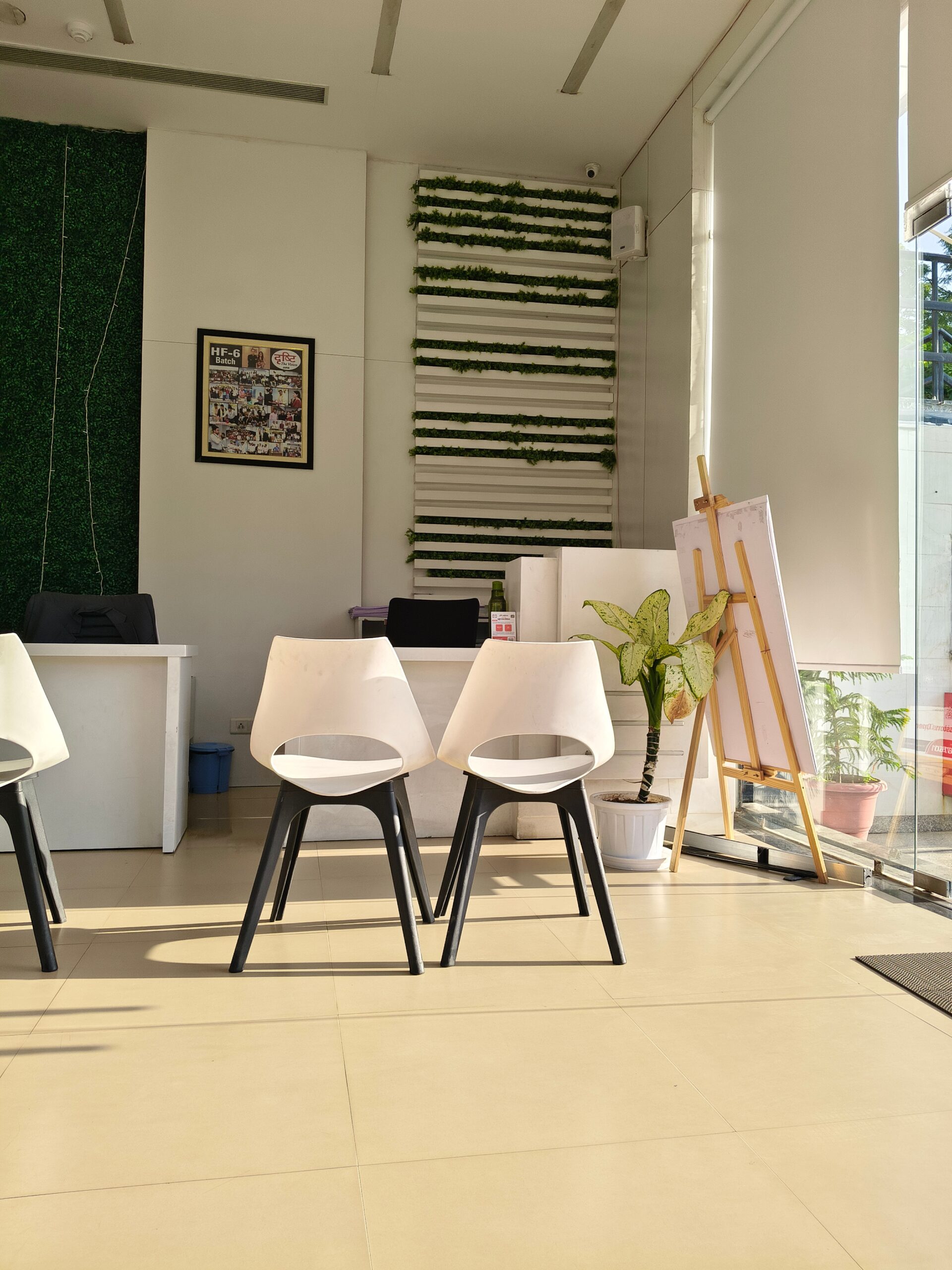
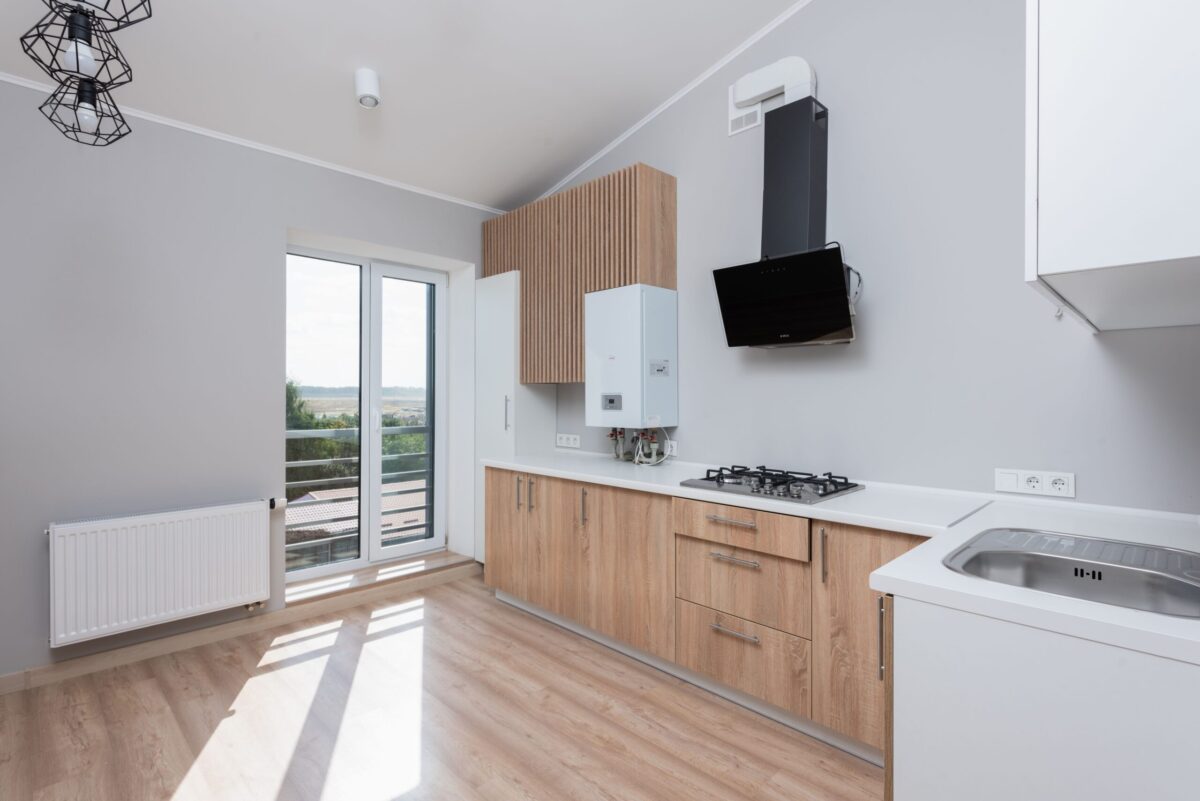
More precisely, a minimalist living room has everything in it that belongs there, where the furniture feels like it belongs, not just because it looks good in a picture; where the palette is not expansive enough to overwhelm the eye when it’s actually in the room. And also a part of aesthetic minimalism.
Select One Interior Design Style.
A minimalist living room with a cohesive design language is very different from a room created by mixing and matching various influences, pretty as each is individually.
Scandinavian minimalism
the design philosophy of the Nordic countries of Norway, Sweden, Denmark, and Finland, is a blend of function and simplicity, interspersed with warmth, derived from the Nordic attitude towards their long and harsh winters and the necessity of creating a genuinely warm interior. Its characteristic range of colours is from white to light grey and warm naturals; its materials are light woods, and its furnishings are designed for both comfort and craftsmanship.
Japandi minimalism
The idea of ma is inherited from Japanese design, the philosophy of wabi-sabi, and a great appreciation for the beauty of imperfect natural materials, dark woods, raw ceramics, and aged textiles all of which are hallmarks of Japandi. The Japandi living room features a more muted and varied color palette than a true Scandinavian one, with greater attention to handcraft and material imperfections, plus a quietness that’s both old and new.
Modern minimalism
It loves geometry and is more inclined toward vertical and horizontal lines than curves or irregularity; it loves industry and materials that are industrial, not softened; it loves to the exclusion of organic warmth. The modern minimalist living room is the most challenging room to get right the hardest part is getting the lines and the quality of the few elements right.
Contemporary minimalism
It is a blend of several minimalist styles, usually placing emphasis on attributes most common to minimalist genres: warm neutral colors, natural materials, furniture with clean lines and intentional negative space, but without the specific formal constraints of Scandinavian, Japanese, or modernist minimalism.
Make a Focal Point
The focal point of a minimalist living room design should be determined first, and then furniture is added; this way, the furniture will support the focal point, not the other way around. The first step is to identify the room’s natural focal point; the second is to design around it. It could be the fireplace, the TV wall, A large window or glazed door, A piece of art, or even an architectural feature.
Multi-Functional Furniture
Multi-functional furniture is not an object category but rather it is the quality of design intelligence that can be developed in a well-designed object that meets multiple functional requirements in minimalist living room. The best multi-functional pieces are the ones that the dual function does not look as though it’s a secondary or as if it hasn’t been done to its best advantage such as the storage ottoman, as comfortable a sofa or as capacious a storage piece, the chaise extension; the side table with a drawer, which can serve as well as a dedicated side table or as a small storage unit.
Proper Furniture Sizing
Accurately sizing furniture is all about two things that most furniture purchases lack: accurate measurements and a willingness to spend time understanding how specific dimensions will work in a given space before committing.
In a minimalist living room, one such dimension that works without conscious effort yet profoundly impacts a room’s ambience is the relationship between furniture and ceiling height. Regarding height, furnishings with low-ceiling profiles, such as sofas and chairs with a seat height below 42 centimeters, and tables with a low visual profile, help open the space and make the distance between the furniture plane and the ceiling seem larger by revealing more of the wall. In higher-ceilinged rooms, more visually imposing furniture, with higher backs, heavier dimensions, and greater presence, helps avoid vertical emptiness.
Efficient furniture layout to improve flow
A minimalist living room flow in a room means an organisation that is immediately legible and, upon entering, provides a clear indication of what to do and how to do it.
Hidden Storage Solutions
In an active living room, there’s always something that needs to be readily available, but not so decorative that you’re seeking to display it, like remotes, charging cords, books in use, children’s paraphernalia, blankets, games, and all the functional clutter of a life lived in the room. In an “old-fashioned” living room, they often sit on coffee tables, side tables, and shelves, adding to the complexity minimalism aims to simplify. They’ll need to be hidden in a convenient location in a minimalist living room.
Using the necessary amount of décor and avoiding over-decorating
In a minimalist living room, the difference between decoration and over-decoration is less about numbers, although too many can be a symptom. It’s a matter of decision-making quality and each object’s presence. A room designed to look nice may have many objects. If they are all carefully selected and curated, it’s more about the quality of the curation than the numbers. If objects in a room are picked up somewhat at random or assembled without a selection process, the room can feel too decorated, regardless of the number of objects.
Layer Different Textures
In a minimalist living room, when space is limited and color is kept to a minimum, texture is the most important way to create visual and tactile richness. Texture helps a neutral palette feel less monotone and less like a bare room, making the eye feel more engaged without feeling overworked, as it would with visual clutter. It’s, in all the ways, a minimalist response to decoration: an interesting room without being busy.
Use Warm Lighting
In a minimalist living room, there’s a big difference between minimalism in the evening, lit by cool, bright overhead lights, and minimalism in the evening, lit by warm, layered, low-intensity lights. Images taken in the room under cool overhead lighting reveal many things, some of them good: the carefully selected textures flatten, the natural materials lose depth and warmth, the negative space becomes a space rather than a composition, and the overall mood is utilitarian at best.
A floor lamp by the sofa provides warm, layered light; a table lamp on the sideboard adds a second level of warmth at a different height; and candles provide the ‘living quality of flame’ in the pool of light on the coffee table. The space is full of shadows that create its volume and intimacy. There is no way to see the room in daylight that gives you the sensation of beauty that you’d get when you actually see it in this room.
Personalize decorations.
The artworks and other decorative items that best fit this role in a minimalist living room have some common features. They are historical in nature, having been gathered from a certain place, by a given person, from a person loved, or at a special time of attention. They have a quality that rewards prolonged examination; they are well-crafted, so the evidence of their craft is interesting. When present in a room with few other objects, they stand firm, and their contribution to the room’s character is unique and irreplaceable, felt both visually and emotionally.
Styling and maintenance of space.
Each room gravitates towards its proprietor’s primal. For most people, that default is more than the surfaces can hold: too many objects in circulation for the room to hold invisibly, and a gradual shift from the thoughtfully planned arrangement that was carefully created to the more convenient arrangement that daily life projects. This tendency to change is more pronounced in a minimalist living room, since it depends more on what isn’t in it, and what isn’t in it is harder to maintain than what is.
The “One In, One Out” Rule
The most important and straightforward rule for keeping objects in balance in a minimalist living room is this: As the objects enter the room, they must exit as well to maintain balance. The number of objects in the room does not increase. Its quality can improve with every trade.
Daily Decluttering Habits
It’s most effective to make daily cleaning part of your daily routine, not a separate, time-consuming task. The most powerful of these integrations is the end-of-day reset: a process that takes 10-15 minutes, that is performed at a specific time of the day, similar to after dinner, when every object that has moved away from its proper place during the day is put back, every surface is wiped down to its base-state, and the minimalist living room is restored to the state in which it is most welcoming to live in and most representative of its design purpose.
Seasonal Décor Updates
A minimalist living room doesn’t mean you need to keep it the same year-round. The changing seasons can provide a natural pace for the room’s character and palette, textures and layers, and enhance its adaptability to the varying quality of light, temperature, and mood throughout the year.
Aesthetic Minimalism is a layer on top of Minimalism. Minimalism, in general, is the idea of owning less, doing less, and keeping less. It is a subtractive approach. Aesthetic Minimalism concerns what remains after reducing quality, location, relationship to light and space, and relationship to nearby objects.
It originated with the architect Ludwig Mies van der Rohe, who coined the phrase to express his idea of structural design: “Less is more.” Minimalism is based on this principle. ‘Less is more’ requires more discernment. Anybody can fill any room. To know what’s worth keeping, what’s worth removing, and to arrange what’s left so that it has merit.
The principles of Aesthetic Minimalism
Aesthetic Minimalism is not about stripping away objects to create an empty room; it is about applying a set of design principles that work together to create an environment that is calm, purposeful, and vibrant, and that aligns with the psychology of minimalism. Each lens highlights one aspect of a space’s sense of space.
Simplicity
The principle is simple, but it is often misinterpreted. It doesn’t suggest being bare or lacking personality. It is simplicity and a place where the mind can rest, and the eye can wander without impediment.
Functionality
Every object in aesthetic minimalism has a function, purpose, problem-solving role, and supports a daily ritual. This does not mean decorative objects are unwelcome, only that they must earn their place by making a true aesthetic contribution rather than simply occupying space. Functional, in this sense, means a decorative bowl that delights you each time you see it.
Negative space
It refers to empty spaces in a room, such as empty walls, clear surfaces, and spaces between furniture. The usual decorating rule is to fill these spaces. In aesthetic minimalism, empty spaces in the composition carry as much meaning and importance as any other object.
Blank spaces have multiple functions. They give the eye a place to rest and break the visual rhythm in a room, making objects more visible and resonant. It creates a sense of breathing room, which translates into the physical space and makes us feel less crowded. And it offers contrast without emptiness; there isn’t any meaning- it isn’t luxurious in what is there.
Balance
When you’re in a room, balance is the feeling you have of being settled, not overfilled, not underfilled, not being on top, not being on the bottom. Most people feel it straight away but don’t express it well, because it happens below conscious analysis.
In interior design, there are two main types of balance.
Symmetrical balance. It is orderly and stable, yet appears formal, thus distributing the visual weight evenly along a central axis. It is obvious why it is used so often in aesthetic minimalist spaces: it efficiently resolves visual tension and creates immediate calm, which is the aim of aesthetic minimalism.
Asymmetrical balance. In this case, it’s not counter-mirroring but counter-weighting that achieves visual balance. Asymmetrical balance can be effective when executed properly and creates a sense of life and purpose. When done casually, it looks unfinished.
Quality Over Quantity
Fewer objects in a room are more visible, more likely to be noticed, and more impactful on the room’s overall mood. The difficulty and opportunity of aesthetic minimalism mean the Minimalism remains high. This, in turn, leads to the second principle: quality before quantity.
Colors and designs of Aesthetic Minimalism.
White
Minimalism is synonymous with white. There’s a reason it’s best known as minimal or white. It will provide more work per square foot than nearly any other color in a space. White is at its most functional when it expands. It doesn’t absorb light and enhances the room’s overall brightness, size, and openness. However, whiteness is most essential in minimalism’s quietness; minimalism makes no demands on a white wall.
Cream
Cream is between white and beige, less intense than white and more intense than beige, and gives elements that neither of them fully includes. Cream cushions; white can enhance, and beige can anchor, but cream sits in between. It’s the easiest color to use in a minimalist palette, the one that’s most sure to evoke warmth without weight, lightness without coldness.
Earth Tones
Earth colors, such as the terracottas, ochres, warm taupes, dusty mauves, and raw umbers collected from soil, clay, stone, and sand, add a quality to a minimalist environment that whites and neutrals lack: depth. These colors link interior and exterior spaces to nature. They have a richness of sensorial qualities not found in cooler neutrals, with warmth you can almost feel and texture you can almost touch. An earthy material provides a grounding tone for the room, which is otherwise light, neutral, and clean-lined.
Soft Gray
Gray is the great chameleon of the minimalist palette. This color can read as warm or cool, urban or natural, airy or grounding, depending entirely on its undertone and the light conditions it lives in. At its best, soft gray is a masterclass in restraint. It provides depth and definition without the visual weight of a true dark tone, and it brings a quiet sophistication that the warmer neutrals don’t quite replicate.
Warm Wood Tones
Wood occupies a unique position in the minimalist palette because it is not, strictly speaking, a color. It is a material, and yet the warm amber, honey, walnut, and oak tones it introduces into a space function as color in every meaningful sense, providing warmth, texture, and organic variation that no painted surface can fully replicate. In a room with white walls and neutral upholstery, a wooden floor, table, or piece of furniture introduces something that feels almost biologically necessary: a connection to living material. The grain, the variation, the slight irregularity of wood qualities that would read as imperfection in a manufactured surface are precisely what make it beautiful.
Black Accents
Black is the element that prevents a minimalist palette from dissolving into vagueness. In a room of soft neutrals, warm woods, and muted tones, a carefully placed black accent does something essential: it defines. Black has the highest visual weight of any color; it commands attention, anchors compositions, and creates contrast with an efficiency no other color can match. In minimalist spaces, this potency is both its value and its risk. Used too liberally, black overwhelms the carefully calibrated calm of a neutral palette. Used too sparingly, it fails to do its defining work. The discipline is in the dose.
Green Plants
Plants occupy a category of their own in the aesthetic minimalist palette; they are neither neutral nor decorative in the conventional sense, but something closer to necessary. In a palette of whites, creams, and warm woods, green introduces the one quality the inorganic world cannot provide: life. A single well-placed plant, a sculptural monstera, a trailing pothos, a clean-lined snake plant, does more to make a minimalist space feel inhabited and alive than almost any other element. It brings color, texture, asymmetry, and slow, constant change into a room that might otherwise feel fixed.
Glass
Precisely how the surface comes and goes, how it refuses to assert itself, how it insists on being transparent over its absence, glass is the most paradoxical touchstone of aesthetic minimalism. Glass’s minimalism with light is its main asset in an aesthetic minimalist interior. Large window panes blur the separation between indoors and outdoors and bring the depth and movement of the outside world into the room.
Ceramics
Ceramics have a special place in aesthetic minimalism, a class of Minimalism in which material, craft, and human touch come into sharp focus and are most likely to be entirely functional yet unusually beautiful. How a piece is finished and what material it is made from say something about how it was made and the nature of the object; in aesthetic minimalism, honesty is a fundamental principle, and these details matter.
Lighting
Lighting creates the atmosphere of a minimalist space, and its quality determines the mood and warmth of any space. Light can change the same room from large and formal to small and inviting, scientific and welcoming, active and lifeless. In aesthetic minimalism, the elements are minimal, and nothing is used as an adjunct to furniture and color choice; therefore, lighting receives special attention, not as something that is added to the furniture and colors, but as a part of the aesthetic minimalism design, which is used to create all other elements.
The basic element of any perfect minimalist interior is natural light, and no matter how complex the artificial lighting system, it cannot match its power. In a space, artificial lighting is so significant, so much so that if the natural light disappears, then the artificial light becomes the sole defining factor of the space. Color temperature is the most crucial variable in lighting. A room of light becomes truly beautiful under warm lamplight; it shows a different side of itself, a nighttime side, one much more intimate and more ‘soulful’ than its daytime light.
Layered Lighting
Layered lighting draws on stage and architectural lighting and suits minimalist home design. It’s simple: You can’t have a single light source perform all the functions a room needs at all times and throughout all activities.
According to the classic lighting design scheme, there are three layers:
Ambient lighting is the general lighting that lets you use a room and provides a basic level of light. This is usually achieved with recessed lights, a statement pendant, or natural light, but kept at low to moderate intensity to avoid harsh, flat light from a single overhead fixture.
Task lighting is the purposeful application of directed light for a very specific function, such as reading, cooking, work, and/or make-up. Task lighting is useful in a small space because it can be focused on a specific area, providing bright light where it is needed without creating glare or hot spots throughout the room.
Accent lighting is the expressive layer of light that is not used to light or perform a task generally, but to focus, add depth, and interest.
Lighting: Floor, table, and pendant lights.
The floor lamp is one of the most versatile and beautiful artificial light sources to experiment with in an aesthetically minimalist interior. In aesthetic minimalism, the floor lamp is also a sculptural object, one of the few things in a minimal room that is fully justified by its function. An effective floor lamp can be a work of art in its own right, and when illuminated, it becomes a fully functional piece of furniture.
The table lamp is selected for its aesthetic minimalism and attention to detail, like any other important piece of furniture, thanks to the quality of its shape, materials, and light. The shade affects both the quality and direction of the light emitted: a linen shade will scatter the light in a soft, warm direction; a metal shade with a downward-facing opening will direct more concentrated light downward, creating a more dramatic pool.
The pendant light fixture is where aesthetic minimalism and archiMinimalism confidence first meet. A pendant is a quintessential item that stands independently of a floor and a ceiling, hangs from a cord, cable, or rod, is visible from anywhere in the room, cannot be ignored, and must be one of the most important design elements in a minimalist interior.
Mood Lighting
It’s not about the quality of light from any one source or fixture, but the interplay and tuning of all the components of a space to produce a certain mood. The purpose of aesthetic minimalist mood lighting is not luminosity. It’s creating a space that feels alive, intimate, and so comfortable that it’s like a room is breathing or, as the Japanese might call it, the dappled shifting light a Japanese might describe as komorebi, the warmth and coziness that shimmers through the leaves, or, as the Danes might put it, the cozy, warm glow inside on a dark evening, known as hygge.
Furniture Selection
The aesthetic of minimalism is immediate and difficult to achieve in furniture. It’s different to adhere to a restricted color palette, a thoughtful array of textures, and a mindful use of light. Most furniture selection begins with a list of typical items, such as a sofa, a coffee table, armchairs, and a sideboard. Then the process moves to fitting the furniture into the space. Aesthetic Minimalism begins anMinimalismrts with the room and what it needs before moving on to what is traditionally expected.
In practical terms, clean design is characterized by a lack of decorative carving, simpler hardware designs, less excessive molding, and simpler curves. Clean design in a minimal room isn’t simply about looks. Clean-lined furniture is also quieter; not so much in terms of noise, but rather less “noisy” in the visual sense: it does not crowd out the other visual aspects of the room, it doesn’t demand as much of the eye, it doesn’t add to the overall visual complexity.
Room-by-Room Guide
The Living Room
Neutrals and naturals form the palette of aesthetic Minimalism in the living room, giving it visual unity without dullness, in the tones of natural wood and stone.
A neutral living room palette starts with the main surfaces: walls, floor, and main upholstery. The walls are a soft, warm white, the floor is either wood or stone with neutral colors, the sofa is either linen or cotton in a related neutral color; all this makes a canvas on which the smaller pieces, the cushions, the textiles, the ceramic objects, the plants read out with unusual clarity and impact. Earth colors play a specific role in the living room palette, as they don’t bring warm sweetness or calm blandness.
Whereas a whole houseplant can accomplish more than a cluster of smaller plants: it creates real presence in the living room. They are part of the room, and in their own way, they can dictate the room’s look and impact as much as furniture does. But just as the difference between a plant in a room and a plant that belongs in the room is treating them as such, giving them space and positioning them on purpose in aesthetic Minimalism, and providing the same care as any other piece of furniture or art.
The living room best demonstrates the lighting section’s multiple lighting layers. The most frequented room by most people, throughout the day and on a variety of occasions, and it has to serve all of these well. They don’t illuminate the room, but they add areas of warmth and depth that bring a sense of control to the room’s overall feel. This kind of roominess is necessary, not a luxury, in a living room meant to be used throughout the night. That’s what sets an alive room apart from a well-furnished room.
The Bedroom
The aesthetic minimalist bedroom need not include a social aspect, as it would in communal areas; instead, it can reflect personal comfort and true preference. The bedroom palette is based on minimalist color principles, with a particular focus on the end of the palette that yields the softest, most restful colors.
The best bedroom palettes are extremely muted and consist of a few similar colors, a single shade depth, and the same texture across walls, bedding, and soft furnishings. The result is that the eye can take in the room without effort, with no eye strain or lack of contrast to attend to. The best bedroom colors are warm whites and soft creams—temperatures that aren’t cold enough to make the room feel clinical, and light enough to keep a room with soft furnishings from feeling cramped. Nature’s restorative quality enters the space, while sage greens mute the visual weight of a stronger color.
A minimalist wardrobe is the heart of a minimalist bedroom, where the rules of conscious living meet the here and now. An orderly wardrobe is more than convenient. This is why the zen-like atmosphere of the bedroom is achievable and can last. Fewer clothes in a wardrobe mean an easier-to-organize, easier-to-navigate wardrobe, and more clothes that will actually get worn. The capsule wardrobe concept is an aesthetic minimalist approach to clothing, using a coherent color palette and a set of high-quality garments: less, more, and better.
The most important object in the bedroom, around which all other elements of the room are arranged, is the bed, the element that takes up the most visual space and serves the room’s main function. In an aesthetic minimalist approach, the bed becomes the room’s focal point, the best bedding available, and the undisputed center of the room.
In an aesthetic minimalist bedroom, choose soft bedding for comfort rather than appearance. When it comes to bedding, feel matters. In a minimal bedroom, bedding color should match the room’s palette or be white, ivory, warm cream, or the lightest shade of gray or sage that blends into the room’s overall quiet. In a minimal bedroom, use fewer cushions, match the palette, and choose ones that are truly comfortable enough to warrant their presence.
The Kitchen
The aesthetic minimalist kitchen resolves this tension not by removing what is necessary but by organizing and concealing it with exceptional discipline, and by ensuring that what remains visible has been earned through beauty, frequency of use, or both. The result is a kitchen that functions as fully as any other while, at a glance, looking as calm as any other room in the house.
The countertop is the kitchen’s most visible surface, the horizontal plane that visually dominates the room and immediately communicates its character upon entering. In aesthetic Minimalism, the countertop is treated as prime real estate, valuable, limited, and not to be occupied without justification. The discipline of clear countertops first requires an honest assessment of what is currently on them and why.
Cabinet organization in a minimal kitchen is the hidden infrastructure that makes the room’s visible calm possible, and its quality directly determines whether that calm can be maintained long term. The organizing principle in aesthetic minimal kitchen cabinets is the same as throughout the minimalist home: reduce first, then organize what remains.
Kitchen equipment accumulates with particular determination: specialist appliances used once, duplicate tools, and items kept because they were expensive rather than useful. A serious kitchen edit almost always reveals a smaller core of genuinely used equipment surrounded by a larger mass of items used only occasionally or never. Matching containers are among the simplest and most transformative interventions available for an aesthetic minimalist kitchen.
Functional accessories in an aesthetic minimalist kitchen serve the cooking process directly, with quality and design integrity that make them worth keeping visible. The most successful minimal kitchens tend to use a consistent material language for visible accessories, committing to one or two materials across the tools kept on display. This material consistency is the kitchen equivalent of the living room’s color palette: the underlying coherence that allows individual objects to coexist without creating visual noise.
The Home Office
The home office is the room where aesthetic Minimalism and psychMinimalism-well-being intersect most directly and measurably. Research on workspace design is among the most robust in environmental psychology: visual complexity reduces cognitive performance, clutter elevates stress and reduces focus, and a clear, ordered workspace demonstrably improves both the quality and enjoyment of work. The minimalist home office is not merely a pleasant aspiration; it is an evidence-based productivity strategy. It is also the room most prone to a particular form of clutter: the functional clutter of a working life, the cables and devices and papers and reference materials that accumulate as the byproduct of actual work rather than mere acquisition.
A working desk will always have some objects on it: the tools of the work being done, the reference materials currently in use, the lamp, the monitor, and the objects that make the surface a working surface rather than simply a table. The minimalist goal is not emptiness but purposeful occupancy: a desk that contains exactly what serves the work and nothing that doesn’t. In practice, this means establishing a clear protocol for what lives on the desk permanently, what you bring to it during specific work sessions and return to storage afterward, and what has no business being there at all.
The psychology of Minimalism reveals that our material possessions are not merely physical objects; they are cognitive anchors. They demand attention, drain energy, and shape our identity. As modern life becomes increasingly overwhelming, the science of less offers a powerful antidote to burnout, anxiety, and the relentless pursuit of more. This is not about asceticism or poverty; it is about intentionality.
What is Minimalism?
Minimalism is often mistakenly equated with an austere white room, a chair, and a single fork. But according to contemporary psychology and consumer research, it has a more subtle and useful definition.
Minimalism is a way of life that involves having very few things, knowing how to obtain them, and a love of simple, minimalist aesthetics. However, this is not a sufficient definition. We must dissect this a little more to understand why it is effective for some and not for others. Minimalism is about making people aware of what we value most while eliminating distractions. It is not the final goal; it’s a tool to reach that goal. It is flexible, personal, and suitable for all incomes and situations.
It’s not the idea of owning the least. It’s all about having a minimalist lifestyle and owning what truly enriches your life.
There are two types of Minimalism.
Eco-Minimalism
It’s driven by a desire to help the environment and live more sustainably. The group is dedicated to repairing items instead of replacing them, buying second-hand, repurposing containers, composting, and doing their part to reduce their carbon footprint. They are working towards planetary health, and as a side benefit, they gain psychological benefits.
Aesthetic Minimalism
Seeking to design a calm, tidy, and visually peaceful environment. This aesthetic is more commonly seen on Instagram and Pinterest, with clean lines, neutral colours, empty countertops, and intentional negative space. They want peace and harmony in their own lives and relief from sensory overload.
The Shared Psychological Outcomes
Motivation may vary, but the effects on the individual are similar. Both types report:
Decreased stress and anxiety levels
Self-assurance in being self-reliant
Greater life satisfaction
Decreased compulsive shopping
Ownership Psychology
Why does dusting the bookshelves or discarding an old jacket feel so great? The answer lies in three well-established psychological mechanisms:
Control
Autonomy
Competence
They are not pop-psychology terms but are grounded in one of the most well-established theories in modern psychology, the Self-Determination Theory (SDT).
Mechanism 1: The Empowerment Effect (Control)
Control over your choices and emotional well-being is an important connection. Maintenance requirements are significantly reduced in terms of time, energy, and money if you have less to maintain.
All the objects must be cleaned
Each object needs some space to be stored in the house
All objects need to be mentally tracked
Simply put, the more objects you remove from your home, the fewer you will have to maintain. You won’t feel controlled or victimised by your possessions. The more you have, the more you will need to keep up with. Research in environmental psychology has found that those who perceive their homes as manageable have much lower cortisol levels than those who feel overwhelmed by their possessions.
The freedom from social pressure (autonomy)
The basis of consumer culture is a straightforward mechanism of social comparison. We always compare ourselves with our neighbours, co-workers, and influencers. We buy products we don’t really need, believing they represent who we are, what we taste like, or where we belong.
If you deliberately choose to have less, you have no opportunity to play the comparison game. There is no need to try to catch up anymore. No longer at risk from advertising that claims you deserve this or that, or that everyone has it.
This is autonomy in the sense of needing psychological endorsement, feeling that one’s acts are one’s own, and being in line with one’s values. The research is consistent with the finding that minimalists score significantly higher on autonomy measures than non-minimalists.
The feeling of doing the right thing (Competence)
Competence is a sense of effectiveness in one’s environment. When your house is uncluttered and tidy:
Needle searching will take only 5 seconds.
The complete apartment can be cleaned in 20 minutes
Anyone who comes to your door is a friend!
Travelling makes for a stress-free experience!
These little successes and triumphs build confidence as I can do it! I can handle my life. Competence is the consistent mediator between Minimalism and happiness. Basically, less is more.
If you work out the kinks in the environment, you feel good about yourself.
Clutter is not just a visual distraction; it also has a measurable impact on brain function and is a stressor.
This is not an opinion but a fact. Functional MRI (fMRI) studies have demonstrated that a cluttered environment engages the anterior cingulate cortex and the amygdala, two brain regions responsible for pain detection, error monitoring, and threat response. Basically, your brain treats clutter as a threat at a lower level.
Visual competition and cognitive load.
There’s visual clutter that competes for your attention. All items in your peripheral vision send signals to the brain. Each of these things has a “cognitive load”, a background noise that constantly operates in your mind.
Imagine your attention as a light beam. Clutter diffracts it into many small beams, revealing irrelevant details. You’re filtering out images in your mind, so the number of sources your brain has to process is reduced, and your brain is immediately calm; your heart rate slows, your muscles relax, and your breathing becomes slower.
Flourishing vs. Surviving
The only thing opposite to depression is flourishing. It’s not only the absence of bad emotions, but the presence of:
Peaceful emotions
Awareness of how to interact with the world
Social competence
The minimalist lifestyle is directly linked to and positively affects flourishing. Reducing physical chaos directly reduces emotional chaos. You don’t simply live in your home; you live it to the fullest.
Decision Fatigue and Mental Overload
The most significant way Minimalism helps is by eliminating Decision Fatigue, a widely recognised phenomenon in behavioural economics and cognitive psychology.
The 35,000 Decisions
There are some 35,000 decisions that you make every day. Our executive function is limited and is needed to determine what to do next. It’s finite and requires a decision on what to do next.
In behavioural economics, pioneered by Nobel Prize winner Daniel Kahneman and his colleagues, decision-making is like a muscle: it can only be exercised so much before it gets tired. Fatigued decision-makers:
Make impulsive choices
Choose the simplest answer
Avoid putting off work that is due or expected
Have less control over self-willpower and self-control
How to choose from a huge variety of options.
There’s a lot of choice, but not too much. At least, that’s the concept psychologist Barry Schwartz explained. After a certain point, there is anxiety, paralysis, and regret in relation to additional options.
The rule is to use this on your clothes:
With 5 white T-shirts, it only takes a second to get dressed.
With fifty shirts, complete with all their fabrics, ironing needs, and how to wear them for any event, getting ready takes a few minutes of mental effort.
Too many options reduce cognitive effort, leading to impulsiveness, mistakes, and fatigue. You waste good brain time on small things and save up brain hours only for creativity, intimate relationships, and strategic thinking.
Creating Cognitive Slack
When there is Minimalism, there is cognitive slack, or unused brain power, which can be used when necessary. You save the decision quota for more important tasks and creative thinking by avoiding trivial decisions, such as what to wear, what to clean, and where to put X. As one productivity researcher said, you save a decision for your life’s work for each decision you can eliminate from your morning routine.
The Poverty Trap
Poverty isn’t minimalism. Poverty is when people are deprived of choice, security, and resources. Poor people carry a heavy cognitive burden from a lack of money, which constantly distracts them from the need to seek more money. The scarcity of money creates a heavy cognitive load, especially for people with low incomes, which draws them towards seeking more money.
Poor people are not minimalists by circumstance. They are then caught in a vicious circle of:
Life in poverty is stressful, demeaning, and debilitating. No, it’s not a life choice. It is a structural failure.
Elephant’s Shade
On the other hand, Minimalism arises from a desire once needs are met. It is a tactic used by the rich and middle classes who have come to understand that something is missing in the equation between possession and happiness when you have more than you need. In the Western world, which has come to recognise that there is no correlation between having and happiness beyond poverty, Minimalism has been embraced.
There is a difference between this and the minimalism movement, whose ethics are to be respected. It helps curb the minimalism trend from becoming another instrument of privilege, in which the affluent feel good about owning fewer things while forgetting they could have bought everything they donated off.
Minimalism helps those who have more than they need understand they need less. It doesn’t do anything for those without. It is a category error to consider them as the same.
Emotional Attachment to Possessions
A lot of people aren’t very good at Minimalism, so why is that, given how beneficial it is? Why do people still hold on to things that they haven’t used in a year? It’s all about the Endowment Effect, one of the most widely reproduced facts in behavioural economics.
What is the Endowment Effect?
We don’t merely own things; things become a part of us. Psychological ownership is intact for touchable and used items as well as for items with which one has memories. If you throw away a coffee cup, it’s like you’ve thrown away the memory of the trip you took to buy it, although the memory of that trip doesn’t go away with the cup.
In traditional experiments, scientists gave one set of subjects a cup of coffee. They then asked: “How much would you sell this mug for?” The other group without the mug was asked: “How much would you pay for this mug?
The outcome was impressive, as owners wanted twice what non-owners would pay. There was no change in the mug. It was the only thing that had changed: that it was owned. We have what we have, and we’re proud of it.
The endowment effect is the reason why:
Holding onto clothes that you haven’t worn in 5 years
You have broken electronics, which you will never repair
You hang on to items that you do not like
All are the endowment effect. The value of the item is close to zero. However, its subjective value, boosted by ownership, is meaningful.
The Wait Pile Strategy
A simple, low-emotion approach can avoid the endowment effect, experts say:
Obtain a cardboard box. A large one.
Put items that you still need to determine the value of in the box.
On the box, write today’s date.
Seal it shut.
Write a future date – 3-6 months in the future.
Store the box.
Wait until the box is opened to begin cleaning.
At the appointed time, open the box. You will probably discover you will never miss out on anything in-house. With time and distance, the emotional attachment has been removed. It’s not hard to let go; oftentimes it’s a relief.
Remembering is in you, not within the object. The thing was a trigger only.
Minimalists reported much lower scores than non-minimalists on the following items:
Anxiety
Fear
Distress
Irritability
Sadness
This wasn’t a trivial difference, as the effect size was moderate to large. Minimalists showed less evidence of emotional distress than the non-minimalists.
Minimalists expressed much greater levels of:
Enthusiasm
Alertness
Determination
Inspiration
Activeness
Minimalists purchased less, saved more, fixed more, and recycled more. They were the most efficient of the homes in terms of energy conservation, as there was less space to heat and cool. They produced less waste for disposal in landfills. Their carbon footprint was significantly reduced.
Minimalists took less time to clean up, look for missing items, and tidy up clutter. At that time, time was diverted to hobbies, relationships, exercise, and rest. They reported feeling less “busy,” even though their work schedules were the same as those of non-minimalists.
How to Start Without Becoming Extreme
Is there such a thing as too little? Yes. And there are consequences.
Signs of overminimalism
If you find that you’ve progressed from intentional living to rigid perfectionism, then you may be on the path to perfectionism.
You feel you’ve got two pairs of shoes, and it’s your fault.
Do not feel comfortable when receiving a gift
You’ve discarded a valuable item and feel bad about it.
You feel guilty for buying too many gifts for the people you love, friends, and family.
You can’t seem to get away from the same spaces and rooms to clean and tidy, and you find yourself doing so all the time.
There are several reasons for extreme Minimalism, including:
Anxiety underlying
Trauma
The signs and symptoms listed below indicate you may be experiencing mental health issues that warrant a break, and a discussion with a mental health specialist is recommended. Minimalism should be a way to ease, not add to, anxiety.
What is Afro-Minimalism?
The local reality should be embraced by global psychology. Minimalism is not a mere Instagram aesthetic in Kenya; it’s a way of survival, given the limited space, high cost of living, and the way high-density housing works.
The birth of Afro-Minimalism.
Minimalist or Afro-minimalist designs are being requested in Nairobi’s homes, with one in four people seeking spaces kept simple. They’re fed up with cramped houses and crave closets that are more intimate, more alive, but they don’t intend to be as cold and sterile as Western Minimalism. Warm textures, local materials, and cultural artefacts are added to Afro-minimalism in intentional, controlled amounts.
For all those who are living in bedsitters, which are single rooms that have a bedroom, a living room, and a kitchen in them, Minimalism is not an option. It is only practicality and need.
Key strategies include:
Multi-purpose furniture: A bed with storage drawers underneath. A table that folds up against the wall when not in use. A chaise longue-style chair that can be used as a side table.
Vertical storage: Shelves that rise, rather than extend. Hooks on all of the doors—over-the-door organisers
Everything has a place, One-Touch Rule. With its use, it is returned at once. No surfaces are left with anything on them.
The Economic Reality
Although most Western minimalism works are spiritual and mindful, Kenyan Minimalism is more rooted in value.
Less dusting
Reduce electrical costs
Fewer chemicals required
Decreased risk of theft
Developers are seeking turnkey, low-maintenance houses due to rising energy and material costs. Developers are seeking turnkey houses that require minimal maintenance, as Kenyans have realised that cluttered houses are expensive.
Minimalism is basically all about freedom psychology. It’s the awareness that you are not the things. Objects don’t contain your identity, your memories, or your worth. They reside in you, and we promote this highly at Homeyquizs.
So whether you’re a techy with a lot of money to burn and trying to prevent burnout, a young parent with a lot of toys and gear to deal with, or a student living in a bedsitter in Nairobi and wanting to make the most of your limited space, the rule applies: the fewer things you have to look at, the clearer your mind will be.
The wrong wine glass can spoil a bottle of wine. It is a widespread belief that wine glass design is largely cosmetic, yet the shape, rim thickness, and bowl shape can have a dramatic influence on the aroma and flavour of wine.
Red wines are generally better served in a larger bowl or glass, as the glass encourages oxidation and consequently deeper aromas. White wines are served in smaller bowl-shaped glasses because they help to keep the wine fresh and colder. Wine professionals, due to their experience, understand that a good wine glass can better concentrate the aromas, regulate oxidation, and lead the wine to the proper parts of the tongue. This is why wine lovers who take their wine seriously tend to spend a lot of money on quality glassware from reputable brands such as Riedel, Zalto, or Schott Zwiesel.
But the same type of glass is not required by all wine lovers. Others want a universal wine glass they can use every day, whereas others want special glasses, whether for red or white wine. The biggest determinant of the best fit will be budget, durability, storage space, and frequency of use.
Three key principles are guiding the design of wine glasses:
Bowl Size and Oxygen Exposure
The amount of air that the wine meets depends on the bowl of the wine glass. Bigger bowls allow more oxygen to be incorporated into the wine, thus releasing aromatic compounds and softening tannins. This is why large-bowled glasses are normally used to serve bold red wines like the Cabernet Sauvignon, whereas small bowls can serve lighter wines well.
Rim Diamond and Aroma Level.
The diameter of the rim determines the flavour that gets to your nose. The slimmer rim directs aromas upwards, giving drinkers an opportunity to sniff intricate layers of fruit, spice, or floral aromas. This design greatly enhances the senses. The cheaper glasses typically have thick rims, which spread aromas instead of focusing them.
Rim thickness and Drinking experience.
The rim is thin, and the wine flows well on the palate. A rim that is too thick makes the wine feel clumsy and less sophisticated to drink. This is a slight distinction, and one of the reasons that good crystal glasses can feel much better than cheap daily glasses.
My Top 6 Picks
Zalto Denk Art Universal wine glasses.
According to professional sommeliers, the Zalto Denk Art Universal glass is for white wines. Individuals who use this glass as their substitute tend to do so mostly because of a single factor: precision of aroma. It is a very high-quality piece of glass for focusing aromas, which is why drinkers can pick out even the finer elements of flavour that would otherwise be imperceptible.
There are trade-offs to this degree of refinement. Due to the thinness of the glass, it must be handled with great care and may seem delicate to use daily. It may not be very practical for buyers who frequent large parties and wish to use dishwasher-safe glasses.
Whereas the Zalto glass has been associated with classiness, the Gabriel-Glas StandArt emphasises utility and stability. The shape of the bowl of this glass resembles that of a bowl, which is meant to be used with virtually every kind of wine without special glassware. The glass is very popular among buyers due to the balance between performance and utility. The Gabriel-Glas StandArt is a little heavier and sturdier. Although this might seem like a drawback, it in fact makes the glass more robust and easier to operate in a normal environment.
The Riedel Vinum Cabernet glass is taller and wider than the universal glasses. This enables aggressive wines like Cabernet Sauvignon, Merlot, and Bordeaux mixtures to breathe better. This glass is popular with wine drinkers who like rich, tannic reds, as it helps dull rough tannins and enhance fruit aromas.
One more reason why we like this glass is its price-to-performance ratio. Although it offers most of the tasting benefits of high-quality glass, it is cheaper than ultra-luxury.
Schott Zwiesel Burgundy glass is intended to hold light red wine such as Pinot Noir. Its bowl is broader than most red wine glasses, so the wine dispenses and spreads its minor aromas. This glass is preferred by many people over ordinary red wine glasses as it helps to increase the floral and fruity aromas that can be wasted in smaller bowls. The next huge advantage is that it is durable. Schott Zwiesel has a unique crystal technology called Tritan, which reduces the chances of breaking. These are excellent alternatives to finer crystal glasses because homes that desire a robust red wine glass without worry that it is fragile can use them.
Spiegelau Authentis glass is famous in restaurants as it is very nice, cheap, and can last longer. This one has a slightly narrower bowl compared with large universal glasses, and it is easier to contain more delicate aromas than white wines like Sauvignon Blanc or Riesling may have. Buyers favour this glass since they can enjoy the fine wine experience without spending the fortune associated with very luxurious crystal glassware.
Riedel Ouverture glass is a favorite entry-level glass among those just venturing into wine. This is because of its smaller bowl design, which contributes to the crisp acidity many white wines are renowned for. This shape gives the lighter wines a more vibrant and refreshing feel compared with universal glasses. What makes this glass popular among many is that it provides great performance at a reasonable cost, which makes it a good place to begin a collection of wine glasses.
Not the most expensive wine glass is necessarily the best. Rather, it depends on the use you intend to make of it. It can be very easy to be aware of these priorities, you can check our other review here.
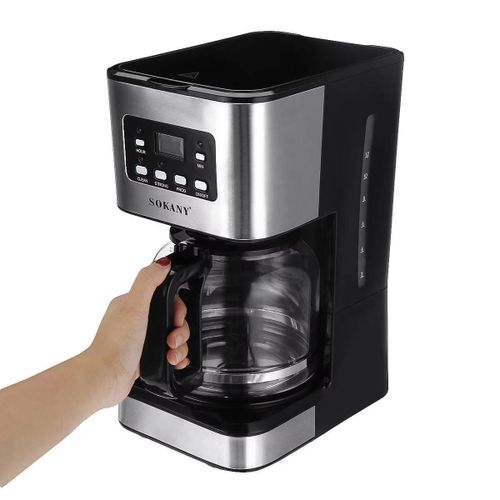
For anyone who appreciates a dependable drip coffee maker that can brew for a group, family mornings, office coffee breaks, or big events, the Sokany 12-Cup Coffee Maker is a good choice. It is spacious, easy to use, and has a small profile, making it an ideal in-between solution between single-serve brewers and commercial units.
Key Specifications & Features
Model: Sokany 12-Cup Electric Coffee Maker / CM-123A / CM-108S
Capacity: Up to 12 cups
Carafe: Glass carafe for brewing and serving
Filter: Removable filter basket for easy cleaning
Keep-Warm Plate: Yes, the warming plate keeps coffee hot after brewing
Water Level Window: Clear water tank markings for precise measurement.
Size / Power: Around 1.5 L capacity.
Design & Build Quality
It’s a classic drip brewer with a black-and-neutral design that complements most kitchen aesthetics. The glass carafe is sturdy and easy to check the coffee level in. The warming plate keeps coffee warm without burning it, and it isn’t sticky. The filter basket can be removed, and maintenance is much easier. A window in the water reservoir lets you easily see how much water you’ve added.
The machine can brew a full 12-cup pot of coffee, perfect for the whole family, the office, or a small group. It’s a one-touch operation machine: fill with water, add ground coffee, press start, and wait. After brewing, the hot plate keeps it hot, so you can savor it without rushing. Uses an anti-drip mechanism.
Maintenance
Cleaning is simple: Remove the filter basket, rinse it, and wipe the carafe. You can wash removable parts in the dishwasher. The non-stick warming plate wipes clean easily.
Safety
2-hour automatic shut-off to avoid overheating if not turned off. The base is stable and safe for everyday use.
Pros & Advantages
Large Capacity: 12 cups is ideal for large servings.
Easy to Use: One-touch brewing and simple controls.
Reliable Warming Function: Keeps coffee hot after brewing.
Good Build Quality: Glass carafe + food-safe components.
Affordable: Good value for a large-capacity drip coffee maker.
Auto-shutoff: A safety feature that gives peace of mind.
Cons & Things to Consider
It takes up more counter space than smaller brewers because it’s a 12-cup model. It is not programmable, and some versions lack a built-in timer, so you must start it by hand—the warming plate only warms, not reheats, cold coffee.
Who Is This For?
Perfect for high-coffee-consuming homes or small offices with a few people using the same coffee pot; makes enough coffee for events & meetings; good for people who don’t need to pay for fancy brands.
The Sokany 12-Cup Coffee Maker Machine is an excellent value, combining capacity, simplicity, and reliability. This isn’t a high-end espresso machine, but it’s a good option for regular, larger-batch coffee. For an all-in-one breakfast maker, check out the Sokany 3-in-1.
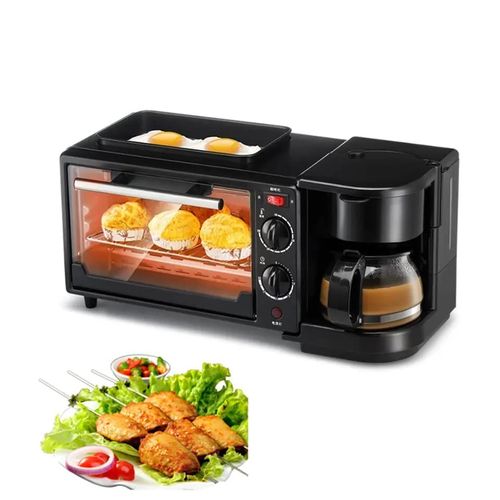
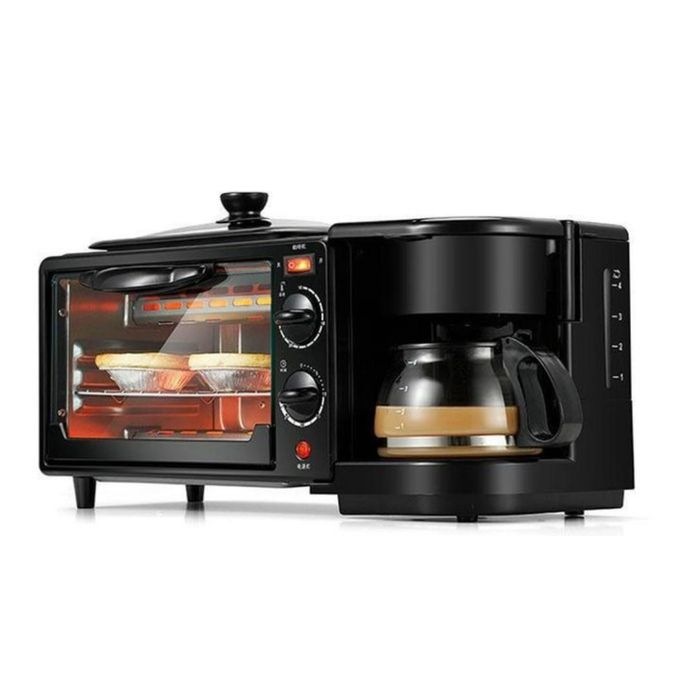
If you’re looking to simplify breakfast preparation while living in a small home, apartment, or dorm, or want one less appliance to deal with, the Sokany 3-in-1 Breakfast Maker is a great option. The concept combines coffee brewing, bread toasting or baking, and egg or pancake frying in a single piece of equipment, saving space and making your morning routine easier. In this review, we will explore its performance, what to look out for, and whether it delivers the goods. It is an improvement over the Sokany coffee maker, which is just for coffee.
What It Is & Key Specifications
SK-145 has three functions: A coffee maker (3-4 cup size), a toaster, and an oven to cook eggs, bacon, and pancakes on a non-stick griddle or a grill surface.
Design & Build Quality
The 3-in-1 unit looks like a compact countertop appliance, but it requires more space than a single toaster or coffee maker. Some building features:
The toaster/oven section typically has a glass door to monitor baking/roasting.
The griddle/frying surface is often non-stick and removable for cleaning in some models.
The coffee maker comes with a glass carafe and filter basket in many versions.
Material: often a mix of plastic housing + stainless steel/work surfaces.
Although the building is usable, there are compromises. As it serves several purposes, each element may not be as sophisticated as a separate appliance. For instance, the griddle surface or oven element could be smaller than standard, separate griddles or ovens.
Can toast up to 4 slices of bread or can a ~7″ pizza. Most have a 30-minute timer and auto-shutoff. Convenient for simple toast, cookies, and small bakes. May be restricted in size & heat distribution for larger baking jobs or bulk quantities.
Grill/Griddle Surface
While the oven or coffee maker is on, the non-stick griddle is great for eggs, bacon, pancakes, and hash browns. Removable trays and non-stick surfaces make cleanup easier, but be mindful of their longevity.
Coffee Maker
Typically, the coffee-maker section lists 3-4 cups. Prep and cook breakfast at the same time: while the bread and/or eggs cook, you can brew coffee.
Simultaneous Use
The big selling point is that you can toast, fry, and brew simultaneously. This is great for mornings when you are pressed for time, and in smaller kitchens, you won’t have to sacrifice counter space or outlets when several appliances are in use.
Pros & What Works
Three-in-one breakfast machine for small houses, apartments, and dorm rooms.
With its versatility, purchasing a single machine may be less expensive than purchasing three different ones.
For one serving of toast, coffee, eggs/pancakes.
Some models have removable trays and non-stick properties to make cleaning easier.
Cons & Considerations
Even though it’s “3-in-1”, the oven size is modest. For larger families or complete baking tasks, you may outgrow it.
Multi-function machines often compromise on some features, such as slower heating and uneven toasting, compared to dedicated appliances.
Non-stick griddle surfaces may degrade faster than heavy-duty ones.
Because it integrates multiple components, a malfunction in one element, like a coffee maker, might affect the entire unit’s usability.
Since functions are integrated, proper ventilation and cleaning are essential to avoid overheating or mixing odors from coffee or fried foods.
The Sokany 3-in-1 Breakfast Maker is a decent addition for those who don’t have much kitchen space or who want a convenient breakfast station in a single machine. It is useful for making toast and frying, and for brewing coffee simultaneously. But with frequent baking, a large family, or high performance requirements for each machine, it may be time to switch to separate machines; however, because of the higher cost of owning separate machines, you should do so with great consideration.
If you have ever wished to prepare your coffee, toast, eggs, and bacon at the same time in a compact appliance, the Nunix 3-in-1 Breakfast Maker delivers just that. It features an oven and toaster, a grill or griddle, and a built-in coffee brewer all in one. Tended to suit one with a tight budget, so this “all-in-one” appliance fits the bill in several ways. The question is: How well does it work, and is it a good investment?
What It Is & Key Specifications
The Nunix 3-in-1 unit includes an oven or toaster, a non-stick griddle/frying surface, and a coffee maker.
The oven’s approximate capacity is 12 liters.
Coffee Capacity of 3-4 cups.
Cooking eggs, pancakes, and sausage on a non-stick griddle.
The oven timer can be set up to 30 minutes and will shut off automatically.
Ideal for kitchens, small rooms, dorms, apartments, and offices.
Design & Build Quality
The Nunix breakfast maker looks like a mini version of a countertop machine with several functions. There are some design features: The baking part is typically equipped with a glass door so you can check the progress. The griddle or frying surface is non-stick and detachable for easy cleaning. Many models include a coffee maker but feature a glass carafe and a filter basket.
Controls usually include dials or switches to control the function, along with a timer knob. The combination unit attempts to perform three jobs, making it more complex than a unit that performs only one. Materials include a heatproof plastic housing and a metal/steel cooking surface. The unit does more than just toast bread and make coffee, which makes it take up more space than a toaster or coffee maker. In real life, you will want to consider heat management, ventilation, and cleaning.
On the toaster/oven side, four slices of bread can be toasted or a 7” pizza fit, depending on the model. Some users recommend using the timer, but warn that you’ll want to preheat and pay attention to the settings. The size may affect baking performance, and heat uniformity may differ. The non-stick griddle surface is perfect for eggs, pancakes, bacon, and sausages. Non-stick surfaces are, however, subject to wear and tear, and removable cleaning parts are a bonus.
Inbuilt coffee brewer which can make 3-4 cups of coffee during the oven/grill’s cooking time, which is great for mornings; convenient filter basket and carafe. But the capacity of a coffee maker is much smaller than that of a full coffee machine.
The main advantage is the multi-purpose application of a single appliance. This is an innovative space-saving tool for smaller kitchens, apartments, dorms, or offices. You can toast/bake, prepare breakfast items on the griddle, and make coffee all at once, saving time and electrical outlets.
Pros & What Works
Combines three functions in one. Brew coffee, toast bread, and fry eggs in one workflow.
Ideal for small households requiring everything in one place for breakfast.
Often cheaper than comparable full-size separate units.
Many removable parts aid in cleaning.
Cons & What to Watch
Like many multi-function devices, Nunix 3-in-1 each of its functions may not be as efficient as a stand-alone device. The oven is small, and bigger dishes and casseroles might be limited.
Non-stick surfaces and multi-functional surfaces require special attention when cleaning and maintaining.
Space-saving as compared to separate units, but a significant amount of counter space is required if used regularly.
Verdict & Recommendation
The Nunix 3-in-1 Breakfast Maker might be a good option if you live in a small home and need to get your morning started as quickly as possible. Not only can you use it to brew a cup of coffee, toast bread, or fry breakfast, but it also saves you a lot of counter space. It is a great value, super convenient, and has good performance for the money. However, if you bake frequently or are looking for a high-quality coffee maker, you may need a separate specialist machine. For general use in a small family, however, it’s useful for a variety of purposes. If you need a different brand, you can check Sokany 3-in-1.
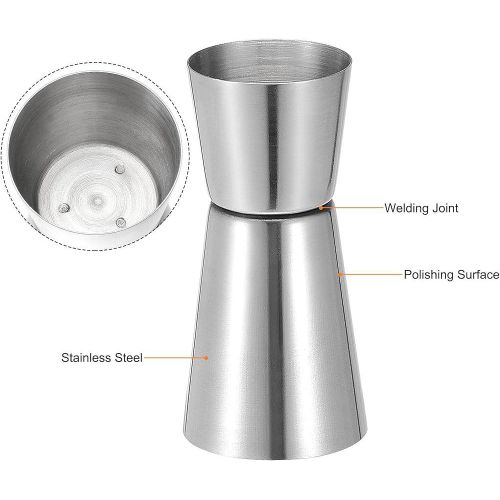
Any good cocktail starts with accuracy, and the Double Tot Measure Jigger (30/60ml) is the one gadget that a bartender can depend on to achieve the accuracy that he wants. This jigger is designed for uniformity, precision, and style in all pours, from amateur to professional bartenders, who will be mixing a professional drink with this jigger. This stainless bar jigger is sleek and trim, one or two inches shorter than a standard bar jigger, which looks like a handbag.
Design & Build
The Double Tot Measure Jigger is both practical and stylish. Crafted from the finest stainless steel, it features a mirror-polished surface that enhances sleek, modern bar aesthetics and won’t rust, corrode, or tarnish. The two-sided design offers 30ml (1 ounce) and 60ml (2 ounces) capacities for easy, accurate pouring without frequent tool changes. It has a balanced waistband in the center for a comfortable grip that allows easy flipping and one-handed measurement, like the professionals. The simple design works in any bar setup, whether it’s a fantastic cocktail bar, a mobile bartender station, or a home bar setup.
Mixing is an art of exactitude, and this jigger is exact. Interior measurement lines are clearly labeled for both areas for partial pours (15ml, 30ml, 45ml, and 60ml), offering flexibility for creating personalized recipes or layered beverages. The stainless steel body won’t change shape over time, ensuring accuracy with repeated use. The surface of it is non-reactive; therefore, it will not alter the taste or smell of spirits, whether it’s gin, whiskey, rum, or liqueurs. Its sharp rim shape also helps minimize spillage, and it pours quickly and evenly, especially in fast-paced settings.
Usability & Comfort
The most important benefit of this double-sided jigger is its efficiency. Standard units of measure (30 ml and 60 ml) can be measured without searching for cups. The center balance point is ergonomically designed to provide stability and control during all pours. It’s also light and strong enough for long hours in a hectic bar or at home parties. Its compact design fits easily in any bartender’s toolbox, pockets, aprons, or bar tool rolls. Cleanup is effortless. The stainless-steel surface is dishwasher-safe and stain-resistant, so it stays shiny after washing.
Material & Durability
An all-food-grade 304 stainless steel jigger, safe and durable. It withstands corrosion from citrus- or vinegar-based mixers, unlike cheaper aluminum or plastic models. It’s also impact-resistant so that it won’t dent or deform with daily use. This level of construction ensures a professional environment in any residence, restaurant, or cocktail bar.
Ideal Use Scenarios
The Double Tot Measure Jigger works well in a variety of applications:
Cocktail Bars, where you need exact ratios of various drinks, as in classic cocktails such as Negronis, Margaritas, and Manhattans.
Home Use: Ideal for drink enthusiasts and home mixologists.
Cafés & Restaurants, where it’s ideal for separating sauces, syrups, and espresso shots.
Events & Catering, where it’s quick and easy to move for outdoor or event bars.
Key Features at a Glance
Feature
Description
Material
304 Stainless Steel (Food Grade)
Capacity
30ml & 60ml (dual measure)
Finish
Mirror-polished, anti-rust coating
Design
Dual-sided hourglass jigger with center grip
Accuracy
Internal measurement lines for precision
Safety
BPA-free, non-reactive with alcohol
Cleaning
Dishwasher-safe and easy to handwash
Best For
Professional and home bartenders, mixologists, café owners
How It Compares
Feature
Double Tot Stainless Steel Jigger
Plastic Bar Jigger
Durability
Lifetime stainless build
Prone to cracking or warping
Precision
High accuracy with interior lines
Basic, often unmarked
Design Appeal
Premium, polished look
Basic or casual
Temperature Resistance
Perfect for chilled or hot liquids
Can warp under heat
Hygiene
Can retain odors
Can retain odors
Verdict
The Double Tot Measure Jigger Bar Stainless Steel Cup (30/60ml). It can’t be beat; it’s essential yet simple, precise yet stylish, a work of art and practicality.
This jigger is a great addition to the bar for anyone who wants consistent glassware or a professional-looking setup. It’s all about durability, style, and performance. “Measure twice, pour once.” But if you want something different, check out our goblet.
Stanley has been a brand of adventure, of longevity, and of trustworthiness. The Stanley Original Cup (1.18L) continues that tradition with a robust, functional cup that serves not just coffee but also for your daily life. It isn’t a cup, but rather it’s a statement. You can be outdoors, at your desk, or sitting on your front porch watching the sun come up, and it won’t be a cup.
Design & Build — The Classic Stanley DNA
If you’ve ever used a Stanley product, you’ll immediately recognise the brand’s DNA: deep green colouring, industrial-strength steel, and an aura of unwavering ruggedness. The Stanley Original Cup 1.18L is no exception. Constructed from 18/8 stainless steel, it is long-lasting and corrosion-resistant. The unique matte powder-coated finish not only looks great on the item, but also offers better grip and scratch resistance. The size is large, 1.18 litres, and it is not only a mug, but a portable hydration system. Can be added to water, coffee, smoothies, and soups. Easy to fill, pour, or clean up, even with a large ice cube, thanks to its wide mouth opening.
Performance — Engineered for Real Life
This cup is not delicate; it’s meant to handle extremes. The 2-wall insulation will keep your drink hot or cold for up to 7 or 10 hours, respectively, making it perfect for the wilderness, office, or an extended hike. It is also condensation-proof, which means your hands stay dry. Gets into the construction site as it does into the camping trip, without complaining, of course. This cup doesn’t complain, no matter the environment.
The ability to adapt is what makes Stanley 1.18L a favorite. It’s ideal for several lifestyles:
For the outdoors, its capacity and durability make it ideal for long road trips, camping, or hiking.
Worksite Companion is designed to stand up to harsh conditions; dust, drops, and heat are no match for it.
Switch out your large water mug, smoothie cup, or thermos with it for daily hydration.
It is also leakproof and travel-friendly, featuring Stanley’s leakproof lid system to keep contents dry on the road and during rough rides.
Sustainability & Legacy
Stanley’s core philosophy revolves around reusability and longevity, long before sustainability became a trend. The 1.18L Original Cup is designed to last a lifetime, reducing disposable waste from plastic bottles and single-use cups. It’s BPA-free, dishwasher-safe, and built from materials that won’t chip, rust, or retain odors- an actual lifetime investment. Owning a Stanley isn’t just about buying drinkware; it’s about joining a legacy of craftsmanship that’s lasted over 100 years.
Key Features
Feature
Description
Brand
Stanley (Original Series)
Capacity
1.18 Liters
Material
18/8 Stainless Steel (BPA-free)
Design
Classic green, double wall insulated.
Heat Retention
Hot up to 7 hours
Cold Retention
Cold up to 10 hours
Cleaning
Dishwasher safe
Durability
Rustproof, dent-resistant, leakproof lid
Use Case
Outdoor, office, home, gym, camping
Why Choose Stanley Original 1.18L Over Regular Cups?
Category
Stanley Original 1.18L
Regular Cup
Durability
Virtually indestructible
Fragile or prone to chipping
Temperature Control
Keeps drinks hot/cold for hours
Loses temperature quickly
Capacity
1.18L (huge volume)
300–400 ml
Portability
Leakproof, travel-ready
Not suitable for outdoor use
Design Legacy
Classic, rugged, timeless
Generic, often mass-produced
Verdict — The Ultimate Everyday Tank of a Cup
The Stanley Original Cup 1.18L is not for the faint of heart; it’s for the life-loving, workaholic, and gear-goer. You can call it your field engineer, camper, gym regular, or just somebody who values excellent engineering, this cup is yours for life. Rugged, huge, and well-made, it’s the epitome of functionality and Stanley style. In the field, there are more options if you have a thermos flask, or you might consider these Stalion mugs at a throwaway price.
The STALLION 12pcs Plastic Mug Set strikes a perfect balance between functionality, strength, and price, especially in a world where product elegance often takes precedence over functionality. From a hardworking housewife to a school kitchenette cook to an office kitchenette worker, and, of course, planning an outdoor activity, these mugs will be your trusted companion every day. The STALLION set is designed for a maximum lifetime usage and is simple, innovative, and practical.
Design & First Impressions
The first thing to notice about the STALLION Plastic Mug Set is its clean, classic design. Ease of holding is the same for both mugs with smooth finishes and rounded edges for every gulp. Its ergonomic handle and standard mug design make it easy to carry, even by children, and to use when commuting to work in the morning while juggling several tasks. There are a variety of color options, including vibrant and neutral tones, so these mugs can be easily combined with any interior, from a minimalist kitchen to a colorful school canteen. They don’t necessarily aim for the high-dollar products, such as glass or ceramic, but they are efficient and useful in regular use.
Build Quality & Durability
In terms of durability, STALLION set performs better. Constructed of premium quality, BPA-free plastic, these mugs will not crack or fade with repeated washings, drops, or knocks. Unlike less expensive plastics, they not only withstand heat but also won’t retain odours or stains and can be used for hot and cold beverages. The surface remains smooth, even after months of daily use, and is suitable for children, picnics, and office pantries. The 12 mugs will never go out of hand, even on the busiest of days!
Whether it’s coffee, tea, milk, juice, or even soup, the STALLION Plastic mugs can easily handle a wide range of beverages. Lightweight construction makes them easy to carry and ideal for outdoor picnics, road trips, or camping. Compared to glass or ceramic mugs, they pose less risk of breaking, making them suitable for families with kids or for high-traffic spots like Schools and Offices. They are easy to clean, as they are dishwasher-safe and free of residue buildup due to their non-porous surface.
Perfect for Every Setting
These mugs are truly all-rounders. Here’s where they excel:
Home Use: Perfect for daily coffee, tea, or juice.
School Use: Safe, durable, and light enough for kids.
Office Use: No worry about breakage or loss.
Outdoor Use Camping, picnics, and road trips made easy.
The STALLION Plastic mugs set’s versatility makes it a perfect bulk buy for families, schools, or institutions looking for durable, hygienic drinkware.
Maintenance & Hygiene
Plastic mugs made of non-toxic, food-grade plastic are safe for every sip. They are nonabsorbent and easy to rinse clean even without detergent, and do not pick up odours or tastes. They can be neatly stacked in your cupboard and will not chip or shatter when washed, unlike glass.
Key Features
Feature
Description
Material
High-quality BPA-free plastic
Set
12 pieces
Design
Simple, durable, and lightweight
Capacity
Approx. 300–350 ml per mug
Use
Home, school, office, camping, outdoor
Safety
Non-toxic, heat-resistant, dishwasher-safe
Colors
Available in assorted or uniform shades
Durability
Break-resistant and fade-proof
Verdict — Reliable, Affordable, and Built to Last
The STALLION 12pcs Plastic Mug Set isn’t a show-in-the-showpiece; it is a show-in-the-show-way. These mugs are sturdier than many alternatives and can withstand the rigors of everyday life. From a family kitchen to a team office, they provide constant reliability, minimal maintenance and unsurpassed practicality. This set is a winner when it comes to mugs you can drop, pack, and use again without fear. But you can also check our ceramic selection, starting with Sundabest ceramic cups.
Contains custom information set by the web developer via the _setCustomVar method in Google Analytics. This cookie is updated every time new data is sent to the Google Analytics server.
2 years after last activity
__utmx
Used to determine whether a user is included in an A / B or Multivariate test.
18 months
_ga
ID used to identify users
2 years
_gali
Used by Google Analytics to determine which links on a page are being clicked
30 seconds
_ga_
ID used to identify users
2 years
_gid
ID used to identify users for 24 hours after last activity
24 hours
_gat
Used to monitor number of Google Analytics server requests when using Google Tag Manager
1 minute
_gac_
Contains information related to marketing campaigns of the user. These are shared with Google AdWords / Google Ads when the Google Ads and Google Analytics accounts are linked together.
90 days
__utma
ID used to identify users and sessions
2 years after last activity
__utmt
Used to monitor number of Google Analytics server requests
10 minutes
__utmb
Used to distinguish new sessions and visits. This cookie is set when the GA.js javascript library is loaded and there is no existing __utmb cookie. The cookie is updated every time data is sent to the Google Analytics server.
30 minutes after last activity
__utmc
Used only with old Urchin versions of Google Analytics and not with GA.js. Was used to distinguish between new sessions and visits at the end of a session.
End of session (browser)
__utmz
Contains information about the traffic source or campaign that directed user to the website. The cookie is set when the GA.js javascript is loaded and updated when data is sent to the Google Anaytics server
6 months after last activity
SourceBuster is used by WooCommerce for order attribution based on user source.
Name
Description
Duration
sbjs_session
The number of page views in this session and the current page path
30 minutes
sbjs_udata
Information about the visitor’s user agent, such as IP, the browser, and the device type
session
sbjs_first
Traffic origin information for the visitor’s first visit to your store (only applicable if the visitor returns before the session expires)
session
sbjs_current
Traffic origin information for the visitor’s current visit to your store
session
sbjs_first_add
Timestamp, referring URL, and entry page for your visitor’s first visit to your store (only applicable if the visitor returns before the session expires)
session
sbjs_current_add
Timestamp, referring URL, and entry page for your visitor’s current visit to your store
session
sbjs_migrations
Technical data to help with migrations between different versions of the tracking feature