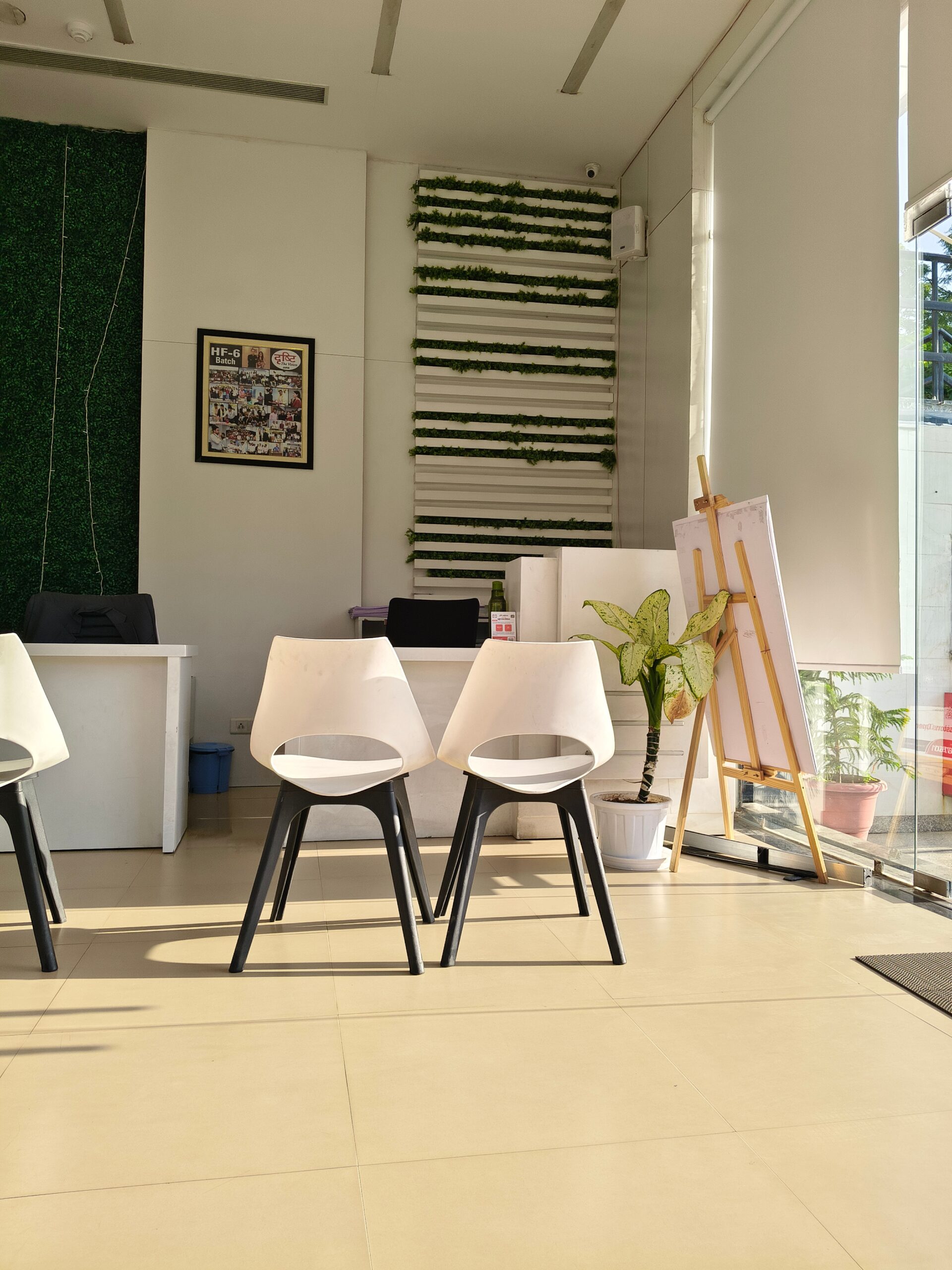
More precisely, a minimalist living room has everything in it that belongs there, where the furniture feels like it belongs, not just because it looks good in a picture; where the palette is not expansive enough to overwhelm the eye when it’s actually in the room. And also a part of aesthetic minimalism.
Select One Interior Design Style.
A minimalist living room with a cohesive design language is very different from a room created by mixing and matching various influences, pretty as each is individually.
Scandinavian minimalism

the design philosophy of the Nordic countries of Norway, Sweden, Denmark, and Finland, is a blend of function and simplicity, interspersed with warmth, derived from the Nordic attitude towards their long and harsh winters and the necessity of creating a genuinely warm interior. Its characteristic range of colours is from white to light grey and warm naturals; its materials are light woods, and its furnishings are designed for both comfort and craftsmanship.
Japandi minimalism

The idea of ma is inherited from Japanese design, the philosophy of wabi-sabi, and a great appreciation for the beauty of imperfect natural materials, dark woods, raw ceramics, and aged textiles all of which are hallmarks of Japandi. The Japandi living room features a more muted and varied color palette than a true Scandinavian one, with greater attention to handcraft and material imperfections, plus a quietness that’s both old and new.
Modern minimalism

It loves geometry and is more inclined toward vertical and horizontal lines than curves or irregularity; it loves industry and materials that are industrial, not softened; it loves to the exclusion of organic warmth. The modern minimalist living room is the most challenging room to get right the hardest part is getting the lines and the quality of the few elements right.
Contemporary minimalism
It is a blend of several minimalist styles, usually placing emphasis on attributes most common to minimalist genres: warm neutral colors, natural materials, furniture with clean lines and intentional negative space, but without the specific formal constraints of Scandinavian, Japanese, or modernist minimalism.
Make a Focal Point
The focal point of a minimalist living room design should be determined first, and then furniture is added; this way, the furniture will support the focal point, not the other way around. The first step is to identify the room’s natural focal point; the second is to design around it. It could be the fireplace, the TV wall, A large window or glazed door, A piece of art, or even an architectural feature.
Multi-Functional Furniture
Multi-functional furniture is not an object category but rather it is the quality of design intelligence that can be developed in a well-designed object that meets multiple functional requirements in minimalist living room. The best multi-functional pieces are the ones that the dual function does not look as though it’s a secondary or as if it hasn’t been done to its best advantage such as the storage ottoman, as comfortable a sofa or as capacious a storage piece, the chaise extension; the side table with a drawer, which can serve as well as a dedicated side table or as a small storage unit.
Proper Furniture Sizing

Accurately sizing furniture is all about two things that most furniture purchases lack: accurate measurements and a willingness to spend time understanding how specific dimensions will work in a given space before committing.
In a minimalist living room, one such dimension that works without conscious effort yet profoundly impacts a room’s ambience is the relationship between furniture and ceiling height. Regarding height, furnishings with low-ceiling profiles, such as sofas and chairs with a seat height below 42 centimeters, and tables with a low visual profile, help open the space and make the distance between the furniture plane and the ceiling seem larger by revealing more of the wall. In higher-ceilinged rooms, more visually imposing furniture, with higher backs, heavier dimensions, and greater presence, helps avoid vertical emptiness.
Efficient furniture layout to improve flow
A minimalist living room flow in a room means an organisation that is immediately legible and, upon entering, provides a clear indication of what to do and how to do it.
Hidden Storage Solutions
In an active living room, there’s always something that needs to be readily available, but not so decorative that you’re seeking to display it, like remotes, charging cords, books in use, children’s paraphernalia, blankets, games, and all the functional clutter of a life lived in the room. In an “old-fashioned” living room, they often sit on coffee tables, side tables, and shelves, adding to the complexity minimalism aims to simplify. They’ll need to be hidden in a convenient location in a minimalist living room.
Using the necessary amount of décor and avoiding over-decorating
In a minimalist living room, the difference between decoration and over-decoration is less about numbers, although too many can be a symptom. It’s a matter of decision-making quality and each object’s presence. A room designed to look nice may have many objects. If they are all carefully selected and curated, it’s more about the quality of the curation than the numbers. If objects in a room are picked up somewhat at random or assembled without a selection process, the room can feel too decorated, regardless of the number of objects.
Layer Different Textures
In a minimalist living room, when space is limited and color is kept to a minimum, texture is the most important way to create visual and tactile richness. Texture helps a neutral palette feel less monotone and less like a bare room, making the eye feel more engaged without feeling overworked, as it would with visual clutter. It’s, in all the ways, a minimalist response to decoration: an interesting room without being busy.
Use Warm Lighting

In a minimalist living room, there’s a big difference between minimalism in the evening, lit by cool, bright overhead lights, and minimalism in the evening, lit by warm, layered, low-intensity lights. Images taken in the room under cool overhead lighting reveal many things, some of them good: the carefully selected textures flatten, the natural materials lose depth and warmth, the negative space becomes a space rather than a composition, and the overall mood is utilitarian at best.
A floor lamp by the sofa provides warm, layered light; a table lamp on the sideboard adds a second level of warmth at a different height; and candles provide the ‘living quality of flame’ in the pool of light on the coffee table. The space is full of shadows that create its volume and intimacy. There is no way to see the room in daylight that gives you the sensation of beauty that you’d get when you actually see it in this room.
Personalize decorations.
The artworks and other decorative items that best fit this role in a minimalist living room have some common features. They are historical in nature, having been gathered from a certain place, by a given person, from a person loved, or at a special time of attention. They have a quality that rewards prolonged examination; they are well-crafted, so the evidence of their craft is interesting. When present in a room with few other objects, they stand firm, and their contribution to the room’s character is unique and irreplaceable, felt both visually and emotionally.
Styling and maintenance of space.
Each room gravitates towards its proprietor’s primal. For most people, that default is more than the surfaces can hold: too many objects in circulation for the room to hold invisibly, and a gradual shift from the thoughtfully planned arrangement that was carefully created to the more convenient arrangement that daily life projects. This tendency to change is more pronounced in a minimalist living room, since it depends more on what isn’t in it, and what isn’t in it is harder to maintain than what is.
The “One In, One Out” Rule
The most important and straightforward rule for keeping objects in balance in a minimalist living room is this: As the objects enter the room, they must exit as well to maintain balance. The number of objects in the room does not increase. Its quality can improve with every trade.
Daily Decluttering Habits
It’s most effective to make daily cleaning part of your daily routine, not a separate, time-consuming task. The most powerful of these integrations is the end-of-day reset: a process that takes 10-15 minutes, that is performed at a specific time of the day, similar to after dinner, when every object that has moved away from its proper place during the day is put back, every surface is wiped down to its base-state, and the minimalist living room is restored to the state in which it is most welcoming to live in and most representative of its design purpose.

Seasonal Décor Updates
A minimalist living room doesn’t mean you need to keep it the same year-round. The changing seasons can provide a natural pace for the room’s character and palette, textures and layers, and enhance its adaptability to the varying quality of light, temperature, and mood throughout the year.
Leave a Reply