The Kenyan cost of inaction on cooking fuel is estimated at $39 billion per year, including health costs, lost labor, and climate damage. But cooking fuel is more than a household cost. It’s a health crisis, an environmental disaster, a gender gap, and an economic blunder. Here’s why this is more complex than most people think.
The Public Health Emergency Hiding in Plain Sight
Almost 7 out of 10 Kenyan households use traditional biomass fuels for cooking every day. The proportion is even higher in rural areas, with more than 80% of households in western Kenya depending mainly on firewood. These fires can be deadly because of the smoke they produce. Household air pollution due to solid fuel use has been estimated to kill thousands of people each year by the World Health Organization. Indoor air pollution is associated with about 23,000 deaths.
Women and children are most affected. They are closest to the cooking zones, where they breathe fine particulate matter at levels far above safe limits. This exposure leads to respiratory infections, chronic obstructive pulmonary disease, and eye complications, and is associated with a higher risk of pneumonia.
The economic consequences are tremendous. Health costs account for 56% of the annual cost of clean cooking in Kenya. Preventable illnesses drain household incomes, put strain on health care facilities, and reduce people’s productivity.
The Hidden Economic Trap
Unfortunately, the poorest families often pay the highest energy costs. They buy firewood in small amounts at exorbitant prices, whereas better-off households may obtain wood from private property at little or no direct cost. This is a particularly stark form of energy injustice.
One recent study in Nairobi comparing cooking costs in the city concluded that the electric pressure cooker was the most economical and energy-efficient option. However, it is too expensive, between Ksh 6500 to Ksh 10000 ($50–80), for many families. Meanwhile, LPG and charcoal prices fluctuate significantly by brand and market, so households often cannot predict fuel prices in advance.
The global market also worsens hardships for Kenyan families. The war in Ukraine has disrupted supply chains, pushing up the prices of fuel, food, and fertilizers and deepening inequalities. In times of economic crisis, women are more likely than men to switch to cheaper, traditional cooking fuels that harm their health. The fuel subsidy put in place to support households was not sufficient to change their behavior.
The Unseen Burden: Time, Dignity, and Opportunity
One of the highest costs of unclean cooking is time. Studies show that, with clean cooking solutions, households would save about 790 hours per year that would otherwise be spent collecting firewood and tending smoky fires.
Women in rural homes must collect firewood for hours a day. Often, girls help, sacrificing school attendance. Research from neighboring countries revealed that a one-hour rise in firewood collection corresponded to fewer school days, which was associated with lower educational attainment later in life.
Kenya’s cost of inaction on clean cooking includes 36% of its total costs in labor-related expenses, worth $14 billion. This reflects the time women and girls spend collecting fuel, cooking, and cleaning stoves, which limits their participation in education, employment, and economic activities.
Cleaner fuels fill this gap. Evidence shows that cleaner cooking technologies can reduce the time gap between women and men in cooking.
The Environmental Death Spiral
Harvesting firewood and producing charcoal is slowly stripping Kenya of its tree cover. Forest loss also reduces the landscape’s ability to regulate rainfall, reduce soil erosion, and store carbon. This seemingly domestic energy choice is actually a local driver of environmental change that leads to land degradation and increased climate vulnerability.
Kenya’s cost of inaction on clean cooking includes climate-related costs of 8%, equivalent to $2.9 billion. This reflects the environmental damage from continued use of inefficient fuels and biomass, including deforestation, ecosystem degradation, and greenhouse gas emissions.
This cycle continues, creating a vicious loop of energy poverty and environmental degradation that increases rural communities’ economic vulnerability.
The Uncomfortable Truth: Policy That Punishes the Poor
A disturbing side effect is that well-intentioned policies can have adverse outcomes. Forest conservation policies have created tensions at the county level, even though they are meant to protect forests. Limited access to firewood has put at-risk families in a difficult position, forcing some to choose between meeting their cooking needs and complying with conservation rules.
This has created tensions between human needs and environmental protection. But according to experts, energy injustice extends beyond access to clean cooking fuels and electricity to who decides, who is listened to, and who suffers when systems fail.
A Way Forward: What 2026 Shows
Despite the grim situation, 2026 offers real hope. Kenya’s National Cooking Transition Strategy (NCTS) aims to achieve universal access to clean cooking by 2028. Between 2024 and 2030, development partners have committed $2.2 billion for clean cooking projects, with Kenya receiving the largest share.
County governments are acting; Makueni County entered a five-year partnership with CLASP to help more than 4,500 people in 63 vocational training centers transition to clean energy. The county has already invested KSh 157 million in solar energy projects. Nakuru County is implementing stakeholder engagement forums to promote the uptake of clean cooking.
Some solutions have practical applications. Recently, the KPC Foundation distributed full LPG starter kits to 100 vulnerable households in Mukuru Viwandani, Nairobi. For homes connected to the grid, electric pressure cookers are among the most cost-efficient cooking options. Improved cookstoves can reduce fuel consumption by up to 60%.
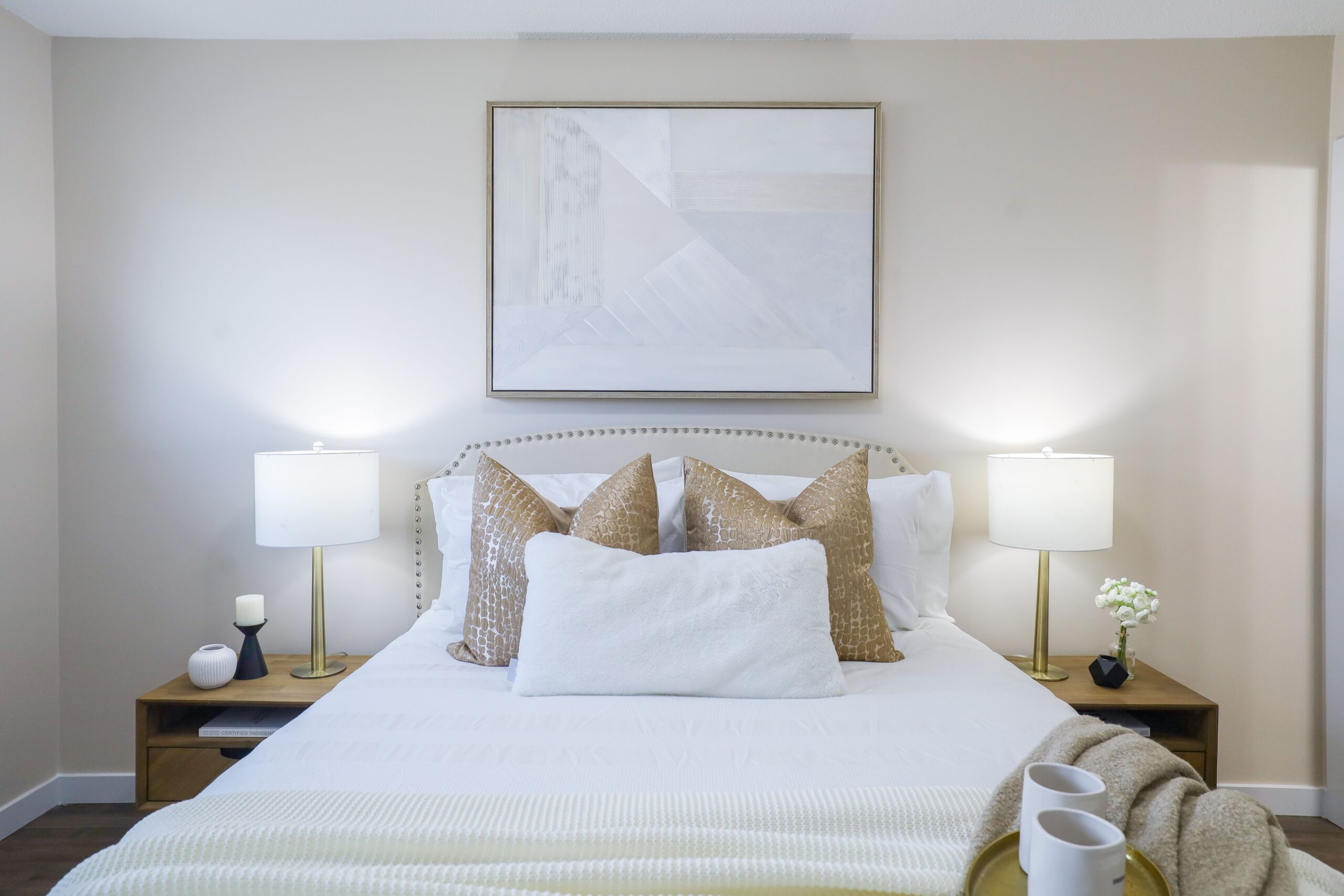
Most bedrooms are laid out in reverse: we select colours for how they look in daylight, decorate our rooms symmetrically, and pile on decorative items to make them look amazing on arrival, then ask ourselves why we can’t get a good night’s sleep. That takes away the bedroom’s one duty: to help you sleep.
The bed.
The most critical item in the bedroom is the bed, yet it’s often overlooked. People will fork out lots of money for a sofa, which they spend an hour on at night and will be tempted not to put any money into the surface they spend a third of their lives on. Even a simple room will provide a good night’s sleep if the bed is right.
This begins with the mattress, then a sturdy frame that provides firm support for the mattress, prevents annoying squeaking that keeps a light sleeper awake, and contributes to the overall look of the room. Low platform beds create a relaxed, grounded atmosphere, whereas upholstered frames with high headboards add softness and presence. If your bed mattress is more than eight years old, it’s time to begin shopping.
The ideal pillow should match the contour of your neck: side sleepers should have thicker pillows, back sleepers medium ones, and stomach sleepers thin ones. When it comes to sheets, anything higher than 400 in thread count is more of a marketing ploy.
Master the Light
Light is the strongest cue for sleep. Street lights, early sunlight and glowing electronics can upset our internal clock, causing us to lose track of time as it grows darker and then begins to grow lighter with daylight. A glimmer of street light on your face at 2 am will mess up your sleep pattern. Don’t spend the money on curtains that don’t go up high enough, wide enough or long enough to block light from the edges. Cover with sheer curtains to soften daylight and blackout curtains at night.
LED lights, charging LEDs and bright alarm clocks quietly illuminate the darkness. Cover or remove them. As far as lighting is concerned, artificial overhead lighting in a bedroom is a crime. You should have layers of lighting, including a side-table lamp for reading, accent lighting for ambience, and dimmers for all lights. Use only warm bulbs. If it’s cooler, it’s morning, not night-time. A sunrise alarm clock is the most helpful sleep investment you can make. It eliminates the adrenaline rush of an ordinary alarm and gradually escalates to natural light, rather than waking you with the shock of an ordinary alarm.
Neutral tone with a few colour accents.
As with other colours, the bedroom’s colour selection can have a profound impact on mood, and one thing is certain: calm must always take priority over drama. Soft, muted colours such as sage green, warm taupe, muted blues, stone, sand, and creamy whites help reduce visual stimulation and add comfort. These colours are a safe choice for the brain and are associated with lower blood pressure. Avoid bright red, orange, and yellow. They stimulate alertness and arousal, the exact opposite of what a room focused on sleep should be.
Texture is as important as colour. Use natural materials such as linen, wool, brushed cotton and wood to add warmth and depth without clutter. A layered bed adds richness to the room and makes it inviting. Large pieces, such as an upholstered bed frame, will give the room presence without cluttering it.
Clear the Clutter
Visual chaos increases cortisol and keeps your brain constantly stressed, even during relaxation. An overstuffed bedroom can distract and overstimulate your nervous system. Your bed should be the focal point, a sleep haven. Maintain an uncluttered environment. Only a lamp, a glass of water and the book you are reading should be kept on your bedside table. Your brain will think your night table is your desk if it looks like one. It is crucial to have storage, but built-in storage is best. Everyday items are out of sight with under-bed storage, closed cabinets and built-in closets.
Open shelving can be effective, but it is more difficult to maintain over time. Things tend to accumulate dust and clutter. If you choose to use shelves, don’t overfill them and be sure they are deliberate. It takes five minutes before bedtime to clear surfaces, which signals to your brain that the day is coming to an end. Get up and make your bed every morning to establish a sense of order and carry this into the mood of the day and productivity.
Air and temperature
One of the less-discussed sleep factors is temperature. The body always cools down to sleep, and an overly warm room can make this difficult. The recommended bedroom temperature is 18-20°C (65-68°F), and it should always be cooler than your body temperature. This can be easily managed with a smart thermostat. Air quality is also of paramount importance. Poor air quality can make you feel unwell, with a congested nose, dry lips, or tiredness when you sleep. If you have pets or allergies, you may have a few issues with your sleep, which can be solved by using an air purifier with a silent operating mode. Humidity is also very important for a comfortable night’s sleep, since it should neither be too moist nor too dry.
The aroma has a surprisingly strong effect on relaxation. Soft, soothing fragrances can help create a relaxing atmosphere and encourage your mind to unwind at night. Again, consistency is key: scents should be light and used only at night. Over time, this becomes an automatic sleep cue. A gentle scent, such as an essential oil diffuser, dried lavender, or a candle, will do. Just don’t overpower the room; your sleeping space should be fresh, but not scented.
Turn the TV and phone out
A TV set in front of the bed or a mobile phone on the bedside table can turn the bed into a workstation for work and entertainment. This makes it harder to fall asleep and keeps the mind active. If you cannot get rid of the TV altogether, at least keep it in a TV cabinet with doors that close. Keep your phone away from the bed, either in another room or across the room. Avoid screen time for 1 hour before bedtime. You’ll find that these simple tweaks can significantly affect how quickly your mind shuts down.
The placement of furniture
An organised bedroom design is luxurious because it supports a simple way of living. The route from the door to the wardrobe and bathroom, and then to bed, should be smooth and not require squeezing around furniture. Place the bed in the middle of the main wall, and, if possible, place a bedside table on the left and one on the right. The bed should be backed by a firm headboard or a wall, providing a sense of security. Only put in arm’s reach of the bed what is needed; everything else should be two steps away.
If your bedroom is smaller, place the bed against the longest wall to create more space. If possible, put it in the middle, as that will create a sense of calm and order. Multi-functional furniture, such as a storage bed with built-in drawers, is ideal for maximising space without cluttering the room with too many items.
Plants
Indoor plants can add colour, texture, and tranquillity to a space that artificial plants cannot match. Certain plants are especially helpful for sleep: snake plants purify the air at night and release oxygen, while lavender and jasmine are relaxing. Snake plants, spider plants, and other low-maintenance plants will not take over a small bedroom.
Room for the Senses
Top-quality bedroom style does rather more than catch the eye. Think about what the room sounds like, feels like and even smells like. Dark drapes absorb light and deaden sound. Acoustic comfort and warmth are enhanced with upholstered furniture, layered rugs and quality bedding. If you live in an area with a high noise level, a sound machine can be helpful. To avoid full wake-ups on the nighttime route to the bathroom, either use a low light or a motion-activated floor light.
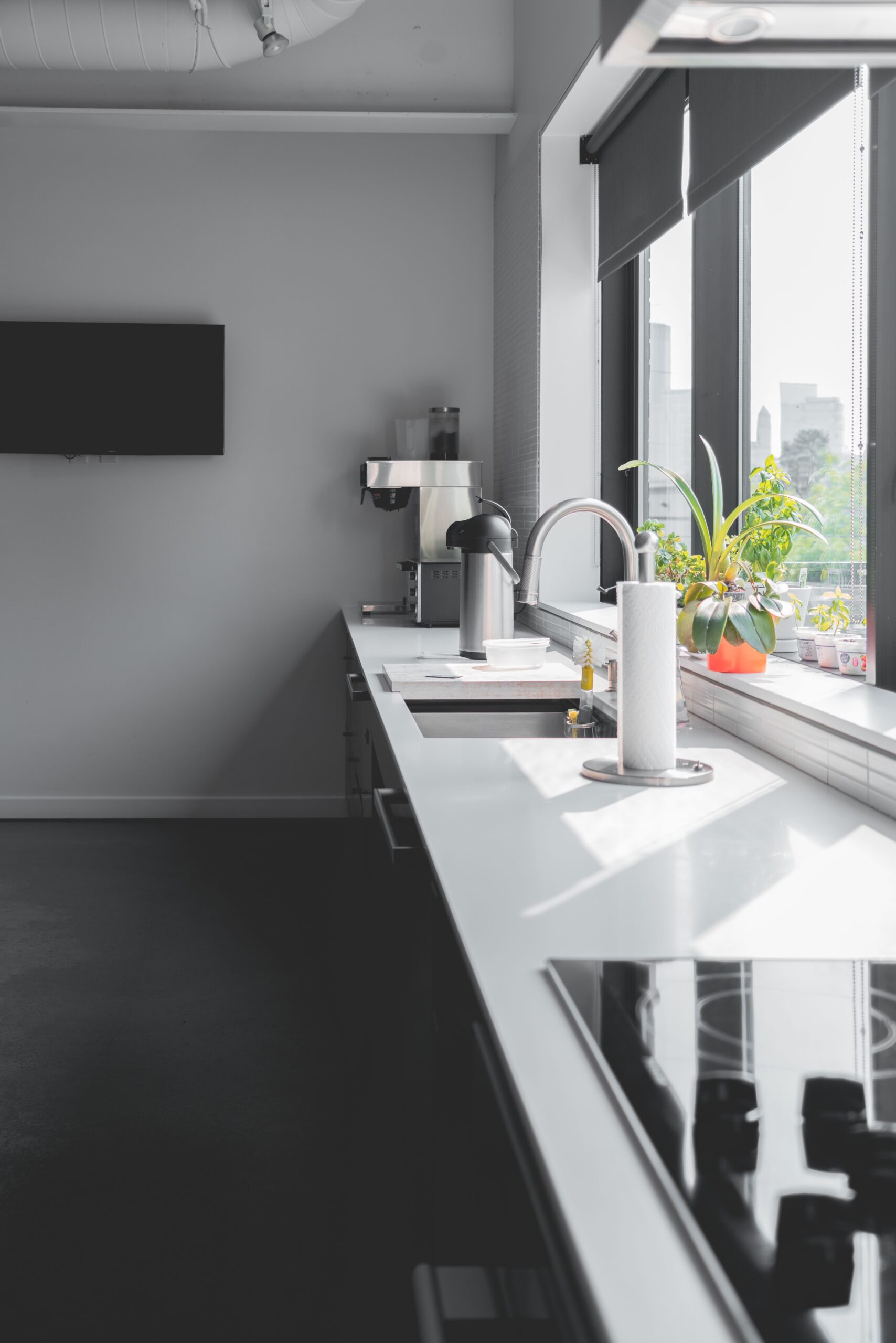
A minimalist kitchen is one in which every object, surface, and design element has its place. Minimalism in kitchen design is about keeping things streamlined and clean, retaining only the essential elements. People are increasingly seeking spaces that aren’t overwhelming because, as homes become smaller and lives busier, they want a more relaxing place to live. Even if you don’t realize it, a kitchen cluttered with mismatched appliances, cramped counters, and full cabinets can cause stress. By contrast, a minimalist kitchen has a certain visual quiet, organized before you open the first drawer.
The kitchen layout and elements of design.
A minimalist kitchen requires a solid foundation and a set of rules to guide the creation of that foundation before selecting a type of cabinetry or countertops.
Determine the purpose of your kitchen.
Great minimalist spaces begin with a clear purpose. What do you do in your kitchen? Do you cook for the whole family and enjoy baking, or do you cook every day for speed? Do you need a separate coffee station, or should it be used for meal prep?
Minimalism isn’t a one-size-fits-all approach; it’s about designing around your actual habits, not an idealized version of what you think you’re supposed to do when preparing meals. If you like to bake a lot, you’ll need different storage and counter space than someone who primarily reheats dinners. If you know what you want to do, you won’t remove what you’ll need or add what you won’t need.
Clean and organize countertops and cabinets
This is the most noticeable step toward making your kitchen minimalist. The countertops should be almost bare, with just a coffee maker or a knife block. The same holds for cabinets: organize like items together, eliminate duplicates, and discard broken, outdated, or unused items that are more than a year old. A good principle to follow is the “one in, one out” rule. For every new kitchen gadget you add, remove another. Getting rid of clutter isn’t something you do just once; it’s a practice that helps ensure the space doesn’t gradually pile up with unnecessary items.
Pick a Simple, Cohesive Color Palette:
Minimalist kitchens typically feature a limited color palette, with tones of white, neutral wood, and accent colors such as matte black or soft sage. This is not boring; it’s about achieving visual serenity. When colors and finishes flow together, the eye is not overloaded, which is one reason minimalist kitchens have a serene atmosphere.
One dominant neutral tone, such as white, cream, or light gray; one secondary material tone, such as natural wood or stone; and one accent material tone used sparingly, such as in hardware, a backsplash, or a single statement material tone. This is why it’s important to stick to a simple color scheme so the entire room appears purposeful rather than cluttered.
Form follows Function.
All additions to the kitchen should be considered first by asking: Will this improve the kitchen’s usability? While a beautiful pendant light is nice, it is also important to have adequate task lighting. It may be a beautiful design, but an open shelf will only be neat if it contains items you use, rather than those that are simply pretty but serve no purpose.
But that doesn’t mean minimalist kitchens lack personality; a single piece of art, an interesting light fixture, or a beautiful bowl of fruit will add warmth. The principle is that only a few items are carefully selected and found useful, rather than many items vying for a person’s attention.
Design an Efficient Kitchen Layout
Minimalism can be put to good use in layout. The old “kitchen work triangle” between the sink, stove, and refrigerator still works well: If you’re working in a kitchen, you don’t want to have to cross long distances between your three primary work areas.
Use zones around the triangle, a prep zone around the sink and cutting boards, a cooking zone around the stove, and a storage zone around the food and dish storage area. Keeping tools close to the job site minimizes wasted motion. Spices by the stove and cutting boards by the prep area help maintain an efficient, quiet environment, even during a hectic dinner rush.
Utilize natural light
Lights are integral to how the kitchen looks and feels, making it appear larger and more serene. Minimalist kitchens tend to be lighter and more open, with many windows to let in as much light as possible, and often use lighter colors to reflect rather than absorb light. If your kitchen is over a window or in close proximity to a prep area, be sure not to clog the window sill or the window itself with window treatments or clutter.
Choosing the Right Materials, Cabinets, and Appliances
Now that the principles have been established, the next stage is to apply them to the physical selection of cabinets, surfaces, and appliances that will make up the room. Less is more. In a minimalist design, these elements should feel purposeful: every element must be built to last a lifetime of work.
Flat-Panel Cabinets
The flat-panel cabinets, also known as slab or handleless cabinets, are a hallmark of minimalist kitchens. They feature uninterrupted surfaces without raised panels, molding, or ornate details. In many minimalist kitchens, handles are the next to vanish: many such kitchens use a push-to-open mechanism or integrated finger pulls. The style works especially well because it allows other features, such as a striking countertop or warm wood tone, to be seen, rather than the cabinets crowding them out.
Quality Countertops
In a minimalist kitchen, the materials you choose take center stage because there are few decorative elements, so they must be high quality. Quartz has become a popular option for its durability, low maintenance, and uniformity, making it ideal for busy homes. Natural stone offers unsurpassed depth and character but may require more maintenance. Wood countertops add warmth and texture to an otherwise sleek, cool material palette.
Regardless of the material you select, the idea is to find something that will work as a focal point, is not a show-stopper, is durable enough to use every day, and is pleasing enough that it doesn’t need embellishment.
Inbuilt appliances
Nothing undermines a pristine kitchen line more than a mismatch with the refrigerator or a large dishwasher that takes over the cabinet run. Appliances such as refrigerators, dishwashers and even microwaves will be built-in or integrated into the cabinetry, with panels that match the cabinet fronts.
This creates a sense of spatial continuity throughout the kitchen and emphasizes the underlying minimalist principle of visual quiet. While it will cost more than stand-alone appliances, it will offer many homeowners the added value of a unified design.
Open Shelving vs. Closed Cabinets
Today, open shelves are a popular addition to the minimalist kitchen, providing an open, uncluttered space that also allows easy access to everyday dishware. But if you’re interested in open shelving, you need to be disciplined about what you put on them, as they showcase everything. It requires good organization and beautiful dishes; otherwise, it’s not going to work.
Closed cabinetry, on the other hand, obscures the inevitable mess of everyday life, such as mismatched containers, bulk items in the pantry, or less attractive but essential tools. For many minimalist kitchens, there’s a balance: a short range of open shelving for items that are used frequently and look good on the shelves, and closed cabinetry for the rest. This combination is up to you and depends on how much you can tolerate seeing and how much time you’re willing to spend arranging.
Durable, Easy-to-Clean Materials
Minimalist kitchens do not require a lot of decoration, nor do they need to include a lot of materials that will fall into disrepair after a short time. Scratches, stains, and wear are much more evident in a pared-back space than in a more decorated and busy space. This means that durability and easy cleaning are not just desirable; they’re essential.
While beautiful, matte finishes are more prone to fingerprints and water spots than glossy ones. For the kitchen, choose scratch-resistant countertops, wipeable cabinet finishes, and stain-resistant floors, all of which help maintain a cool, clean appearance and make life easier.
Selecting a Smaller Number, But of Higher Quality Kitchen Essentials
Minimalism is not the doctrine of the absence of resources; it is the doctrine of the presence of resources. A minimalist kitchen may have just three good knives that will satisfy all the needs, instead of having ten mediocre knives. In the same way, when it comes to cookware, small appliances and tools, fewer items that are well-made, versatile and have a long lifespan are better options than a slew of specialized gadgets that are used only infrequently.
Styling a Minimalist Kitchen Without Losing Warmth.
The most common misconception about minimalist kitchen design is that it should be cold or sterile. In fact, a tastefully designed minimalist kitchen can be as welcoming and inviting as any other type of kitchen; it’s just that it creates the same warmth by selecting a few carefully planned items instead of filling the space with decoration.
Warm Lighting for a Welcoming Atmosphere.
Lighting can significantly shape the atmosphere of a space. A well-designed kitchen can feel clinical with overhead cool lighting, but warm, layered lighting instantly makes the room feel more inviting. Mix in different light sources: Use recessed lighting for the prep areas, warm-toned pendant lighting over an island, and under-cabinet lighting for a soft glow over the counter spaces at night. Dimmable fixtures are particularly beneficial because they can create a bright, efficient kitchen space when you’re cooking and a soft, cozy environment for dinner or a late-night snack.
Use of natural materials, such as wood and stone.
Natural materials are a great way to counteract the potential plainness of a minimalist kitchen. When a space is too homogeneous, a wood cutting board, open wood shelving, or a stone countertop with its visible veining can add texture and organic warmth. They age beautifully and get better with age, something which manufactured surfaces cannot compete with.
A limited colour palette with subtle contrast.
A minimalist kitchen is best rendered with a limited color palette, yet it’s important not to be “flat” with such a palette. A hint of contrast, such as warm white cabinetry with a deep walnut island or matte black fixtures with soft cream walls, provides depth and visual interest without detracting from the overall harmonious and subtle atmosphere. It’s contrast that matters, not one that is distracting.
Plants and herbs that can be grown indoors.
Nothing is more inviting in a kitchen than lush greenery. A few potted plants on a windowsill, or a single trailing plant on a freestanding shelf, will liven up a formally clean room with a touch of organic color. They also offer a practical advantage; fresh basil and rosemary within reach make cooking a bit more special and tie the decorative to the room’s use.
Minimal décor that complements the space.
Minimalist kitchen decorating does not mean no decorating at all; it’s simply a matter of making sure that every decorative element is deliberate. One painting, a lovely ceramic vase, or an interesting light fixture can serve as a subtle focal point for a room without dominating it. The secret is to focus on one or two significant items rather than adding many small, trifling pieces to the surfaces. If in any doubt: Less is more; 1 striking object works better than 5 smaller ones.
Beautiful organization of kitchen utensils, spices and pantry goods
The items used in a kitchen, even the mundane ones used every day, can add to the warmth and style of a kitchen. Glass or ceramic containers can be used to store pantry staples such as flour, rice, and pasta, making them look like design elements rather than necessities. Having spices in neat, tidy jars or a small collection of regularly used utensils in a crock near the stove infuses a homelike, intentional touch and demonstrates that a minimalist kitchen organization system can be both appealing and useful.
Keeping a Minimalist Kitchen Day-by-Day
You might have a minimalist kitchen, but maintaining it that way is another matter. Even the best-laid plans can fall apart if a few habits aren’t followed consistently.
Keep Countertops Clear
The simplest good habit to keep a kitchen from getting cluttered is to do a nightly cleanup and clear the countertops, or at least most of them, before you go to bed. Things tend to pile up during the day with mail, mixing bowls, and miscellaneous items, and a final sweep at the end of the day ensures that this doesn’t become a problem.
Organize Cabinets Regularly
As with countertops, cabinets should be inspected periodically; every few months is a good schedule. Set aside a few minutes to remove any items that are or were out of date, unused, or duplicated. This is a more consistent and manageable form of light “cleaning” than the once-a-year deep “declutter,” and helps cabinets function as intended.
Don’t keep appliances that are not used daily.
All kitchen utensils don’t have to be on the counter or in the key cabinet. Items used occasionally, such as a stand mixer, an air fryer, or a waffle iron, should be stored in a pantry, lower cabinets, or even a garage shelf, and used as needed. Use the most easily accessible space for the few items you need to use daily.
“One In, One Out” Rule
This simple rule is one of the best kitchen organization strategies a minimalist can use for long-term organization: “One in, One out.” When it comes to mixing bowls, a brand-new set means the odd ones out. New knife, old dull knife donated or thrown. This is a natural way to keep the volume of kitchen items under control without having to make major kitchen cleanouts once in a while.
Clean as You Cook
Rinsing bowls between tasks, cleaning counters while cooking something that’s bubbling, and putting away ingredients as soon as you’re done, etc., prevent things from getting messy in the kitchen when preparing meals. It also makes post-meal cleanup much less frightening, since the majority of the job is done before you eat.
Buy intentionally
Trending kitchen gadgets abound, and it’s easy to collect one-use-only items that then sit in your drawer for months on end. When considering purchasing a new kitchen tool or appliance, ask yourself whether it truly addresses a relevant and recurring issue and whether the same result can be achieved with an existing tool just as well. At the core of functional kitchen design is deliberate buying, where everything is included for a reason; a functional one, that is, not because it looked like a great idea to put in a store display.
More precisely, a minimalist living room has everything in it that belongs there, where the furniture feels like it belongs, not just because it looks good in a picture; where the palette is not expansive enough to overwhelm the eye when it’s actually in the room. And also a part of aesthetic minimalism.
Select One Interior Design Style.
A minimalist living room with a cohesive design language is very different from a room created by mixing and matching various influences, pretty as each is individually.
Scandinavian minimalism
the design philosophy of the Nordic countries of Norway, Sweden, Denmark, and Finland, is a blend of function and simplicity, interspersed with warmth, derived from the Nordic attitude towards their long and harsh winters and the necessity of creating a genuinely warm interior. Its characteristic range of colours is from white to light grey and warm naturals; its materials are light woods, and its furnishings are designed for both comfort and craftsmanship.
Japandi minimalism
The idea of ma is inherited from Japanese design, the philosophy of wabi-sabi, and a great appreciation for the beauty of imperfect natural materials, dark woods, raw ceramics, and aged textiles all of which are hallmarks of Japandi. The Japandi living room features a more muted and varied color palette than a true Scandinavian one, with greater attention to handcraft and material imperfections, plus a quietness that’s both old and new.
Modern minimalism
It loves geometry and is more inclined toward vertical and horizontal lines than curves or irregularity; it loves industry and materials that are industrial, not softened; it loves to the exclusion of organic warmth. The modern minimalist living room is the most challenging room to get right the hardest part is getting the lines and the quality of the few elements right.
Contemporary minimalism
It is a blend of several minimalist styles, usually placing emphasis on attributes most common to minimalist genres: warm neutral colors, natural materials, furniture with clean lines and intentional negative space, but without the specific formal constraints of Scandinavian, Japanese, or modernist minimalism.
Make a Focal Point
The focal point of a minimalist living room design should be determined first, and then furniture is added; this way, the furniture will support the focal point, not the other way around. The first step is to identify the room’s natural focal point; the second is to design around it. It could be the fireplace, the TV wall, A large window or glazed door, A piece of art, or even an architectural feature.
Multi-Functional Furniture
Multi-functional furniture is not an object category but rather it is the quality of design intelligence that can be developed in a well-designed object that meets multiple functional requirements in minimalist living room. The best multi-functional pieces are the ones that the dual function does not look as though it’s a secondary or as if it hasn’t been done to its best advantage such as the storage ottoman, as comfortable a sofa or as capacious a storage piece, the chaise extension; the side table with a drawer, which can serve as well as a dedicated side table or as a small storage unit.
Proper Furniture Sizing
Accurately sizing furniture is all about two things that most furniture purchases lack: accurate measurements and a willingness to spend time understanding how specific dimensions will work in a given space before committing.
In a minimalist living room, one such dimension that works without conscious effort yet profoundly impacts a room’s ambience is the relationship between furniture and ceiling height. Regarding height, furnishings with low-ceiling profiles, such as sofas and chairs with a seat height below 42 centimeters, and tables with a low visual profile, help open the space and make the distance between the furniture plane and the ceiling seem larger by revealing more of the wall. In higher-ceilinged rooms, more visually imposing furniture, with higher backs, heavier dimensions, and greater presence, helps avoid vertical emptiness.
Efficient furniture layout to improve flow
A minimalist living room flow in a room means an organisation that is immediately legible and, upon entering, provides a clear indication of what to do and how to do it.
Hidden Storage Solutions
In an active living room, there’s always something that needs to be readily available, but not so decorative that you’re seeking to display it, like remotes, charging cords, books in use, children’s paraphernalia, blankets, games, and all the functional clutter of a life lived in the room. In an “old-fashioned” living room, they often sit on coffee tables, side tables, and shelves, adding to the complexity minimalism aims to simplify. They’ll need to be hidden in a convenient location in a minimalist living room.
Using the necessary amount of décor and avoiding over-decorating
In a minimalist living room, the difference between decoration and over-decoration is less about numbers, although too many can be a symptom. It’s a matter of decision-making quality and each object’s presence. A room designed to look nice may have many objects. If they are all carefully selected and curated, it’s more about the quality of the curation than the numbers. If objects in a room are picked up somewhat at random or assembled without a selection process, the room can feel too decorated, regardless of the number of objects.
Layer Different Textures
In a minimalist living room, when space is limited and color is kept to a minimum, texture is the most important way to create visual and tactile richness. Texture helps a neutral palette feel less monotone and less like a bare room, making the eye feel more engaged without feeling overworked, as it would with visual clutter. It’s, in all the ways, a minimalist response to decoration: an interesting room without being busy.
Use Warm Lighting
In a minimalist living room, there’s a big difference between minimalism in the evening, lit by cool, bright overhead lights, and minimalism in the evening, lit by warm, layered, low-intensity lights. Images taken in the room under cool overhead lighting reveal many things, some of them good: the carefully selected textures flatten, the natural materials lose depth and warmth, the negative space becomes a space rather than a composition, and the overall mood is utilitarian at best.
A floor lamp by the sofa provides warm, layered light; a table lamp on the sideboard adds a second level of warmth at a different height; and candles provide the ‘living quality of flame’ in the pool of light on the coffee table. The space is full of shadows that create its volume and intimacy. There is no way to see the room in daylight that gives you the sensation of beauty that you’d get when you actually see it in this room.
Personalize decorations.
The artworks and other decorative items that best fit this role in a minimalist living room have some common features. They are historical in nature, having been gathered from a certain place, by a given person, from a person loved, or at a special time of attention. They have a quality that rewards prolonged examination; they are well-crafted, so the evidence of their craft is interesting. When present in a room with few other objects, they stand firm, and their contribution to the room’s character is unique and irreplaceable, felt both visually and emotionally.
Styling and maintenance of space.
Each room gravitates towards its proprietor’s primal. For most people, that default is more than the surfaces can hold: too many objects in circulation for the room to hold invisibly, and a gradual shift from the thoughtfully planned arrangement that was carefully created to the more convenient arrangement that daily life projects. This tendency to change is more pronounced in a minimalist living room, since it depends more on what isn’t in it, and what isn’t in it is harder to maintain than what is.
The “One In, One Out” Rule
The most important and straightforward rule for keeping objects in balance in a minimalist living room is this: As the objects enter the room, they must exit as well to maintain balance. The number of objects in the room does not increase. Its quality can improve with every trade.
Daily Decluttering Habits
It’s most effective to make daily cleaning part of your daily routine, not a separate, time-consuming task. The most powerful of these integrations is the end-of-day reset: a process that takes 10-15 minutes, that is performed at a specific time of the day, similar to after dinner, when every object that has moved away from its proper place during the day is put back, every surface is wiped down to its base-state, and the minimalist living room is restored to the state in which it is most welcoming to live in and most representative of its design purpose.
Seasonal Décor Updates
A minimalist living room doesn’t mean you need to keep it the same year-round. The changing seasons can provide a natural pace for the room’s character and palette, textures and layers, and enhance its adaptability to the varying quality of light, temperature, and mood throughout the year.
Your cart
Cookie Consent
We use cookies to improve your experience on our site. By using our site, you consent to cookies.
Contains custom information set by the web developer via the _setCustomVar method in Google Analytics. This cookie is updated every time new data is sent to the Google Analytics server.
2 years after last activity
__utmx
Used to determine whether a user is included in an A / B or Multivariate test.
18 months
_ga
ID used to identify users
2 years
_gali
Used by Google Analytics to determine which links on a page are being clicked
30 seconds
_ga_
ID used to identify users
2 years
_gid
ID used to identify users for 24 hours after last activity
24 hours
_gat
Used to monitor number of Google Analytics server requests when using Google Tag Manager
1 minute
_gac_
Contains information related to marketing campaigns of the user. These are shared with Google AdWords / Google Ads when the Google Ads and Google Analytics accounts are linked together.
90 days
__utma
ID used to identify users and sessions
2 years after last activity
__utmt
Used to monitor number of Google Analytics server requests
10 minutes
__utmb
Used to distinguish new sessions and visits. This cookie is set when the GA.js javascript library is loaded and there is no existing __utmb cookie. The cookie is updated every time data is sent to the Google Analytics server.
30 minutes after last activity
__utmc
Used only with old Urchin versions of Google Analytics and not with GA.js. Was used to distinguish between new sessions and visits at the end of a session.
End of session (browser)
__utmz
Contains information about the traffic source or campaign that directed user to the website. The cookie is set when the GA.js javascript is loaded and updated when data is sent to the Google Anaytics server
6 months after last activity
SourceBuster is used by WooCommerce for order attribution based on user source.
Name
Description
Duration
sbjs_session
The number of page views in this session and the current page path
30 minutes
sbjs_udata
Information about the visitor’s user agent, such as IP, the browser, and the device type
session
sbjs_first
Traffic origin information for the visitor’s first visit to your store (only applicable if the visitor returns before the session expires)
session
sbjs_current
Traffic origin information for the visitor’s current visit to your store
session
sbjs_first_add
Timestamp, referring URL, and entry page for your visitor’s first visit to your store (only applicable if the visitor returns before the session expires)
session
sbjs_current_add
Timestamp, referring URL, and entry page for your visitor’s current visit to your store
session
sbjs_migrations
Technical data to help with migrations between different versions of the tracking feature