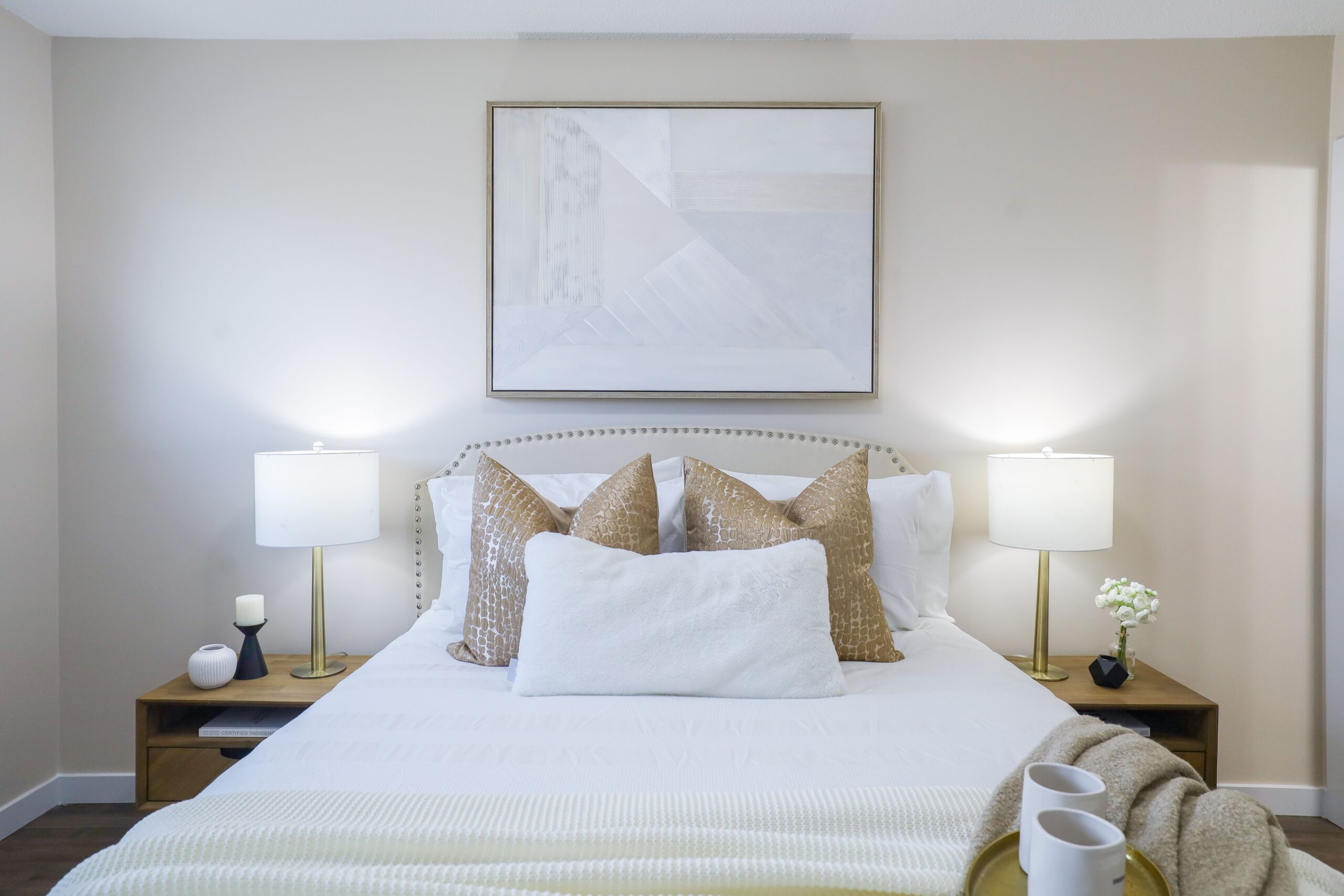
Most bedrooms are laid out in reverse: we select colours for how they look in daylight, decorate our rooms symmetrically, and pile on decorative items to make them look amazing on arrival, then ask ourselves why we can’t get a good night’s sleep. That takes away the bedroom’s one duty: to help you sleep.
The bed.
The most critical item in the bedroom is the bed, yet it’s often overlooked. People will fork out lots of money for a sofa, which they spend an hour on at night and will be tempted not to put any money into the surface they spend a third of their lives on. Even a simple room will provide a good night’s sleep if the bed is right.
This begins with the mattress, then a sturdy frame that provides firm support for the mattress, prevents annoying squeaking that keeps a light sleeper awake, and contributes to the overall look of the room. Low platform beds create a relaxed, grounded atmosphere, whereas upholstered frames with high headboards add softness and presence. If your bed mattress is more than eight years old, it’s time to begin shopping.
The ideal pillow should match the contour of your neck: side sleepers should have thicker pillows, back sleepers medium ones, and stomach sleepers thin ones. When it comes to sheets, anything higher than 400 in thread count is more of a marketing ploy.
Master the Light
Light is the strongest cue for sleep. Street lights, early sunlight and glowing electronics can upset our internal clock, causing us to lose track of time as it grows darker and then begins to grow lighter with daylight. A glimmer of street light on your face at 2 am will mess up your sleep pattern. Don’t spend the money on curtains that don’t go up high enough, wide enough or long enough to block light from the edges. Cover with sheer curtains to soften daylight and blackout curtains at night.
LED lights, charging LEDs and bright alarm clocks quietly illuminate the darkness. Cover or remove them. As far as lighting is concerned, artificial overhead lighting in a bedroom is a crime. You should have layers of lighting, including a side-table lamp for reading, accent lighting for ambience, and dimmers for all lights. Use only warm bulbs. If it’s cooler, it’s morning, not night-time. A sunrise alarm clock is the most helpful sleep investment you can make. It eliminates the adrenaline rush of an ordinary alarm and gradually escalates to natural light, rather than waking you with the shock of an ordinary alarm.
Neutral tone with a few colour accents.

As with other colours, the bedroom’s colour selection can have a profound impact on mood, and one thing is certain: calm must always take priority over drama. Soft, muted colours such as sage green, warm taupe, muted blues, stone, sand, and creamy whites help reduce visual stimulation and add comfort. These colours are a safe choice for the brain and are associated with lower blood pressure. Avoid bright red, orange, and yellow. They stimulate alertness and arousal, the exact opposite of what a room focused on sleep should be.
Texture is as important as colour. Use natural materials such as linen, wool, brushed cotton and wood to add warmth and depth without clutter. A layered bed adds richness to the room and makes it inviting. Large pieces, such as an upholstered bed frame, will give the room presence without cluttering it.
Clear the Clutter
Visual chaos increases cortisol and keeps your brain constantly stressed, even during relaxation. An overstuffed bedroom can distract and overstimulate your nervous system. Your bed should be the focal point, a sleep haven. Maintain an uncluttered environment. Only a lamp, a glass of water and the book you are reading should be kept on your bedside table. Your brain will think your night table is your desk if it looks like one. It is crucial to have storage, but built-in storage is best. Everyday items are out of sight with under-bed storage, closed cabinets and built-in closets.
Open shelving can be effective, but it is more difficult to maintain over time. Things tend to accumulate dust and clutter. If you choose to use shelves, don’t overfill them and be sure they are deliberate. It takes five minutes before bedtime to clear surfaces, which signals to your brain that the day is coming to an end. Get up and make your bed every morning to establish a sense of order and carry this into the mood of the day and productivity.
Air and temperature

One of the less-discussed sleep factors is temperature. The body always cools down to sleep, and an overly warm room can make this difficult. The recommended bedroom temperature is 18-20°C (65-68°F), and it should always be cooler than your body temperature. This can be easily managed with a smart thermostat. Air quality is also of paramount importance. Poor air quality can make you feel unwell, with a congested nose, dry lips, or tiredness when you sleep. If you have pets or allergies, you may have a few issues with your sleep, which can be solved by using an air purifier with a silent operating mode. Humidity is also very important for a comfortable night’s sleep, since it should neither be too moist nor too dry.
The aroma has a surprisingly strong effect on relaxation. Soft, soothing fragrances can help create a relaxing atmosphere and encourage your mind to unwind at night. Again, consistency is key: scents should be light and used only at night. Over time, this becomes an automatic sleep cue. A gentle scent, such as an essential oil diffuser, dried lavender, or a candle, will do. Just don’t overpower the room; your sleeping space should be fresh, but not scented.
Turn the TV and phone out
A TV set in front of the bed or a mobile phone on the bedside table can turn the bed into a workstation for work and entertainment. This makes it harder to fall asleep and keeps the mind active. If you cannot get rid of the TV altogether, at least keep it in a TV cabinet with doors that close. Keep your phone away from the bed, either in another room or across the room. Avoid screen time for 1 hour before bedtime. You’ll find that these simple tweaks can significantly affect how quickly your mind shuts down.
The placement of furniture
An organised bedroom design is luxurious because it supports a simple way of living. The route from the door to the wardrobe and bathroom, and then to bed, should be smooth and not require squeezing around furniture. Place the bed in the middle of the main wall, and, if possible, place a bedside table on the left and one on the right. The bed should be backed by a firm headboard or a wall, providing a sense of security. Only put in arm’s reach of the bed what is needed; everything else should be two steps away.
If your bedroom is smaller, place the bed against the longest wall to create more space. If possible, put it in the middle, as that will create a sense of calm and order. Multi-functional furniture, such as a storage bed with built-in drawers, is ideal for maximising space without cluttering the room with too many items.
Plants
Indoor plants can add colour, texture, and tranquillity to a space that artificial plants cannot match. Certain plants are especially helpful for sleep: snake plants purify the air at night and release oxygen, while lavender and jasmine are relaxing. Snake plants, spider plants, and other low-maintenance plants will not take over a small bedroom.
Room for the Senses
Top-quality bedroom style does rather more than catch the eye. Think about what the room sounds like, feels like and even smells like. Dark drapes absorb light and deaden sound. Acoustic comfort and warmth are enhanced with upholstered furniture, layered rugs and quality bedding. If you live in an area with a high noise level, a sound machine can be helpful. To avoid full wake-ups on the nighttime route to the bathroom, either use a low light or a motion-activated floor light.